

92
A. Kadłuczka and K. Stala
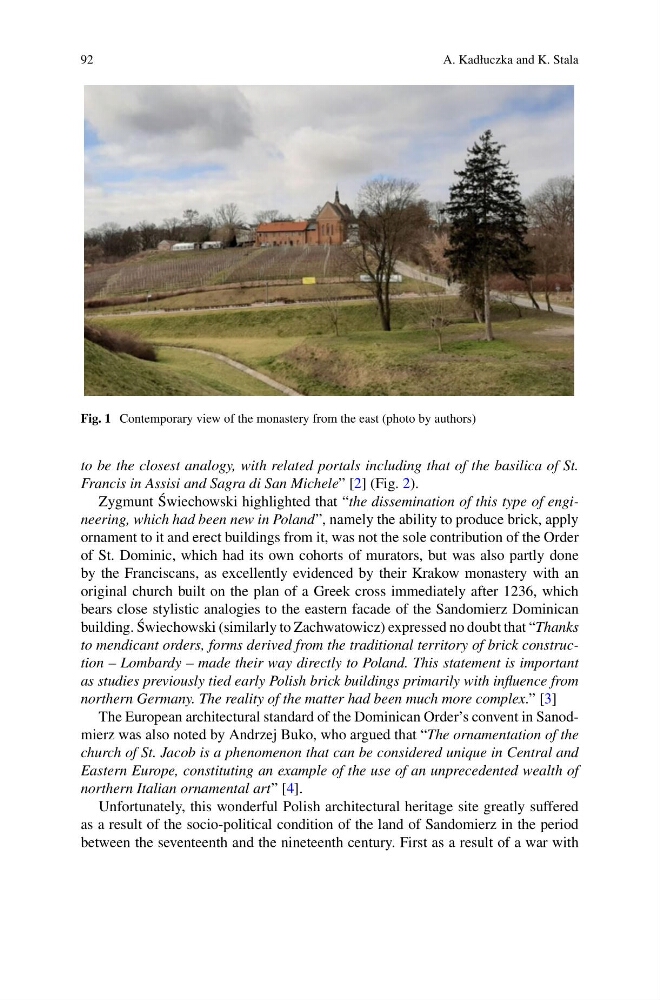
Fig. 1 Contemporary view of the monastery from the east (photo by authors)
to be the closest analogy, with related portals including that of the basilica of St.
Francis in Assisi and Sagra di San Michele” [2] (Fig. 2).
Zygmunt ´
Swiechowski highlighted that “the dissemination of this type of engineering, which had been new in Poland”, namely the ability to produce brick, apply
ornament to it and erect buildings from it, was not the sole contribution of the Order
of St. Dominic, which had its own cohorts of murators, but was also partly done
by the Franciscans, as excellently evidenced by their Krakow monastery with an
original church built on the plan of a Greek cross immediately after 1236, which
bears close stylistic analogies to the eastern facade of the Sandomierz Dominican
building. ´
Swiechowski (similarly to Zachwatowicz) expressed no doubt that “Thanks
to mendicant orders, forms derived from the traditional territory of brick construction – Lombardy – made their way directly to Poland. This statement is important
as studies previously tied early Polish brick buildings primarily with influence from
northern Germany. The reality of the matter had been much more complex.” [3]
The European architectural standard of the Dominican Order’s convent in Sanodmierz was also noted by Andrzej Buko, who argued that “The ornamentation of the
church of St. Jacob is a phenomenon that can be considered unique in Central and
Eastern Europe, constituting an example of the use of an unprecedented wealth of
northern Italian ornamental art” [4].
Unfortunately, this wonderful Polish architectural heritage site greatly suffered
as a result of the socio-political condition of the land of Sandomierz in the period
between the seventeenth and the nineteenth century. First as a result of a war with
A. Kadłuczka and K. Stala
Fig. 1 Contemporary view of the monastery from the east (photo by authors)
to be the closest analogy, with related portals including that of the basilica of St.
Francis in Assisi and Sagra di San Michele” [2] (Fig. 2).
Zygmunt ´
Swiechowski highlighted that “the dissemination of this type of engineering, which had been new in Poland”, namely the ability to produce brick, apply
ornament to it and erect buildings from it, was not the sole contribution of the Order
of St. Dominic, which had its own cohorts of murators, but was also partly done
by the Franciscans, as excellently evidenced by their Krakow monastery with an
original church built on the plan of a Greek cross immediately after 1236, which
bears close stylistic analogies to the eastern facade of the Sandomierz Dominican
building. ´
Swiechowski (similarly to Zachwatowicz) expressed no doubt that “Thanks
to mendicant orders, forms derived from the traditional territory of brick construction – Lombardy – made their way directly to Poland. This statement is important
as studies previously tied early Polish brick buildings primarily with influence from
northern Germany. The reality of the matter had been much more complex.” [3]
The European architectural standard of the Dominican Order’s convent in Sanodmierz was also noted by Andrzej Buko, who argued that “The ornamentation of the
church of St. Jacob is a phenomenon that can be considered unique in Central and
Eastern Europe, constituting an example of the use of an unprecedented wealth of
northern Italian ornamental art” [4].
Unfortunately, this wonderful Polish architectural heritage site greatly suffered
as a result of the socio-political condition of the land of Sandomierz in the period
between the seventeenth and the nineteenth century. First as a result of a war with