

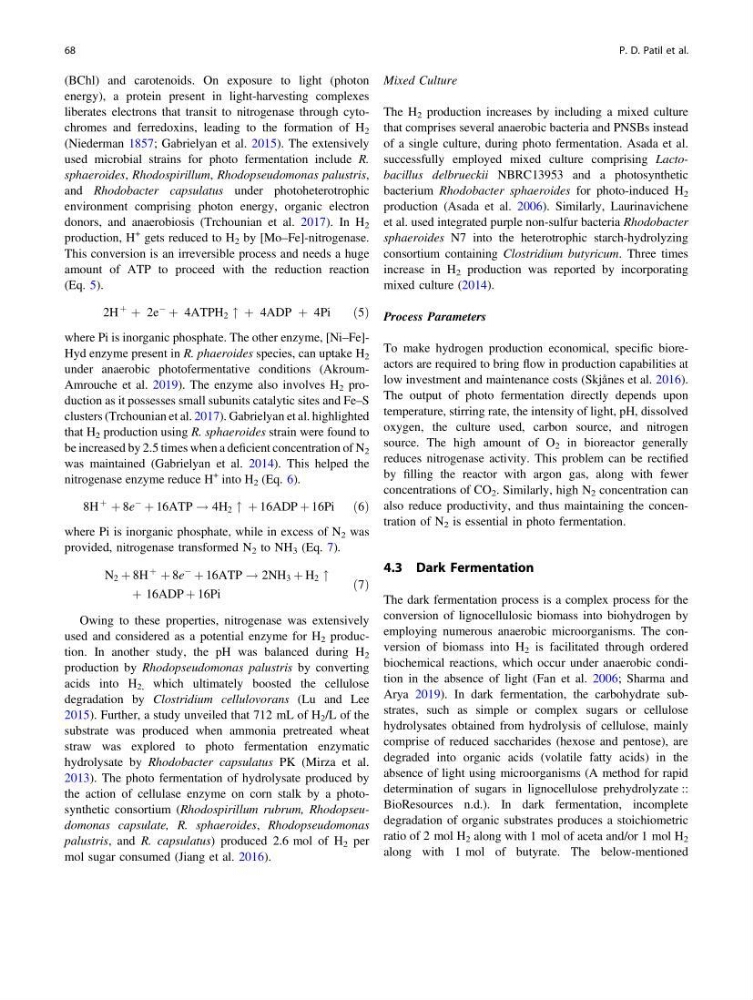
(BChl) and carotenoids. On exposure to light (photon
energy), a protein present in light-harvesting complexes
liberates electrons that transit to nitrogenase through cytochromes and ferredoxins, leading to the formation of H 2
(Niederman 1857; Gabrielyan et al. 2015). The extensively
used microbial strains for photo fermentation include R.
sphaeroides, Rhodospirillum, Rhodopseudomonas palustris,
and Rhodobacter capsulatus under photoheterotrophic
environment comprising photon energy, organic electron
donors, and anaerobiosis (Trchounian et al. 2017). In H 2
production, H
+ gets reduced to H 2 by [Mo–Fe]-nitrogenase.
This conversion is an irreversible process and needs a huge
amount of ATP to proceed with the reduction reaction
(Eq. 5).
2H
þ
þ 2e
À
þ 4ATPH 2 " þ 4ADP þ 4Pi
ð5Þ
where Pi is inorganic phosphate. The other enzyme, [Ni–Fe]Hyd enzyme present in R. phaeroides species, can uptake H 2
under anaerobic photofermentative conditions (AkroumAmrouche et al. 2019). The enzyme also involves H 2 production as it possesses small subunits catalytic sites and Fe–S
clusters (Trchounian et al. 2017). Gabrielyan et al. highlighted
that H 2 production using R. sphaeroides strain were found to
be increased by 2.5 times when a deficient concentration of N 2
was maintained (Gabrielyan et al. 2014). This helped the
nitrogenase enzyme reduce H
+ into H 2 (Eq. 6).
8H
þ
þ 8e
À
þ 16ATP ! 4H 2 " þ 16ADP þ 16Pi ð6Þ
where Pi is inorganic phosphate, while in excess of N 2 was
provided, nitrogenase transformed N 2 to NH 3 (Eq. 7).
N 2 þ 8H
þ
þ 8e
À
þ 16ATP ! 2NH 3 þ H 2 "
þ 16ADP þ 16Pi
ð7Þ
Owing to these properties, nitrogenase was extensively
used and considered as a potential enzyme for H 2 production. In another study, the pH was balanced during H 2
production by Rhodopseudomonas palustris by converting
acids into H 2, which ultimately boosted the cellulose
degradation by Clostridium cellulovorans (Lu and Lee
2015). Further, a study unveiled that 712 mL of H 2 /L of the
substrate was produced when ammonia pretreated wheat
straw was explored to photo fermentation enzymatic
hydrolysate by Rhodobacter capsulatus PK (Mirza et al.
2013). The photo fermentation of hydrolysate produced by
the action of cellulase enzyme on corn stalk by a photosynthetic consortium (Rhodospirillum rubrum, Rhodopseudomonas capsulate, R. sphaeroides, Rhodopseudomonas
palustris, and R. capsulatus) produced 2.6 mol of H 2 per
mol sugar consumed (Jiang et al. 2016).
Mixed Culture
The H 2 production increases by including a mixed culture
that comprises several anaerobic bacteria and PNSBs instead
of a single culture, during photo fermentation. Asada et al.
successfully employed mixed culture comprising Lactobacillus delbrueckii NBRC13953 and a photosynthetic
bacterium Rhodobacter sphaeroides for photo-induced H 2
production (Asada et al. 2006). Similarly, Laurinavichene
et al. used integrated purple non-sulfur bacteria Rhodobacter
sphaeroides N7 into the heterotrophic starch-hydrolyzing
consortium containing Clostridium butyricum. Three times
increase in H 2 production was reported by incorporating
mixed culture (2014).
Process Parameters
To make hydrogen production economical, specific bioreactors are required to bring flow in production capabilities at
low investment and maintenance costs (Skjånes et al. 2016).
The output of photo fermentation directly depends upon
temperature, stirring rate, the intensity of light, pH, dissolved
oxygen, the culture used, carbon source, and nitrogen
source. The high amount of O 2 in bioreactor generally
reduces nitrogenase activity. This problem can be rectified
by filling the reactor with argon gas, along with fewer
concentrations of CO 2 . Similarly, high N 2 concentration can
also reduce productivity, and thus maintaining the concentration of N 2 is essential in photo fermentation.
4.3 Dark Fermentation
The dark fermentation process is a complex process for the
conversion of lignocellulosic biomass into biohydrogen by
employing numerous anaerobic microorganisms. The conversion of biomass into H 2 is facilitated through ordered
biochemical reactions, which occur under anaerobic condition in the absence of light (Fan et al. 2006; Sharma and
Arya 2019). In dark fermentation, the carbohydrate substrates, such as simple or complex sugars or cellulose
hydrolysates obtained from hydrolysis of cellulose, mainly
comprise of reduced saccharides (hexose and pentose), are
degraded into organic acids (volatile fatty acids) in the
absence of light using microorganisms (A method for rapid
determination of sugars in lignocellulose prehydrolyzate ::
BioResources n.d.). In dark fermentation, incomplete
degradation of organic substrates produces a stoichiometric
ratio of 2 mol H 2 along with 1 mol of aceta and/or 1 mol H 2
along with 1 mol of butyrate. The below-mentioned
68
P. D. Patil et al.
energy), a protein present in light-harvesting complexes
liberates electrons that transit to nitrogenase through cytochromes and ferredoxins, leading to the formation of H 2
(Niederman 1857; Gabrielyan et al. 2015). The extensively
used microbial strains for photo fermentation include R.
sphaeroides, Rhodospirillum, Rhodopseudomonas palustris,
and Rhodobacter capsulatus under photoheterotrophic
environment comprising photon energy, organic electron
donors, and anaerobiosis (Trchounian et al. 2017). In H 2
production, H
+ gets reduced to H 2 by [Mo–Fe]-nitrogenase.
This conversion is an irreversible process and needs a huge
amount of ATP to proceed with the reduction reaction
(Eq. 5).
2H
þ
þ 2e
À
þ 4ATPH 2 " þ 4ADP þ 4Pi
ð5Þ
where Pi is inorganic phosphate. The other enzyme, [Ni–Fe]Hyd enzyme present in R. phaeroides species, can uptake H 2
under anaerobic photofermentative conditions (AkroumAmrouche et al. 2019). The enzyme also involves H 2 production as it possesses small subunits catalytic sites and Fe–S
clusters (Trchounian et al. 2017). Gabrielyan et al. highlighted
that H 2 production using R. sphaeroides strain were found to
be increased by 2.5 times when a deficient concentration of N 2
was maintained (Gabrielyan et al. 2014). This helped the
nitrogenase enzyme reduce H
+ into H 2 (Eq. 6).
8H
þ
þ 8e
À
þ 16ATP ! 4H 2 " þ 16ADP þ 16Pi ð6Þ
where Pi is inorganic phosphate, while in excess of N 2 was
provided, nitrogenase transformed N 2 to NH 3 (Eq. 7).
N 2 þ 8H
þ
þ 8e
À
þ 16ATP ! 2NH 3 þ H 2 "
þ 16ADP þ 16Pi
ð7Þ
Owing to these properties, nitrogenase was extensively
used and considered as a potential enzyme for H 2 production. In another study, the pH was balanced during H 2
production by Rhodopseudomonas palustris by converting
acids into H 2, which ultimately boosted the cellulose
degradation by Clostridium cellulovorans (Lu and Lee
2015). Further, a study unveiled that 712 mL of H 2 /L of the
substrate was produced when ammonia pretreated wheat
straw was explored to photo fermentation enzymatic
hydrolysate by Rhodobacter capsulatus PK (Mirza et al.
2013). The photo fermentation of hydrolysate produced by
the action of cellulase enzyme on corn stalk by a photosynthetic consortium (Rhodospirillum rubrum, Rhodopseudomonas capsulate, R. sphaeroides, Rhodopseudomonas
palustris, and R. capsulatus) produced 2.6 mol of H 2 per
mol sugar consumed (Jiang et al. 2016).
Mixed Culture
The H 2 production increases by including a mixed culture
that comprises several anaerobic bacteria and PNSBs instead
of a single culture, during photo fermentation. Asada et al.
successfully employed mixed culture comprising Lactobacillus delbrueckii NBRC13953 and a photosynthetic
bacterium Rhodobacter sphaeroides for photo-induced H 2
production (Asada et al. 2006). Similarly, Laurinavichene
et al. used integrated purple non-sulfur bacteria Rhodobacter
sphaeroides N7 into the heterotrophic starch-hydrolyzing
consortium containing Clostridium butyricum. Three times
increase in H 2 production was reported by incorporating
mixed culture (2014).
Process Parameters
To make hydrogen production economical, specific bioreactors are required to bring flow in production capabilities at
low investment and maintenance costs (Skjånes et al. 2016).
The output of photo fermentation directly depends upon
temperature, stirring rate, the intensity of light, pH, dissolved
oxygen, the culture used, carbon source, and nitrogen
source. The high amount of O 2 in bioreactor generally
reduces nitrogenase activity. This problem can be rectified
by filling the reactor with argon gas, along with fewer
concentrations of CO 2 . Similarly, high N 2 concentration can
also reduce productivity, and thus maintaining the concentration of N 2 is essential in photo fermentation.
4.3 Dark Fermentation
The dark fermentation process is a complex process for the
conversion of lignocellulosic biomass into biohydrogen by
employing numerous anaerobic microorganisms. The conversion of biomass into H 2 is facilitated through ordered
biochemical reactions, which occur under anaerobic condition in the absence of light (Fan et al. 2006; Sharma and
Arya 2019). In dark fermentation, the carbohydrate substrates, such as simple or complex sugars or cellulose
hydrolysates obtained from hydrolysis of cellulose, mainly
comprise of reduced saccharides (hexose and pentose), are
degraded into organic acids (volatile fatty acids) in the
absence of light using microorganisms (A method for rapid
determination of sugars in lignocellulose prehydrolyzate ::
BioResources n.d.). In dark fermentation, incomplete
degradation of organic substrates produces a stoichiometric
ratio of 2 mol H 2 along with 1 mol of aceta and/or 1 mol H 2
along with 1 mol of butyrate. The below-mentioned
68
P. D. Patil et al.