

fuel and acknowledged as a feasible option to fossil fuels.
Hydrogen is the future ideal fuel that extends environmental,
social, and economic advantages. The global dependency on
imported oil and the transportation sector emissions can be
reduced by switching to hydrogen (Meher Kotay and Das
2008). Moreover, the higher net calorific value of H 2 than
other fuels and its broad applicability in the conversion of
industrially valuable products (synthetic gas, plastics, olefins, ammonia, methane, methyl alcohol, etc.) make it more
versatile raw material (Ladanai and Vinterbäck 2009). The
demand for hydrogen, around the globe, has been continuously increasing, with a growth rate of approximately 10%
per year (Winter 2005). Currently, more than 90% of the
hydrogen is produced from fossil fuels comprising 18, 30,
and 48% production from coal, oil/naphtha, and methane
feedstock, respectively (Łukajtis et al. 2018). Steam methane
reforming is a popular method of producing hydrogen, along
with thermochemical (gasification), and electrolysis of
water. However, these methods increase the carbon footprint
of hydrogen production and release high levels of CO 2
(Nagarajan et al. 2019). Therefore, biological hydrogen
production is one such promising alternative to these conventional methods, which is energy-efficient compared to
those of chemical and electrochemical processes (Das and
Veziroǧlu 2001). Moreover, the utilization of low-value
renewable feedstocks is an efficient means to lower the
overall cost of hydrogen production (Lay et al. 2012). The
global biomass residue yield passes 220 billion t yearly,
capable of generating energy equal to the energy generated
by crude oil of 60–80 billion tons (Fan et al. 2006).
Therefore, its abundance and low-cost make lignocellulosic
biomass a promising resource for biofuel production, such as
hydrogen and ethanol (Ladisch et al. 1983; Lechner and
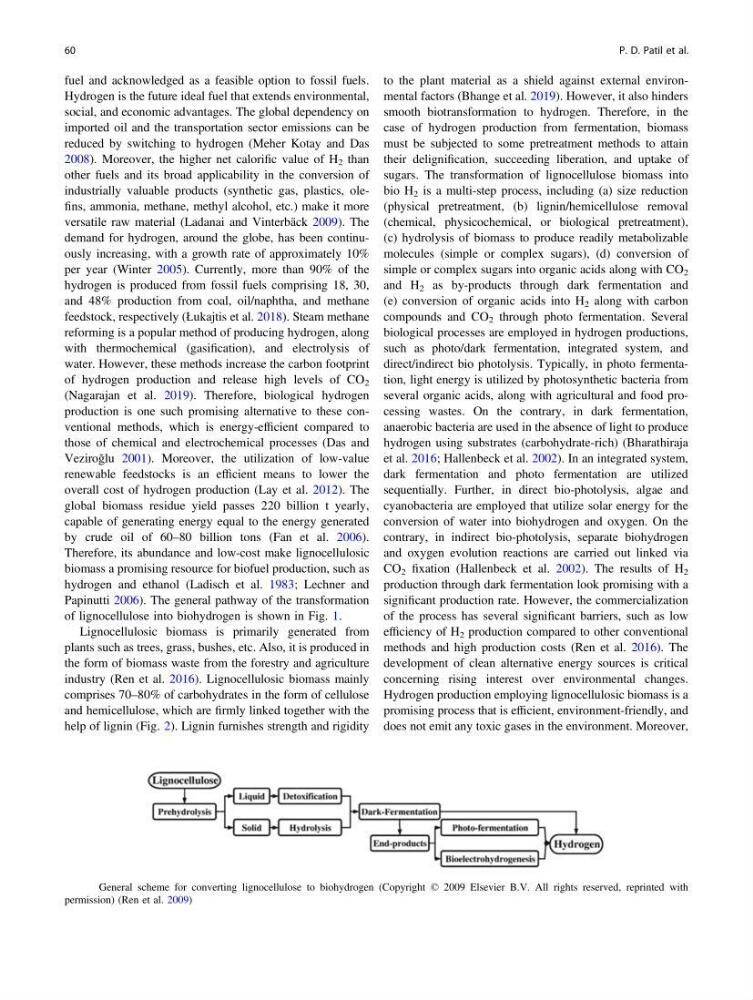
Papinutti 2006). The general pathway of the transformation
of lignocellulose into biohydrogen is shown in Fig. 1.
Lignocellulosic biomass is primarily generated from
plants such as trees, grass, bushes, etc. Also, it is produced in
the form of biomass waste from the forestry and agriculture
industry (Ren et al. 2016). Lignocellulosic biomass mainly
comprises 70–80% of carbohydrates in the form of cellulose
and hemicellulose, which are firmly linked together with the
help of lignin (Fig. 2). Lignin furnishes strength and rigidity
to the plant material as a shield against external environmental factors (Bhange et al. 2019). However, it also hinders
smooth biotransformation to hydrogen. Therefore, in the
case of hydrogen production from fermentation, biomass
must be subjected to some pretreatment methods to attain
their delignification, succeeding liberation, and uptake of
sugars. The transformation of lignocellulose biomass into
bio H 2 is a multi-step process, including (a) size reduction
(physical pretreatment, (b) lignin/hemicellulose removal
(chemical, physicochemical, or biological pretreatment),
(c) hydrolysis of biomass to produce readily metabolizable
molecules (simple or complex sugars), (d) conversion of
simple or complex sugars into organic acids along with CO 2
and H 2 as by-products through dark fermentation and
(e) conversion of organic acids into H 2 along with carbon
compounds and CO 2 through photo fermentation. Several
biological processes are employed in hydrogen productions,
such as photo/dark fermentation, integrated system, and
direct/indirect bio photolysis. Typically, in photo fermentation, light energy is utilized by photosynthetic bacteria from
several organic acids, along with agricultural and food processing wastes. On the contrary, in dark fermentation,
anaerobic bacteria are used in the absence of light to produce
hydrogen using substrates (carbohydrate-rich) (Bharathiraja
et al. 2016; Hallenbeck et al. 2002). In an integrated system,
dark fermentation and photo fermentation are utilized
sequentially. Further, in direct bio-photolysis, algae and
cyanobacteria are employed that utilize solar energy for the
conversion of water into biohydrogen and oxygen. On the
contrary, in indirect bio-photolysis, separate biohydrogen
and oxygen evolution reactions are carried out linked via
CO 2 fixation (Hallenbeck et al. 2002). The results of H 2
production through dark fermentation look promising with a
significant production rate. However, the commercialization
of the process has several significant barriers, such as low
efficiency of H 2 production compared to other conventional
methods and high production costs (Ren et al. 2016). The
development of clean alternative energy sources is critical
concerning rising interest over environmental changes.
Hydrogen production employing lignocellulosic biomass is a
promising process that is efficient, environment-friendly, and
does not emit any toxic gases in the environment. Moreover,
Fig. 1 General scheme for converting lignocellulose to biohydrogen (Copyright © 2009 Elsevier B.V. All rights reserved, reprinted with
permission) (Ren et al. 2009)
60
P. D. Patil et al.
Hydrogen is the future ideal fuel that extends environmental,
social, and economic advantages. The global dependency on
imported oil and the transportation sector emissions can be
reduced by switching to hydrogen (Meher Kotay and Das
2008). Moreover, the higher net calorific value of H 2 than
other fuels and its broad applicability in the conversion of
industrially valuable products (synthetic gas, plastics, olefins, ammonia, methane, methyl alcohol, etc.) make it more
versatile raw material (Ladanai and Vinterbäck 2009). The
demand for hydrogen, around the globe, has been continuously increasing, with a growth rate of approximately 10%
per year (Winter 2005). Currently, more than 90% of the
hydrogen is produced from fossil fuels comprising 18, 30,
and 48% production from coal, oil/naphtha, and methane
feedstock, respectively (Łukajtis et al. 2018). Steam methane
reforming is a popular method of producing hydrogen, along
with thermochemical (gasification), and electrolysis of
water. However, these methods increase the carbon footprint
of hydrogen production and release high levels of CO 2
(Nagarajan et al. 2019). Therefore, biological hydrogen
production is one such promising alternative to these conventional methods, which is energy-efficient compared to
those of chemical and electrochemical processes (Das and
Veziroǧlu 2001). Moreover, the utilization of low-value
renewable feedstocks is an efficient means to lower the
overall cost of hydrogen production (Lay et al. 2012). The
global biomass residue yield passes 220 billion t yearly,
capable of generating energy equal to the energy generated
by crude oil of 60–80 billion tons (Fan et al. 2006).
Therefore, its abundance and low-cost make lignocellulosic
biomass a promising resource for biofuel production, such as
hydrogen and ethanol (Ladisch et al. 1983; Lechner and
Papinutti 2006). The general pathway of the transformation
of lignocellulose into biohydrogen is shown in Fig. 1.
Lignocellulosic biomass is primarily generated from
plants such as trees, grass, bushes, etc. Also, it is produced in
the form of biomass waste from the forestry and agriculture
industry (Ren et al. 2016). Lignocellulosic biomass mainly
comprises 70–80% of carbohydrates in the form of cellulose
and hemicellulose, which are firmly linked together with the
help of lignin (Fig. 2). Lignin furnishes strength and rigidity
to the plant material as a shield against external environmental factors (Bhange et al. 2019). However, it also hinders
smooth biotransformation to hydrogen. Therefore, in the
case of hydrogen production from fermentation, biomass
must be subjected to some pretreatment methods to attain
their delignification, succeeding liberation, and uptake of
sugars. The transformation of lignocellulose biomass into
bio H 2 is a multi-step process, including (a) size reduction
(physical pretreatment, (b) lignin/hemicellulose removal
(chemical, physicochemical, or biological pretreatment),
(c) hydrolysis of biomass to produce readily metabolizable
molecules (simple or complex sugars), (d) conversion of
simple or complex sugars into organic acids along with CO 2
and H 2 as by-products through dark fermentation and
(e) conversion of organic acids into H 2 along with carbon
compounds and CO 2 through photo fermentation. Several
biological processes are employed in hydrogen productions,
such as photo/dark fermentation, integrated system, and
direct/indirect bio photolysis. Typically, in photo fermentation, light energy is utilized by photosynthetic bacteria from
several organic acids, along with agricultural and food processing wastes. On the contrary, in dark fermentation,
anaerobic bacteria are used in the absence of light to produce
hydrogen using substrates (carbohydrate-rich) (Bharathiraja
et al. 2016; Hallenbeck et al. 2002). In an integrated system,
dark fermentation and photo fermentation are utilized
sequentially. Further, in direct bio-photolysis, algae and
cyanobacteria are employed that utilize solar energy for the
conversion of water into biohydrogen and oxygen. On the
contrary, in indirect bio-photolysis, separate biohydrogen
and oxygen evolution reactions are carried out linked via
CO 2 fixation (Hallenbeck et al. 2002). The results of H 2
production through dark fermentation look promising with a
significant production rate. However, the commercialization
of the process has several significant barriers, such as low
efficiency of H 2 production compared to other conventional
methods and high production costs (Ren et al. 2016). The
development of clean alternative energy sources is critical
concerning rising interest over environmental changes.
Hydrogen production employing lignocellulosic biomass is a
promising process that is efficient, environment-friendly, and
does not emit any toxic gases in the environment. Moreover,
Fig. 1 General scheme for converting lignocellulose to biohydrogen (Copyright © 2009 Elsevier B.V. All rights reserved, reprinted with
permission) (Ren et al. 2009)
60
P. D. Patil et al.