

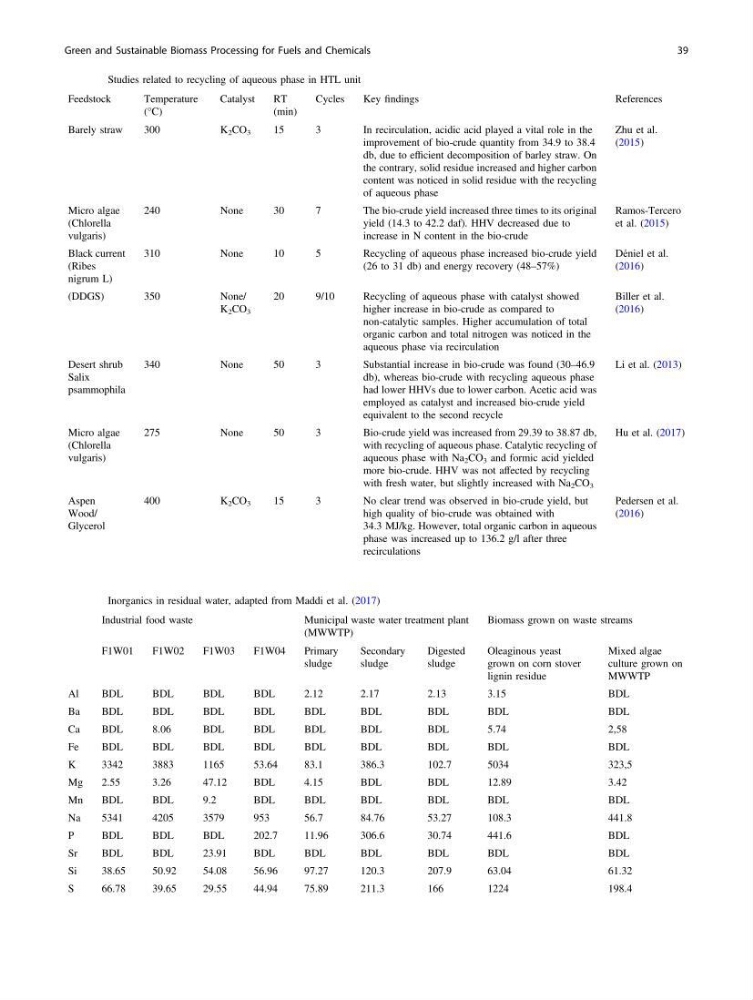
Table 2 Studies related to recycling of aqueous phase in HTL unit
Feedstock
Temperature
(°C)
Catalyst
RT
(min)
Cycles
Key findings
References
Barely straw
300
K 2 CO 3
15
3
In recirculation, acidic acid played a vital role in the
improvement of bio-crude quantity from 34.9 to 38.4
db, due to efficient decomposition of barley straw. On
the contrary, solid residue increased and higher carbon
content was noticed in solid residue with the recycling
of aqueous phase
Zhu et al.
(2015)
Micro algae
(Chlorella
vulgaris)
240
None
30
7
The bio-crude yield increased three times to its original
yield (14.3 to 42.2 daf). HHV decreased due to
increase in N content in the bio-crude
Ramos-Tercero
et al. (2015)
Black current
(Ribes
nigrum L)
310
None
10
5
Recycling of aqueous phase increased bio-crude yield
(26 to 31 db) and energy recovery (48–57%)
Déniel et al.
(2016)
(DDGS)
350
None/
K 2 CO 3
20
9/10
Recycling of aqueous phase with catalyst showed
higher increase in bio-crude as compared to
non-catalytic samples. Higher accumulation of total
organic carbon and total nitrogen was noticed in the
aqueous phase via recirculation
Biller et al.
(2016)
Desert shrub
Salix
psammophila
340
None
50
3
Substantial increase in bio-crude was found (30–46.9
db), whereas bio-crude with recycling aqueous phase
had lower HHVs due to lower carbon. Acetic acid was
employed as catalyst and increased bio-crude yield
equivalent to the second recycle
Li et al. (2013)
Micro algae
(Chlorella
vulgaris)
275
None
50
3
Bio-crude yield was increased from 29.39 to 38.87 db,
with recycling of aqueous phase. Catalytic recycling of
aqueous phase with Na 2 CO 3 and formic acid yielded
more bio-crude. HHV was not affected by recycling
with fresh water, but slightly increased with Na 2 CO 3
Hu et al. (2017)
Aspen
Wood/
Glycerol
400
K 2 CO 3
15
3
No clear trend was observed in bio-crude yield, but
high quality of bio-crude was obtained with
34.3 MJ/kg. However, total organic carbon in aqueous
phase was increased up to 136.2 g/l after three
recirculations
Pedersen et al.
(2016)
Table 3 Inorganics in residual water, adapted from Maddi et al. (2017)
Industrial food waste
Municipal waste water treatment plant
(MWWTP)
Biomass grown on waste streams
F1W01
F1W02
F1W03
F1W04
Primary
sludge
Secondary
sludge
Digested
sludge
Oleaginous yeast
grown on corn stover
lignin residue
Mixed algae
culture grown on
MWWTP
Al
BDL
BDL
BDL
BDL
2.12
2.17
2.13
3.15
BDL
Ba
BDL
BDL
BDL
BDL
BDL
BDL
BDL
BDL
BDL
Ca
BDL
8.06
BDL
BDL
BDL
BDL
BDL
5.74
2,58
Fe
BDL
BDL
BDL
BDL
BDL
BDL
BDL
BDL
BDL
K
3342
3883
1165
53.64
83.1
386.3
102.7
5034
323,5
Mg
2.55
3.26
47.12
BDL
4.15
BDL
BDL
12.89
3.42
Mn
BDL
BDL
9.2
BDL
BDL
BDL
BDL
BDL
BDL
Na
5341
4205
3579
953
56.7
84.76
53.27
108.3
441.8
P
BDL
BDL
BDL
202.7
11.96
306.6
30.74
441.6
BDL
Sr
BDL
BDL
23.91
BDL
BDL
BDL
BDL
BDL
BDL
Si
38.65
50.92
54.08
56.96
97.27
120.3
207.9
63.04
61.32
S
66.78
39.65
29.55
44.94
75.89
211.3
166
1224
198.4
Green and Sustainable Biomass Processing for Fuels and Chemicals
39
Feedstock
Temperature
(°C)
Catalyst
RT
(min)
Cycles
Key findings
References
Barely straw
300
K 2 CO 3
15
3
In recirculation, acidic acid played a vital role in the
improvement of bio-crude quantity from 34.9 to 38.4
db, due to efficient decomposition of barley straw. On
the contrary, solid residue increased and higher carbon
content was noticed in solid residue with the recycling
of aqueous phase
Zhu et al.
(2015)
Micro algae
(Chlorella
vulgaris)
240
None
30
7
The bio-crude yield increased three times to its original
yield (14.3 to 42.2 daf). HHV decreased due to
increase in N content in the bio-crude
Ramos-Tercero
et al. (2015)
Black current
(Ribes
nigrum L)
310
None
10
5
Recycling of aqueous phase increased bio-crude yield
(26 to 31 db) and energy recovery (48–57%)
Déniel et al.
(2016)
(DDGS)
350
None/
K 2 CO 3
20
9/10
Recycling of aqueous phase with catalyst showed
higher increase in bio-crude as compared to
non-catalytic samples. Higher accumulation of total
organic carbon and total nitrogen was noticed in the
aqueous phase via recirculation
Biller et al.
(2016)
Desert shrub
Salix
psammophila
340
None
50
3
Substantial increase in bio-crude was found (30–46.9
db), whereas bio-crude with recycling aqueous phase
had lower HHVs due to lower carbon. Acetic acid was
employed as catalyst and increased bio-crude yield
equivalent to the second recycle
Li et al. (2013)
Micro algae
(Chlorella
vulgaris)
275
None
50
3
Bio-crude yield was increased from 29.39 to 38.87 db,
with recycling of aqueous phase. Catalytic recycling of
aqueous phase with Na 2 CO 3 and formic acid yielded
more bio-crude. HHV was not affected by recycling
with fresh water, but slightly increased with Na 2 CO 3
Hu et al. (2017)
Aspen
Wood/
Glycerol
400
K 2 CO 3
15
3
No clear trend was observed in bio-crude yield, but
high quality of bio-crude was obtained with
34.3 MJ/kg. However, total organic carbon in aqueous
phase was increased up to 136.2 g/l after three
recirculations
Pedersen et al.
(2016)
Table 3 Inorganics in residual water, adapted from Maddi et al. (2017)
Industrial food waste
Municipal waste water treatment plant
(MWWTP)
Biomass grown on waste streams
F1W01
F1W02
F1W03
F1W04
Primary
sludge
Secondary
sludge
Digested
sludge
Oleaginous yeast
grown on corn stover
lignin residue
Mixed algae
culture grown on
MWWTP
Al
BDL
BDL
BDL
BDL
2.12
2.17
2.13
3.15
BDL
Ba
BDL
BDL
BDL
BDL
BDL
BDL
BDL
BDL
BDL
Ca
BDL
8.06
BDL
BDL
BDL
BDL
BDL
5.74
2,58
Fe
BDL
BDL
BDL
BDL
BDL
BDL
BDL
BDL
BDL
K
3342
3883
1165
53.64
83.1
386.3
102.7
5034
323,5
Mg
2.55
3.26
47.12
BDL
4.15
BDL
BDL
12.89
3.42
Mn
BDL
BDL
9.2
BDL
BDL
BDL
BDL
BDL
BDL
Na
5341
4205
3579
953
56.7
84.76
53.27
108.3
441.8
P
BDL
BDL
BDL
202.7
11.96
306.6
30.74
441.6
BDL
Sr
BDL
BDL
23.91
BDL
BDL
BDL
BDL
BDL
BDL
Si
38.65
50.92
54.08
56.96
97.27
120.3
207.9
63.04
61.32
S
66.78
39.65
29.55
44.94
75.89
211.3
166
1224
198.4
Green and Sustainable Biomass Processing for Fuels and Chemicals
39