

conversion processes (Maity 2015; Alonso et al. 2010;
Octave and Thomas 2009).
For operation and commercialization of biorefinery, there
are lot of obstacles and gaps. By using energy crops, the
current technical barriers are related to the production cost,
complications during harvesting and sorting the material
produced, particularly for annual or other crops, harvested
within a narrow time. While calculating the overall costs of
biomass, transportation costs are of principal importance;
hence local synthesis of biomass feedstock is most favorable
and encouraging. Distribution of nutrients is another technical problem allied with energy crops. The major
non-technical obstacles are restrictions on use of land as well
as ecological effects of large areas of monoculture. The main
non-technical barriers for the industrialization of biofuels in
transport sector relate to costs of production, taxation policies, legislation and available markets as well as distribution
and blending (Demirbas 2009).
4 HTL Aqueous Phase as a Precursor
4.1 Aqueous Phase Recirculation in HTL
HTL at laboratory level has been broadly studied for
assessing the operational parameters. However, the
commercial-scale implementation is being delayed due to
unsolved challenges, which include the utilization and
management of the aqueous phase stream produced along
with the bio-crude (Déniel et al. 2016). Generally, the
majority of feedstocks contain 50% water content, which can
be used as reaction solvent in HTL processing. Thereby an
excessive amount of water is produced, which requires water
handling management (Biller et al. 2016).
Depending upon the composition of biomass, the aqueous
effluent often carries water-soluble organics and nutrients.
For the overall process economics of HTL, the management
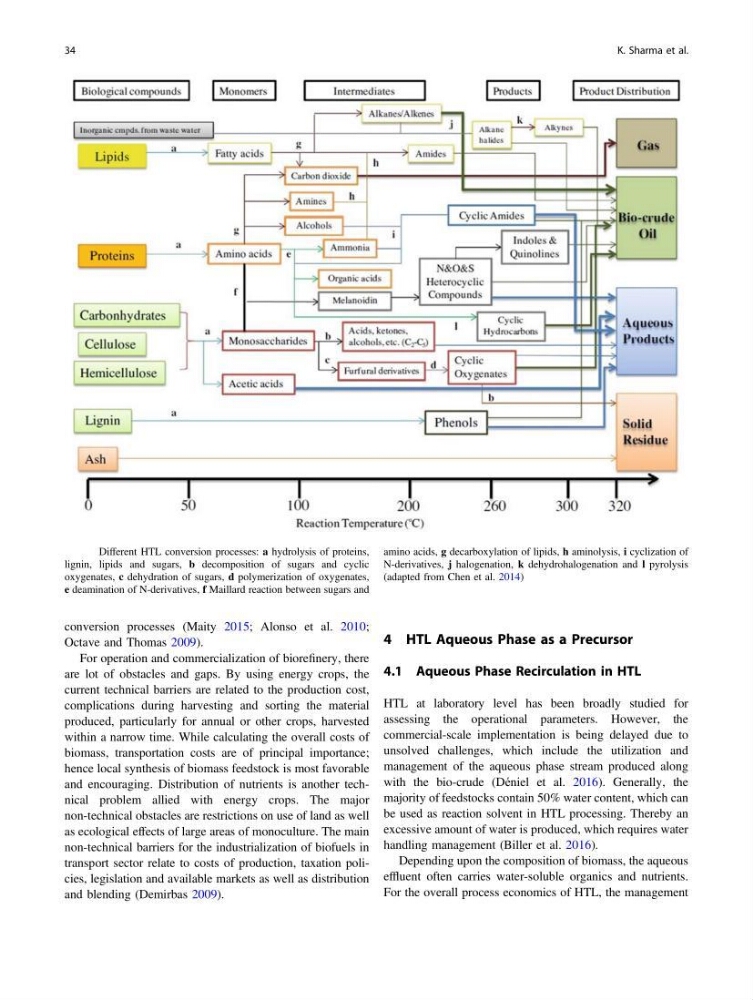
Fig. 7 Different HTL conversion processes: a hydrolysis of proteins,
lignin, lipids and sugars, b decomposition of sugars and cyclic
oxygenates, c dehydration of sugars, d polymerization of oxygenates,
e deamination of N-derivatives, f Maillard reaction between sugars and
amino acids, g decarboxylation of lipids, h aminolysis, i cyclization of
N-derivatives, j halogenation, k dehydrohalogenation and l pyrolysis
(adapted from Chen et al. 2014)
34
K. Sharma et al.
Octave and Thomas 2009).
For operation and commercialization of biorefinery, there
are lot of obstacles and gaps. By using energy crops, the
current technical barriers are related to the production cost,
complications during harvesting and sorting the material
produced, particularly for annual or other crops, harvested
within a narrow time. While calculating the overall costs of
biomass, transportation costs are of principal importance;
hence local synthesis of biomass feedstock is most favorable
and encouraging. Distribution of nutrients is another technical problem allied with energy crops. The major
non-technical obstacles are restrictions on use of land as well
as ecological effects of large areas of monoculture. The main
non-technical barriers for the industrialization of biofuels in
transport sector relate to costs of production, taxation policies, legislation and available markets as well as distribution
and blending (Demirbas 2009).
4 HTL Aqueous Phase as a Precursor
4.1 Aqueous Phase Recirculation in HTL
HTL at laboratory level has been broadly studied for
assessing the operational parameters. However, the
commercial-scale implementation is being delayed due to
unsolved challenges, which include the utilization and
management of the aqueous phase stream produced along
with the bio-crude (Déniel et al. 2016). Generally, the
majority of feedstocks contain 50% water content, which can
be used as reaction solvent in HTL processing. Thereby an
excessive amount of water is produced, which requires water
handling management (Biller et al. 2016).
Depending upon the composition of biomass, the aqueous
effluent often carries water-soluble organics and nutrients.
For the overall process economics of HTL, the management
Fig. 7 Different HTL conversion processes: a hydrolysis of proteins,
lignin, lipids and sugars, b decomposition of sugars and cyclic
oxygenates, c dehydration of sugars, d polymerization of oxygenates,
e deamination of N-derivatives, f Maillard reaction between sugars and
amino acids, g decarboxylation of lipids, h aminolysis, i cyclization of
N-derivatives, j halogenation, k dehydrohalogenation and l pyrolysis
(adapted from Chen et al. 2014)
34
K. Sharma et al.