

3.3 Biorefinery and Value-Added Chemicals
Comparatively low energy and carbon recovery as well as
geographically discrete availability of biomass have been
renowned as main hurdles for the sustainable production of
biofuels. However, chemical synthesis requires comparatively lower amount of biomass to fulfil the demand. The
concept of biorefinery will continuously gain importance
due to evolving research outcomes in the synthesis of
bio-based intermediates and products (FitzPatrick et al.
2010; Lipinsky 1981).
Biorefining of bio-crudes and bio-oils is equally important
to petroleum refinery that generates multiple fuels and
products from fossil crudes. The overall goal is to produce a
variety of products from different biomass feeds in biorefinery by combining various technologies. An ideal biorefinery
should combine thermochemical conversion techniques to
obtain a variety of biofuels, power and commodity materials
(Fernando et al. 2006; Kaparaju et al. 2009; Laser et al. 2009;
Lynd et al. 2009). This allows the system development that
ideally try to reduce all kinds of wastes during biomass
feedstock processing. In future, the biorefineries would be
capable of mimicking the energy efficiency of bio-oils
refining through the development of sustainable bio-products
and heat integration. Within the biorefinery, the amount of
heat released during the various processes could be used to
encounter the heat necessities for hydrothermal processes.
The classification of biorefinery depends mostly on
existing biomass transformation technologies to obtain a
broad range of bio-products through various stages. Mostly
hydrothermal conversion techniques are established because
of particular chemical properties of the biomass feedstock.
Thus, individually integrated biorefineries are estimated to
be designed based on composition of biomass feedstocks.
Therefore, biorefinery is divided into three main categories
depending on contents and chemical composition of biomass
feeds: lignocellulosic biorefinery, triglyceride biorefinery
and sugar/starch biorefinery, as shown in Figs. 8, 9 and 10,
respectively. The current biorefinery classification covers the
complete range of feedstocks and depends on identified
conversion techniques. Nevertheless, these techniques and
valuable compounds are estimated to be extended in coming
future in terms of scientific developments and finding of new
feedstocks. Individually integrated biorefineries will be
established based on contents of different feedstock with
aims to obtain various products by implementing precise
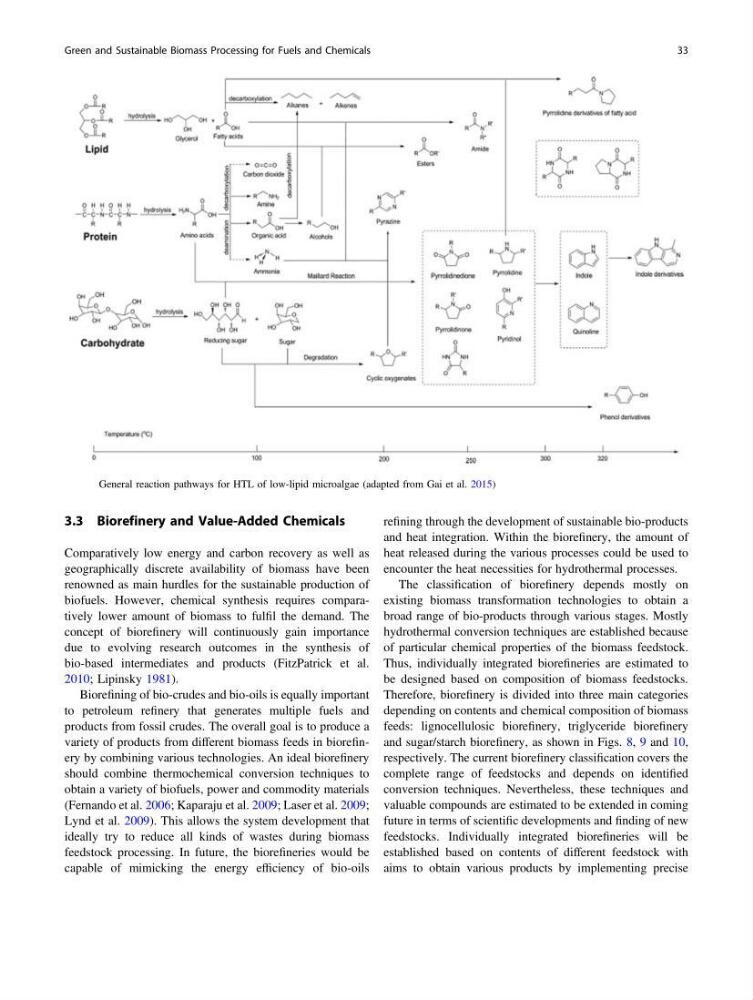
Fig. 6 General reaction pathways for HTL of low-lipid microalgae (adapted from Gai et al. 2015)
Green and Sustainable Biomass Processing for Fuels and Chemicals
33
Comparatively low energy and carbon recovery as well as
geographically discrete availability of biomass have been
renowned as main hurdles for the sustainable production of
biofuels. However, chemical synthesis requires comparatively lower amount of biomass to fulfil the demand. The
concept of biorefinery will continuously gain importance
due to evolving research outcomes in the synthesis of
bio-based intermediates and products (FitzPatrick et al.
2010; Lipinsky 1981).
Biorefining of bio-crudes and bio-oils is equally important
to petroleum refinery that generates multiple fuels and
products from fossil crudes. The overall goal is to produce a
variety of products from different biomass feeds in biorefinery by combining various technologies. An ideal biorefinery
should combine thermochemical conversion techniques to
obtain a variety of biofuels, power and commodity materials
(Fernando et al. 2006; Kaparaju et al. 2009; Laser et al. 2009;
Lynd et al. 2009). This allows the system development that
ideally try to reduce all kinds of wastes during biomass
feedstock processing. In future, the biorefineries would be
capable of mimicking the energy efficiency of bio-oils
refining through the development of sustainable bio-products
and heat integration. Within the biorefinery, the amount of
heat released during the various processes could be used to
encounter the heat necessities for hydrothermal processes.
The classification of biorefinery depends mostly on
existing biomass transformation technologies to obtain a
broad range of bio-products through various stages. Mostly
hydrothermal conversion techniques are established because
of particular chemical properties of the biomass feedstock.
Thus, individually integrated biorefineries are estimated to
be designed based on composition of biomass feedstocks.
Therefore, biorefinery is divided into three main categories
depending on contents and chemical composition of biomass
feeds: lignocellulosic biorefinery, triglyceride biorefinery
and sugar/starch biorefinery, as shown in Figs. 8, 9 and 10,
respectively. The current biorefinery classification covers the
complete range of feedstocks and depends on identified
conversion techniques. Nevertheless, these techniques and
valuable compounds are estimated to be extended in coming
future in terms of scientific developments and finding of new
feedstocks. Individually integrated biorefineries will be
established based on contents of different feedstock with
aims to obtain various products by implementing precise
Fig. 6 General reaction pathways for HTL of low-lipid microalgae (adapted from Gai et al. 2015)
Green and Sustainable Biomass Processing for Fuels and Chemicals
33