

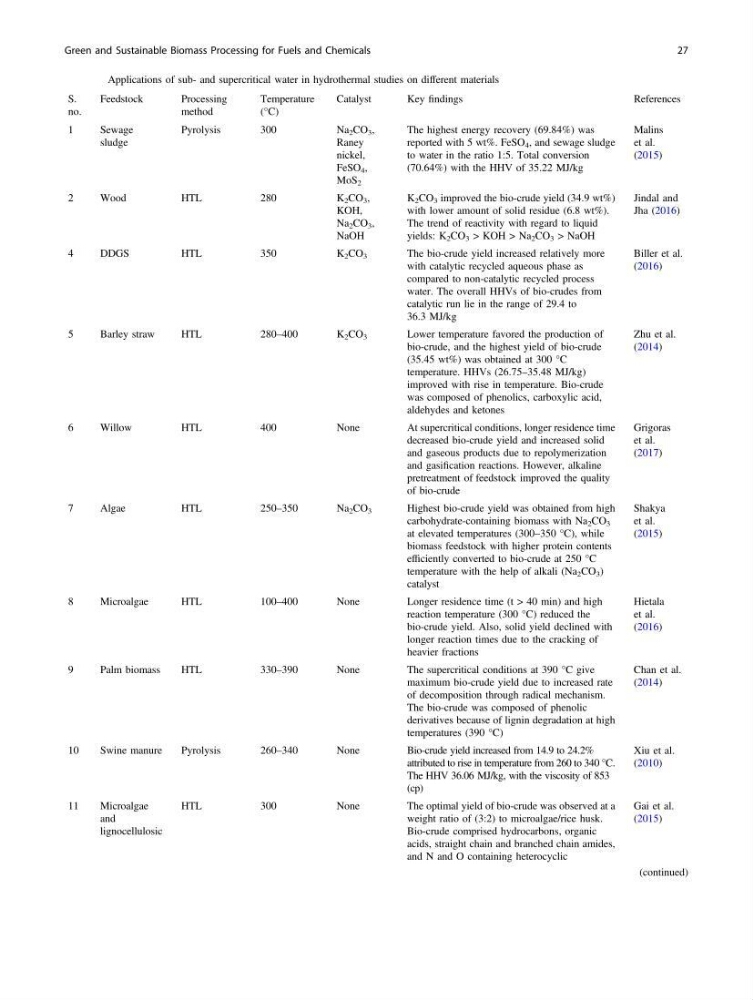
Table 1 Applications of sub- and supercritical water in hydrothermal studies on different materials
S.
no.
Feedstock
Processing
method
Temperature
(°C)
Catalyst
Key findings
References
1
Sewage
sludge
Pyrolysis
300
Na 2 CO 3 ,
Raney
nickel,
FeSO 4 ,
MoS 2
The highest energy recovery (69.84%) was
reported with 5 wt%. FeSO 4 , and sewage sludge
to water in the ratio 1:5. Total conversion
(70.64%) with the HHV of 35.22 MJ/kg
Malins
et al.
(2015)
2
Wood
HTL
280
K 2 CO 3 ,
KOH,
Na 2 CO 3 ,
NaOH
K 2 CO 3 improved the bio-crude yield (34.9 wt%)
with lower amount of solid residue (6.8 wt%).
The trend of reactivity with regard to liquid
yields: K 2 CO 3 > KOH > Na 2 CO 3 > NaOH
Jindal and
Jha (2016)
4
DDGS
HTL
350
K 2 CO 3
The bio-crude yield increased relatively more
with catalytic recycled aqueous phase as
compared to non-catalytic recycled process
water. The overall HHVs of bio-crudes from
catalytic run lie in the range of 29.4 to
36.3 MJ/kg
Biller et al.
(2016)
5
Barley straw
HTL
280–400
K 2 CO 3
Lower temperature favored the production of
bio-crude, and the highest yield of bio-crude
(35.45 wt%) was obtained at 300 °C
temperature. HHVs (26.75–35.48 MJ/kg)
improved with rise in temperature. Bio-crude
was composed of phenolics, carboxylic acid,
aldehydes and ketones
Zhu et al.
(2014)
6
Willow
HTL
400
None
At supercritical conditions, longer residence time
decreased bio-crude yield and increased solid
and gaseous products due to repolymerization
and gasification reactions. However, alkaline
pretreatment of feedstock improved the quality
of bio-crude
Grigoras
et al.
(2017)
7
Algae
HTL
250–350
Na 2 CO 3
Highest bio-crude yield was obtained from high
carbohydrate-containing biomass with Na 2 CO 3
at elevated temperatures (300–350 °C), while
biomass feedstock with higher protein contents
efficiently converted to bio-crude at 250 °C
temperature with the help of alkali (Na 2 CO 3 )
catalyst
Shakya
et al.
(2015)
8
Microalgae
HTL
100–400
None
Longer residence time (t > 40 min) and high
reaction temperature (300 °C) reduced the
bio-crude yield. Also, solid yield declined with
longer reaction times due to the cracking of
heavier fractions
Hietala
et al.
(2016)
9
Palm biomass
HTL
330–390
None
The supercritical conditions at 390 °C give
maximum bio-crude yield due to increased rate
of decomposition through radical mechanism.
The bio-crude was composed of phenolic
derivatives because of lignin degradation at high
temperatures (390 °C)
Chan et al.
(2014)
10
Swine manure
Pyrolysis
260–340
None
Bio-crude yield increased from 14.9 to 24.2%
attributed to rise in temperature from 260 to 340 °C.
The HHV 36.06 MJ/kg, with the viscosity of 853
(cp)
Xiu et al.
(2010)
11
Microalgae
and
lignocellulosic
HTL
300
None
The optimal yield of bio-crude was observed at a
weight ratio of (3:2) to microalgae/rice husk.
Bio-crude comprised hydrocarbons, organic
acids, straight chain and branched chain amides,
and N and O containing heterocyclic
Gai et al.
(2015)
(continued)
Green and Sustainable Biomass Processing for Fuels and Chemicals
27
S.
no.
Feedstock
Processing
method
Temperature
(°C)
Catalyst
Key findings
References
1
Sewage
sludge
Pyrolysis
300
Na 2 CO 3 ,
Raney
nickel,
FeSO 4 ,
MoS 2
The highest energy recovery (69.84%) was
reported with 5 wt%. FeSO 4 , and sewage sludge
to water in the ratio 1:5. Total conversion
(70.64%) with the HHV of 35.22 MJ/kg
Malins
et al.
(2015)
2
Wood
HTL
280
K 2 CO 3 ,
KOH,
Na 2 CO 3 ,
NaOH
K 2 CO 3 improved the bio-crude yield (34.9 wt%)
with lower amount of solid residue (6.8 wt%).
The trend of reactivity with regard to liquid
yields: K 2 CO 3 > KOH > Na 2 CO 3 > NaOH
Jindal and
Jha (2016)
4
DDGS
HTL
350
K 2 CO 3
The bio-crude yield increased relatively more
with catalytic recycled aqueous phase as
compared to non-catalytic recycled process
water. The overall HHVs of bio-crudes from
catalytic run lie in the range of 29.4 to
36.3 MJ/kg
Biller et al.
(2016)
5
Barley straw
HTL
280–400
K 2 CO 3
Lower temperature favored the production of
bio-crude, and the highest yield of bio-crude
(35.45 wt%) was obtained at 300 °C
temperature. HHVs (26.75–35.48 MJ/kg)
improved with rise in temperature. Bio-crude
was composed of phenolics, carboxylic acid,
aldehydes and ketones
Zhu et al.
(2014)
6
Willow
HTL
400
None
At supercritical conditions, longer residence time
decreased bio-crude yield and increased solid
and gaseous products due to repolymerization
and gasification reactions. However, alkaline
pretreatment of feedstock improved the quality
of bio-crude
Grigoras
et al.
(2017)
7
Algae
HTL
250–350
Na 2 CO 3
Highest bio-crude yield was obtained from high
carbohydrate-containing biomass with Na 2 CO 3
at elevated temperatures (300–350 °C), while
biomass feedstock with higher protein contents
efficiently converted to bio-crude at 250 °C
temperature with the help of alkali (Na 2 CO 3 )
catalyst
Shakya
et al.
(2015)
8
Microalgae
HTL
100–400
None
Longer residence time (t > 40 min) and high
reaction temperature (300 °C) reduced the
bio-crude yield. Also, solid yield declined with
longer reaction times due to the cracking of
heavier fractions
Hietala
et al.
(2016)
9
Palm biomass
HTL
330–390
None
The supercritical conditions at 390 °C give
maximum bio-crude yield due to increased rate
of decomposition through radical mechanism.
The bio-crude was composed of phenolic
derivatives because of lignin degradation at high
temperatures (390 °C)
Chan et al.
(2014)
10
Swine manure
Pyrolysis
260–340
None
Bio-crude yield increased from 14.9 to 24.2%
attributed to rise in temperature from 260 to 340 °C.
The HHV 36.06 MJ/kg, with the viscosity of 853
(cp)
Xiu et al.
(2010)
11
Microalgae
and
lignocellulosic
HTL
300
None
The optimal yield of bio-crude was observed at a
weight ratio of (3:2) to microalgae/rice husk.
Bio-crude comprised hydrocarbons, organic
acids, straight chain and branched chain amides,
and N and O containing heterocyclic
Gai et al.
(2015)
(continued)
Green and Sustainable Biomass Processing for Fuels and Chemicals
27