

“design” capacity. The idea of TSILs can eradicate densely
the presence of species that are unnecessary to a particular
operation. TSILs are simply ILs with a displaced halide by a
parent species (e.g., imidazole) and in the process, replacing
the organic halide with a desired functional group.
2 Applications of Ionic Liquids
2.1 Sample Pretreatment
ILs form a vital part of many processes involving pretreatment and sample preparation. In the analyses of complex
matrices of biological and environmental samples, ionic
liquids are very important in the sample pretreatment stages.
Sample pretreatment is a separation process that relies on the
isolation of interfering species in a sample through the
enrichment of targets. In analyzing complex samples, it is
important to improve its sensitivity, selectivity, repeatability,
and precision. Extraction is enhanced by the numerous
advantages ionic liquids possess, which are high thermal
stability, good solubility, hydrophobic or hydrophilic properties, negligible vapor pressure, and environmental
sustainability. Through designing the structure of the anion
and the cation species, the exact conditions for the sample
pretreatment can be effectively considered. This in turn gives
better sensitivity during extraction (Fig. 3).
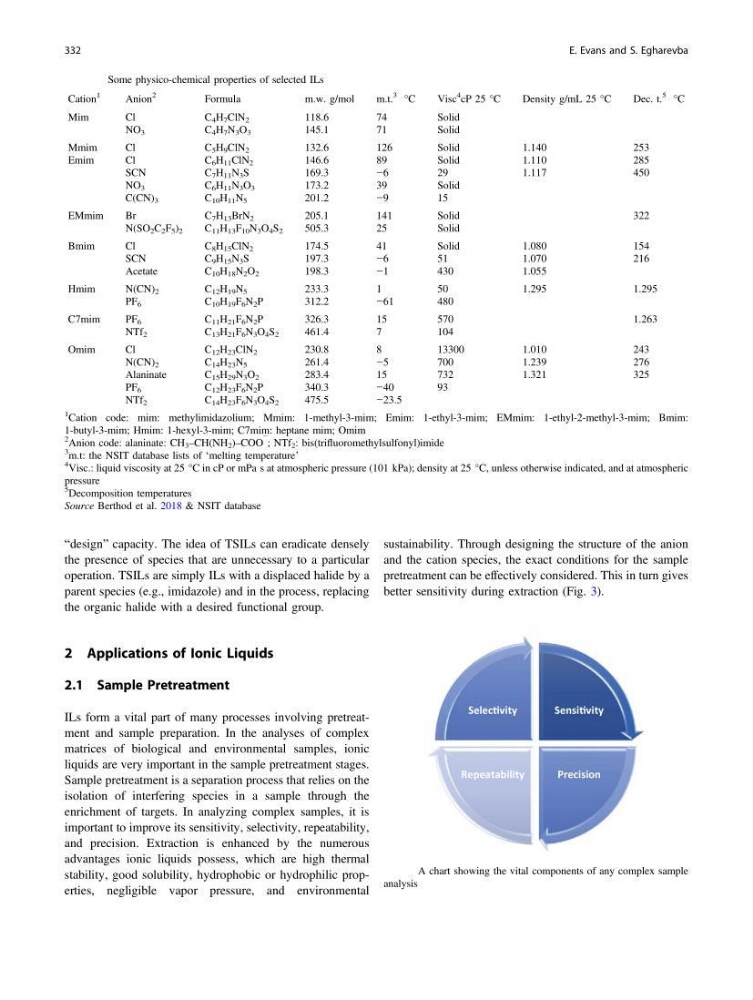
Table 1 Some physico-chemical properties of selected ILs
Cation
1
Anion
2
Formula
m.w. g/mol
m.t.
3 °C
Visc
4
cP 25 °C
Density g/mL 25 °C
Dec. t.
5 °C
Mim
Cl
NO 3
C 4 H 7 ClN 2
C 4 H 7 N 3 O 3
118.6
145.1
74
71
Solid
Solid
Mmim
Emim
Cl
Cl
SCN
NO 3
C(CN) 3
C 5 H 9 ClN 2
C 6 H 11 ClN 2
C 7 H 11 N 3 S
C 6 H 11 N 3 O 3
C 10 H 11 N 5
132.6
146.6
169.3
173.2
201.2
126
89
−6
39
−9
Solid
Solid
29
Solid
15
1.140
1.110
1.117
253
285
450
EMmim
Br
N(SO 2 C 2 F 5 ) 2
C 7 H 13 BrN 2
C 11 H 13 F 10 N 3 O 4 S 2
205.1
505.3
141
25
Solid
Solid
322
Bmim
Cl
SCN
Acetate
C 8 H 15 ClN 2
C 9 H 15 N 3 S
C 10 H 18 N 2 O 2
174.5
197.3
198.3
41
−6
−1
Solid
51
430
1.080
1.070
1.055
154
216
Hmim
N(CN) 2
PF 6
C 12 H 19 N 5
C 10 H 19 F 6 N 2 P
233.3
312.2
1
−61
50
480
1.295
1.295
C7mim
PF 6
NTf 2
C 11 H 21 F 6 N 2 P
C 13 H 21 F 6 N 3 O 4 S 2
326.3
461.4
15
7
570
104
1.263
Omim
Cl
N(CN) 2
Alaninate
PF 6
NTf 2
C 12 H 23 ClN 2
C 14 H 23 N 5
C 15 H 29 N 3 O 2
C 12 H 23 F 6 N 2 P
C 14 H 23 F 6 N 3 O 4 S 2
230.8
261.4
283.4
340.3
475.5
8
−5
15
−40
−23.5
13300
700
732
93
1.010
1.239
1.321
243
276
325
1
Cation code: mim: methylimidazolium; Mmim: 1-methyl-3-mim; Emim: 1-ethyl-3-mim; EMmim: 1-ethyl-2-methyl-3-mim; Bmim:
1-butyl-3-mim; Hmim: 1-hexyl-3-mim; C7mim: heptane mim; Omim
2
Anion code: alaninate: CH 3 –CH(NH 2 )–COO
¯
; NTf 2 : bis(trifluoromethylsulfonyl)imide
3
m.t: the NSIT database lists of ‘melting temperature’
4
Visc.: liquid viscosity at 25 °C in cP or mPa s at atmospheric pressure (101 kPa); density at 25 °C, unless otherwise indicated, and at atmospheric
pressure
5
Decomposition temperatures
Source Berthod et al. 2018 & NSIT database
Sensiivity
Precision
Repeatability
Seleccvity
Fig. 3 A chart showing the vital components of any complex sample
analysis
332
E. Evans and S. Egharevba
the presence of species that are unnecessary to a particular
operation. TSILs are simply ILs with a displaced halide by a
parent species (e.g., imidazole) and in the process, replacing
the organic halide with a desired functional group.
2 Applications of Ionic Liquids
2.1 Sample Pretreatment
ILs form a vital part of many processes involving pretreatment and sample preparation. In the analyses of complex
matrices of biological and environmental samples, ionic
liquids are very important in the sample pretreatment stages.
Sample pretreatment is a separation process that relies on the
isolation of interfering species in a sample through the
enrichment of targets. In analyzing complex samples, it is
important to improve its sensitivity, selectivity, repeatability,
and precision. Extraction is enhanced by the numerous
advantages ionic liquids possess, which are high thermal
stability, good solubility, hydrophobic or hydrophilic properties, negligible vapor pressure, and environmental
sustainability. Through designing the structure of the anion
and the cation species, the exact conditions for the sample
pretreatment can be effectively considered. This in turn gives
better sensitivity during extraction (Fig. 3).
Table 1 Some physico-chemical properties of selected ILs
Cation
1
Anion
2
Formula
m.w. g/mol
m.t.
3 °C
Visc
4
cP 25 °C
Density g/mL 25 °C
Dec. t.
5 °C
Mim
Cl
NO 3
C 4 H 7 ClN 2
C 4 H 7 N 3 O 3
118.6
145.1
74
71
Solid
Solid
Mmim
Emim
Cl
Cl
SCN
NO 3
C(CN) 3
C 5 H 9 ClN 2
C 6 H 11 ClN 2
C 7 H 11 N 3 S
C 6 H 11 N 3 O 3
C 10 H 11 N 5
132.6
146.6
169.3
173.2
201.2
126
89
−6
39
−9
Solid
Solid
29
Solid
15
1.140
1.110
1.117
253
285
450
EMmim
Br
N(SO 2 C 2 F 5 ) 2
C 7 H 13 BrN 2
C 11 H 13 F 10 N 3 O 4 S 2
205.1
505.3
141
25
Solid
Solid
322
Bmim
Cl
SCN
Acetate
C 8 H 15 ClN 2
C 9 H 15 N 3 S
C 10 H 18 N 2 O 2
174.5
197.3
198.3
41
−6
−1
Solid
51
430
1.080
1.070
1.055
154
216
Hmim
N(CN) 2
PF 6
C 12 H 19 N 5
C 10 H 19 F 6 N 2 P
233.3
312.2
1
−61
50
480
1.295
1.295
C7mim
PF 6
NTf 2
C 11 H 21 F 6 N 2 P
C 13 H 21 F 6 N 3 O 4 S 2
326.3
461.4
15
7
570
104
1.263
Omim
Cl
N(CN) 2
Alaninate
PF 6
NTf 2
C 12 H 23 ClN 2
C 14 H 23 N 5
C 15 H 29 N 3 O 2
C 12 H 23 F 6 N 2 P
C 14 H 23 F 6 N 3 O 4 S 2
230.8
261.4
283.4
340.3
475.5
8
−5
15
−40
−23.5
13300
700
732
93
1.010
1.239
1.321
243
276
325
1
Cation code: mim: methylimidazolium; Mmim: 1-methyl-3-mim; Emim: 1-ethyl-3-mim; EMmim: 1-ethyl-2-methyl-3-mim; Bmim:
1-butyl-3-mim; Hmim: 1-hexyl-3-mim; C7mim: heptane mim; Omim
2
Anion code: alaninate: CH 3 –CH(NH 2 )–COO
¯
; NTf 2 : bis(trifluoromethylsulfonyl)imide
3
m.t: the NSIT database lists of ‘melting temperature’
4
Visc.: liquid viscosity at 25 °C in cP or mPa s at atmospheric pressure (101 kPa); density at 25 °C, unless otherwise indicated, and at atmospheric
pressure
5
Decomposition temperatures
Source Berthod et al. 2018 & NSIT database
Sensiivity
Precision
Repeatability
Seleccvity
Fig. 3 A chart showing the vital components of any complex sample
analysis
332
E. Evans and S. Egharevba