

manure or feedstock is transformed into a syngas stream
from the gasification process. Secondly, the synthesis gas is
converted to methanol via the use of catalysts as mentioned
earlier. The synthesis of methanol from manure or any
feedstock is an exothermic process; for that reason, the extra
energy can be used to generate electricity needed in the
process (Noor and Kamarudin 2014; Belete and Ayza 2015).
The storage and transportation of methanol are done in
similar way as it is for gasoline and diesel. They are even
easier compared to other transportation fuels. Methanol
usage eases the reliance on non-renewable energy alternatives while resolving issues concerning manures and other
biomasses used for energy production (Ak and Demirbas
2016). Figure 11 presents a summary of advantages and
limitations related to methanol production from manure.
4.7 Cofiring of Manure with Base Fuel
This is a simultaneous combustion of manure and a base fuel
which can be wood, coal or any other base fuel. It is identified
as a promising option regarding the use of manure in heat and
electricity generation (Tillman 1999). The heat generated
from cofiring may be useful in steam or power plants where
boilers are producing high pressured steam for the generation
of electricity. The boiler takes in energy from the combined
combustion of manure and base fuel to heat water and convert
it into steam. Some technologies using boilers have been
assessed with the cofiring process (EREN/DOE 2000).
Stoker-grate firing systems with animal manures are now
commercialized. Cofiring is achieved with wood shavings,
straw, or both, rather than coal with manure (Antares Group
Incorporated et al. 1999).
Generally, the key components in the costs of a cofiring
process are the base fuel costs and the capital costs of
adapting the processing plant where cofiring is being
undertaken (Plasynski 1999). Costs are affected by the
accessibility of a site for yarding, biomass storage, drying
facilities and the boiler types. The boiler efficiency is always
significant after the adjustment of combustion output
regarding the mixture of the new fuel mixture. This implies
that the efficiency of biomass combustion to electricity will
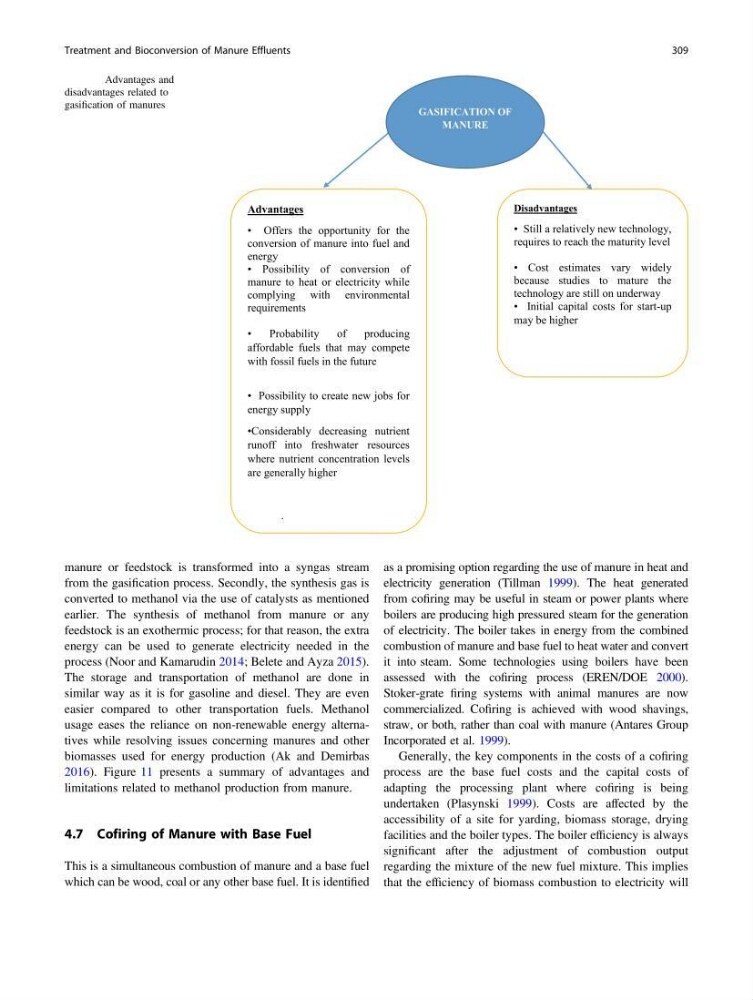
Fig. 10 Advantages and
disadvantages related to
gasification of manures
Treatment and Bioconversion of Manure Effluents
309
from the gasification process. Secondly, the synthesis gas is
converted to methanol via the use of catalysts as mentioned
earlier. The synthesis of methanol from manure or any
feedstock is an exothermic process; for that reason, the extra
energy can be used to generate electricity needed in the
process (Noor and Kamarudin 2014; Belete and Ayza 2015).
The storage and transportation of methanol are done in
similar way as it is for gasoline and diesel. They are even
easier compared to other transportation fuels. Methanol
usage eases the reliance on non-renewable energy alternatives while resolving issues concerning manures and other
biomasses used for energy production (Ak and Demirbas
2016). Figure 11 presents a summary of advantages and
limitations related to methanol production from manure.
4.7 Cofiring of Manure with Base Fuel
This is a simultaneous combustion of manure and a base fuel
which can be wood, coal or any other base fuel. It is identified
as a promising option regarding the use of manure in heat and
electricity generation (Tillman 1999). The heat generated
from cofiring may be useful in steam or power plants where
boilers are producing high pressured steam for the generation
of electricity. The boiler takes in energy from the combined
combustion of manure and base fuel to heat water and convert
it into steam. Some technologies using boilers have been
assessed with the cofiring process (EREN/DOE 2000).
Stoker-grate firing systems with animal manures are now
commercialized. Cofiring is achieved with wood shavings,
straw, or both, rather than coal with manure (Antares Group
Incorporated et al. 1999).
Generally, the key components in the costs of a cofiring
process are the base fuel costs and the capital costs of
adapting the processing plant where cofiring is being
undertaken (Plasynski 1999). Costs are affected by the
accessibility of a site for yarding, biomass storage, drying
facilities and the boiler types. The boiler efficiency is always
significant after the adjustment of combustion output
regarding the mixture of the new fuel mixture. This implies
that the efficiency of biomass combustion to electricity will
Fig. 10 Advantages and
disadvantages related to
gasification of manures
Treatment and Bioconversion of Manure Effluents
309