

bioplastics (Kato 2019; Lopez-Gil et al. 2014). However,
adequate processing and post-treatment conditions may
favor some bioplastic characteristics including their
mechanical and tensile strengths (Jiménez-Rosado et al.
2020). Specifically, using heat treatments can improve the
mechanical properties of the obtained structures, for example, bioplastics based on soy proteins (Alashwal et al. 2020).
The primary characteristic of a bioplastic is its biological
or biomass base (Chua et al. 1999). Thus, another problem
can be mitigated when bioplastic is produced, i.e., the safe
destination of food waste (Tsang et al. 2019). Food production
generates thousands of agroindustrial waste tons in the processing of different cultures (Colen et al. 2019). A large part
of these wastes have no direct applications, impacting the
environment through their inadequate treatment, e.g., burning
and burial or other disposal methods of these residues (Conke
and Nascimento 2018). Biomass generation in Brazil from
agricultural and/or agroindustrial residues in 2015 were 768
million tons and 130 million tons, respectively, with a growth
projection for 2030 of 1,196 million tons and 207 million
tons, representing an increase of approximately 55 and 59%,
respectively (Moraes et al. 2017).
Food waste in Brazil is related to several factors, including
harvesting, inadequate preparation, inappropriate handling
and food transport, storage, and Brazilian cultural habits
(Henz and Porpino 2017). Therefore, changing habits and
developing of new technologies related to food residue use is
vital (Landim et al. 2016; Marcheto et al. 2008). Bioplastics
production resolves food waste-related environmental issues
by utilizing the renewable and biodegradable resources of
commonly used materials (Mclellan et al. 2019).
Therefore, numerous studies have demonstrated the
usability of food residues in biological conversion for bioplastics production (Araújo et al. 2018; Alashwal et al. 2020;
Zhang et al. 2020; Yamada et al. 2020; Dinesh et al. 2020;
Teigiserova et al. 2019; Karan et al. 2019). Biodegradation
functionality is an advantage that can be used in many of
these bioplastic creation processes (Emadian et al. 2017).
With the advancement of biological processing techniques, it
is possible to convert nearly all biomass from food waste,
whether of vegetable origin (green engineering) or animal origin, into bioplastics (Agnihotri et al. 2020). This conversion
allows for energy generation systems and feedstocks for
biodegradable plastics to fall under the broad concept of bioeconomics (Karan et al. 2019). Once inedible food waste
becomes a reality of food processing, it can promote the use of
stable feedstocks for future chains, where bio-based compounds
with value-added products are produced, and can partially
replace synthetic chemical production (e.g., organic acids, dyes,
enzymes, chemicals, and bioplastics) (Bhaskar et al. 2018).
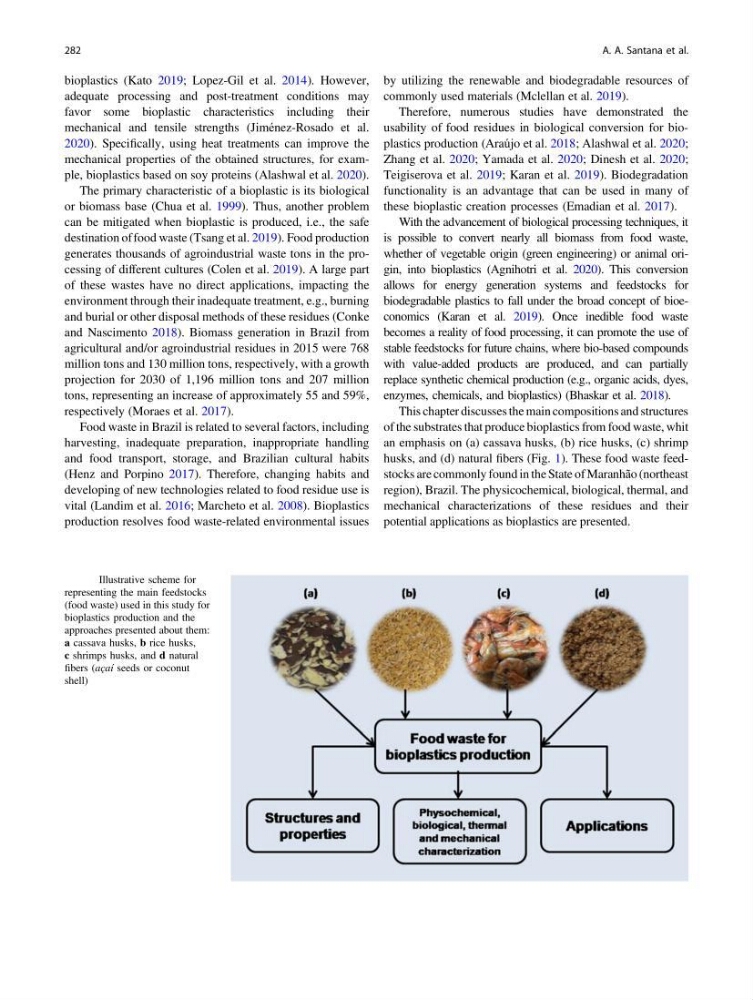
This chapter discusses the main compositions and structures
of the substrates that produce bioplastics from food waste, whit
an emphasis on (a) cassava husks, (b) rice husks, (c) shrimp
husks, and (d) natural fibers (Fig. 1). These food waste feedstocks are commonly found in the State of Maranhão (northeast
region), Brazil. The physicochemical, biological, thermal, and
mechanical characterizations of these residues and their
potential applications as bioplastics are presented.
Fig. 1 Illustrative scheme for
representing the main feedstocks
(food waste) used in this study for
bioplastics production and the
approaches presented about them:
a cassava husks, b rice husks,
c shrimps husks, and d natural
fibers (açaí seeds or coconut
shell)
282
A. A. Santana et al.
adequate processing and post-treatment conditions may
favor some bioplastic characteristics including their
mechanical and tensile strengths (Jiménez-Rosado et al.
2020). Specifically, using heat treatments can improve the
mechanical properties of the obtained structures, for example, bioplastics based on soy proteins (Alashwal et al. 2020).
The primary characteristic of a bioplastic is its biological
or biomass base (Chua et al. 1999). Thus, another problem
can be mitigated when bioplastic is produced, i.e., the safe
destination of food waste (Tsang et al. 2019). Food production
generates thousands of agroindustrial waste tons in the processing of different cultures (Colen et al. 2019). A large part
of these wastes have no direct applications, impacting the
environment through their inadequate treatment, e.g., burning
and burial or other disposal methods of these residues (Conke
and Nascimento 2018). Biomass generation in Brazil from
agricultural and/or agroindustrial residues in 2015 were 768
million tons and 130 million tons, respectively, with a growth
projection for 2030 of 1,196 million tons and 207 million
tons, representing an increase of approximately 55 and 59%,
respectively (Moraes et al. 2017).
Food waste in Brazil is related to several factors, including
harvesting, inadequate preparation, inappropriate handling
and food transport, storage, and Brazilian cultural habits
(Henz and Porpino 2017). Therefore, changing habits and
developing of new technologies related to food residue use is
vital (Landim et al. 2016; Marcheto et al. 2008). Bioplastics
production resolves food waste-related environmental issues
by utilizing the renewable and biodegradable resources of
commonly used materials (Mclellan et al. 2019).
Therefore, numerous studies have demonstrated the
usability of food residues in biological conversion for bioplastics production (Araújo et al. 2018; Alashwal et al. 2020;
Zhang et al. 2020; Yamada et al. 2020; Dinesh et al. 2020;
Teigiserova et al. 2019; Karan et al. 2019). Biodegradation
functionality is an advantage that can be used in many of
these bioplastic creation processes (Emadian et al. 2017).
With the advancement of biological processing techniques, it
is possible to convert nearly all biomass from food waste,
whether of vegetable origin (green engineering) or animal origin, into bioplastics (Agnihotri et al. 2020). This conversion
allows for energy generation systems and feedstocks for
biodegradable plastics to fall under the broad concept of bioeconomics (Karan et al. 2019). Once inedible food waste
becomes a reality of food processing, it can promote the use of
stable feedstocks for future chains, where bio-based compounds
with value-added products are produced, and can partially
replace synthetic chemical production (e.g., organic acids, dyes,
enzymes, chemicals, and bioplastics) (Bhaskar et al. 2018).
This chapter discusses the main compositions and structures
of the substrates that produce bioplastics from food waste, whit
an emphasis on (a) cassava husks, (b) rice husks, (c) shrimp
husks, and (d) natural fibers (Fig. 1). These food waste feedstocks are commonly found in the State of Maranhão (northeast
region), Brazil. The physicochemical, biological, thermal, and
mechanical characterizations of these residues and their
potential applications as bioplastics are presented.
Fig. 1 Illustrative scheme for
representing the main feedstocks
(food waste) used in this study for
bioplastics production and the
approaches presented about them:
a cassava husks, b rice husks,
c shrimps husks, and d natural
fibers (açaí seeds or coconut
shell)
282
A. A. Santana et al.