

chemically or by microbial fermentation. Lactic acid has
several industrial applications such as food, feed, pharmaceuticals, and cosmetics. It is mainly used as a precursor for
producing biodegradable polyester called polylactic acid
(PLA) (Novy et al. 2018; Ye et al. 2013). PLA is used to
manufacture various products, including plastic cups, bags,
packaging materials, and prosthetics (surgical implants)
(Turner et al. 2015).
Microbial strains that potentially utilize xylose as well as
glucose and ferment to lactic acid using renewable raw
materials are of great importance for industrial biotechnology (Turner et al. 2015). Many reports highlight efforts to
obtain such microbial strains that are capable of simultaneous consumption of xylose and glucose through mutagenesis
and by introducing heterologous pathways of metabolism
into conventional S. cerevisiae (Robak and Balcerek 2018).
The studies suggest that yeast can execute better than
lactic acid bacteria (LAB) under convenient fermentation
conditions, therefore, few yeasts have been engineered with
a heterologous lactate dehydrogenase (LDH). As investigated by Kwak and Jin (2017), in spite of introducing a
heterologous LDH, the engineered S. cerevisiae generated
ethanol as a major product and low yield of lactic acid under
fermentable sugars through its unusual regulatory system
known as the Crabtree effect. The effect explains the phenomenon where some yeasts prefer fermentation over
aerobic respiration even in sufficient supply of oxygen. In
another study, production of lactic acid by Crabtree positive
yeasts, LDH from Rhizopus oryzae was overexpressed in S.
cerevisiae to compare the glucose and xylose utilizing
capabilities; yet the production of ethanol (0.31 g g
−1 glucose) was still greater than lactic acid (0.22 g g
−1 ).
In contrast, engineered S. cerevisiae generated higher
lactic acid (0.69 g g
−1 xylose) with insignificant ethanol
(<0.01 g g
−1 xylose) production under sole xylose culture
conditions (Turner et al. 2015). Upon changing carbon
source from glucose to xylose, Crabtree negative yeasts also
showed improvement in the production of lactic acid with
lower ethanol yield. Overexpression of Lactobacillus helveticus LDH in a native xylose utilizing yeast S. stipitis
exhibited significant productivity of lactic acid (0.60 g g
−1
xylose) and a considerable decline in ethanol yields (using
0.28 to 0.02 g g
−1 xylose) under limited supply of oxygen,
at 50 g L
−1 xylose concentration (Kwak and Jin 2017).
However, reports suggest that only few strains of LAB
can ferment xylose (Mussatto and Teixeira 2010). Enterococcus mundtii QU25, a strain of LAB has been studied to
produce elevated yield of lactic acid homofermentatively via
PPP from both glucose and xylose. With increase in xylose
concentrations (25.8 g L
−1
–100 g L
−1 ) QU25 generated
more lactic acid (21.7 g L
−1 ) with minimal by-products
consuming 50.2 g L
−1 xylose. At this concentration, the
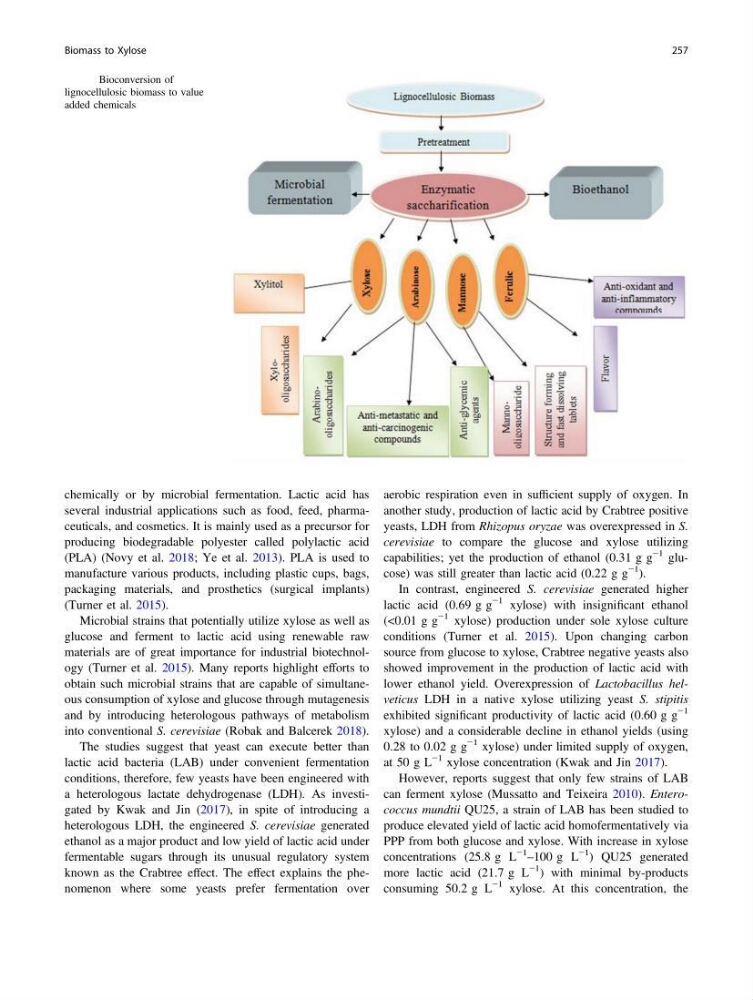
Fig. 1 Bioconversion of
lignocellulosic biomass to value
added chemicals
Biomass to Xylose
257
several industrial applications such as food, feed, pharmaceuticals, and cosmetics. It is mainly used as a precursor for
producing biodegradable polyester called polylactic acid
(PLA) (Novy et al. 2018; Ye et al. 2013). PLA is used to
manufacture various products, including plastic cups, bags,
packaging materials, and prosthetics (surgical implants)
(Turner et al. 2015).
Microbial strains that potentially utilize xylose as well as
glucose and ferment to lactic acid using renewable raw
materials are of great importance for industrial biotechnology (Turner et al. 2015). Many reports highlight efforts to
obtain such microbial strains that are capable of simultaneous consumption of xylose and glucose through mutagenesis
and by introducing heterologous pathways of metabolism
into conventional S. cerevisiae (Robak and Balcerek 2018).
The studies suggest that yeast can execute better than
lactic acid bacteria (LAB) under convenient fermentation
conditions, therefore, few yeasts have been engineered with
a heterologous lactate dehydrogenase (LDH). As investigated by Kwak and Jin (2017), in spite of introducing a
heterologous LDH, the engineered S. cerevisiae generated
ethanol as a major product and low yield of lactic acid under
fermentable sugars through its unusual regulatory system
known as the Crabtree effect. The effect explains the phenomenon where some yeasts prefer fermentation over
aerobic respiration even in sufficient supply of oxygen. In
another study, production of lactic acid by Crabtree positive
yeasts, LDH from Rhizopus oryzae was overexpressed in S.
cerevisiae to compare the glucose and xylose utilizing
capabilities; yet the production of ethanol (0.31 g g
−1 glucose) was still greater than lactic acid (0.22 g g
−1 ).
In contrast, engineered S. cerevisiae generated higher
lactic acid (0.69 g g
−1 xylose) with insignificant ethanol
(<0.01 g g
−1 xylose) production under sole xylose culture
conditions (Turner et al. 2015). Upon changing carbon
source from glucose to xylose, Crabtree negative yeasts also
showed improvement in the production of lactic acid with
lower ethanol yield. Overexpression of Lactobacillus helveticus LDH in a native xylose utilizing yeast S. stipitis
exhibited significant productivity of lactic acid (0.60 g g
−1
xylose) and a considerable decline in ethanol yields (using
0.28 to 0.02 g g
−1 xylose) under limited supply of oxygen,
at 50 g L
−1 xylose concentration (Kwak and Jin 2017).
However, reports suggest that only few strains of LAB
can ferment xylose (Mussatto and Teixeira 2010). Enterococcus mundtii QU25, a strain of LAB has been studied to
produce elevated yield of lactic acid homofermentatively via
PPP from both glucose and xylose. With increase in xylose
concentrations (25.8 g L
−1
–100 g L
−1 ) QU25 generated
more lactic acid (21.7 g L
−1 ) with minimal by-products
consuming 50.2 g L
−1 xylose. At this concentration, the
Fig. 1 Bioconversion of
lignocellulosic biomass to value
added chemicals
Biomass to Xylose
257