

3 Anaerobic Digestion of Palm Oil Mill Waste
by-Products
3.1 Biological Process
Anaerobic digestion is a well-studied and simple technology
that is widely used as a treatment process for biodegradable
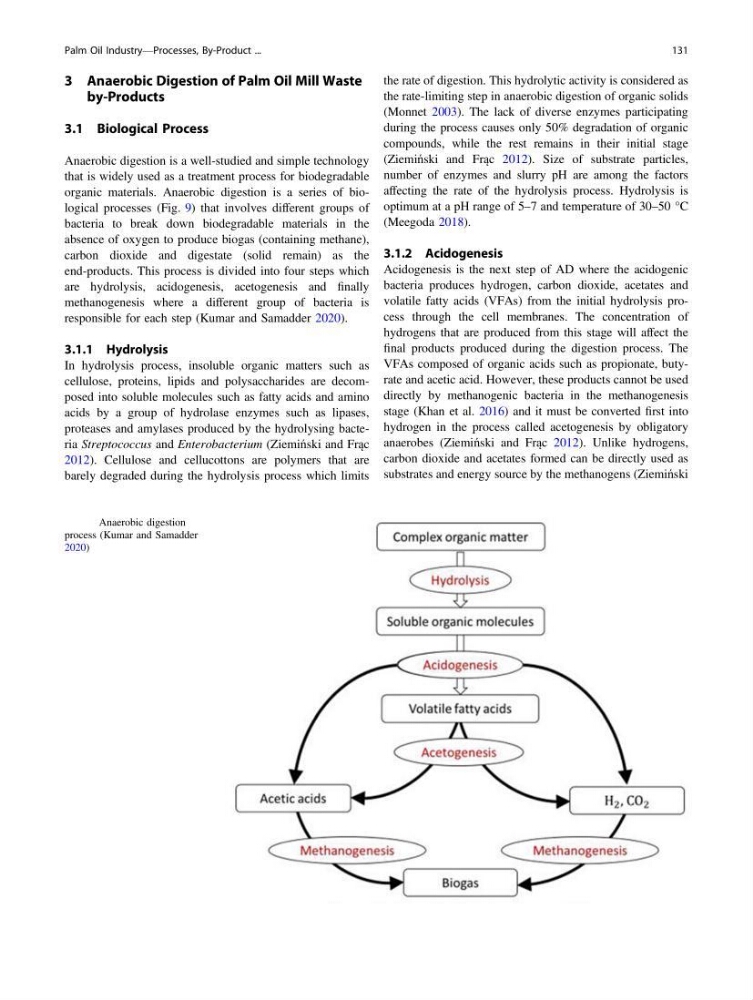
organic materials. Anaerobic digestion is a series of biological processes (Fig. 9) that involves different groups of
bacteria to break down biodegradable materials in the
absence of oxygen to produce biogas (containing methane),
carbon dioxide and digestate (solid remain) as the
end-products. This process is divided into four steps which
are hydrolysis, acidogenesis, acetogenesis and finally
methanogenesis where a different group of bacteria is
responsible for each step (Kumar and Samadder 2020).
3.1.1 Hydrolysis
In hydrolysis process, insoluble organic matters such as
cellulose, proteins, lipids and polysaccharides are decomposed into soluble molecules such as fatty acids and amino
acids by a group of hydrolase enzymes such as lipases,
proteases and amylases produced by the hydrolysing bacteria Streptococcus and Enterobacterium (Ziemiński and Frąc
2012). Cellulose and cellucottons are polymers that are
barely degraded during the hydrolysis process which limits
the rate of digestion. This hydrolytic activity is considered as
the rate-limiting step in anaerobic digestion of organic solids
(Monnet 2003). The lack of diverse enzymes participating
during the process causes only 50% degradation of organic
compounds, while the rest remains in their initial stage
(Ziemiński and Frąc 2012). Size of substrate particles,
number of enzymes and slurry pH are among the factors
affecting the rate of the hydrolysis process. Hydrolysis is
optimum at a pH range of 5–7 and temperature of 30–50 °C
(Meegoda 2018).
3.1.2 Acidogenesis
Acidogenesis is the next step of AD where the acidogenic
bacteria produces hydrogen, carbon dioxide, acetates and
volatile fatty acids (VFAs) from the initial hydrolysis process through the cell membranes. The concentration of
hydrogens that are produced from this stage will affect the
final products produced during the digestion process. The
VFAs composed of organic acids such as propionate, butyrate and acetic acid. However, these products cannot be used
directly by methanogenic bacteria in the methanogenesis
stage (Khan et al. 2016) and it must be converted first into
hydrogen in the process called acetogenesis by obligatory
anaerobes (Ziemiński and Frąc 2012). Unlike hydrogens,
carbon dioxide and acetates formed can be directly used as
substrates and energy source by the methanogens (Ziemiński
Fig. 9 Anaerobic digestion
process (Kumar and Samadder
2020)
Palm Oil Industry—Processes, By-Product ...
131
by-Products
3.1 Biological Process
Anaerobic digestion is a well-studied and simple technology
that is widely used as a treatment process for biodegradable
organic materials. Anaerobic digestion is a series of biological processes (Fig. 9) that involves different groups of
bacteria to break down biodegradable materials in the
absence of oxygen to produce biogas (containing methane),
carbon dioxide and digestate (solid remain) as the
end-products. This process is divided into four steps which
are hydrolysis, acidogenesis, acetogenesis and finally
methanogenesis where a different group of bacteria is
responsible for each step (Kumar and Samadder 2020).
3.1.1 Hydrolysis
In hydrolysis process, insoluble organic matters such as
cellulose, proteins, lipids and polysaccharides are decomposed into soluble molecules such as fatty acids and amino
acids by a group of hydrolase enzymes such as lipases,
proteases and amylases produced by the hydrolysing bacteria Streptococcus and Enterobacterium (Ziemiński and Frąc
2012). Cellulose and cellucottons are polymers that are
barely degraded during the hydrolysis process which limits
the rate of digestion. This hydrolytic activity is considered as
the rate-limiting step in anaerobic digestion of organic solids
(Monnet 2003). The lack of diverse enzymes participating
during the process causes only 50% degradation of organic
compounds, while the rest remains in their initial stage
(Ziemiński and Frąc 2012). Size of substrate particles,
number of enzymes and slurry pH are among the factors
affecting the rate of the hydrolysis process. Hydrolysis is
optimum at a pH range of 5–7 and temperature of 30–50 °C
(Meegoda 2018).
3.1.2 Acidogenesis
Acidogenesis is the next step of AD where the acidogenic
bacteria produces hydrogen, carbon dioxide, acetates and
volatile fatty acids (VFAs) from the initial hydrolysis process through the cell membranes. The concentration of
hydrogens that are produced from this stage will affect the
final products produced during the digestion process. The
VFAs composed of organic acids such as propionate, butyrate and acetic acid. However, these products cannot be used
directly by methanogenic bacteria in the methanogenesis
stage (Khan et al. 2016) and it must be converted first into
hydrogen in the process called acetogenesis by obligatory
anaerobes (Ziemiński and Frąc 2012). Unlike hydrogens,
carbon dioxide and acetates formed can be directly used as
substrates and energy source by the methanogens (Ziemiński
Fig. 9 Anaerobic digestion
process (Kumar and Samadder
2020)
Palm Oil Industry—Processes, By-Product ...
131