

source and can be utilized in the mill, while the by-product
sludge generated could be used for land applications.
However, an AD process requires a long start-up period
and retention time for the bacteria in each AD process to
adjust to the new environment before they are able to use the
organic matters for growth. Another disadvantage of AD is
that the digesters require large land space to ensure complete
digestion of organic influent. These problems can be solved
by utilizing granulated seed sludge and high-rate anaerobic
bioreactors to shorten the start-up period and retention time
and to maintain a conducive pH and temperature conditions
in the reactor for bacterial growth (Poh and Chong 2014).
2.5.2 Composting Technology
Composting technology involves a microbial activity in
which the organic wastes are being stabilized under controlled pH, temperature and humidity. Aerobic
microorganisms decompose the biodegradable organic
materials to produce a stabilized end product known as
compost which is rich in humic acid-like substances (Rupani
et al. 2010). Rapid activation of microbes around the root
system consumes high amount of oxygen, resulting in partial
organic decomposition and unstable final compost (Rupani
et al. 2010). Hence, it is crucial to increase the treatment
period to improve the quality of the compost.
Co-composting is one of the methods to alter the organic
content to achieve an optimum C/N ratio of 30. For example,
sawdust was added in a composting pile of palm oil mill
sludge (POMS) (Embrandiri 2015) and EFB-POME mixtures (Hau 2020) to adjust the carbon content, to prevent air
pollution and to increase composting process efficiency.
Composting is an ideal process for palm oil by-products due
to its simplicity, treatment effectiveness and ability to produce value-added products (Rupani et al. 2010).
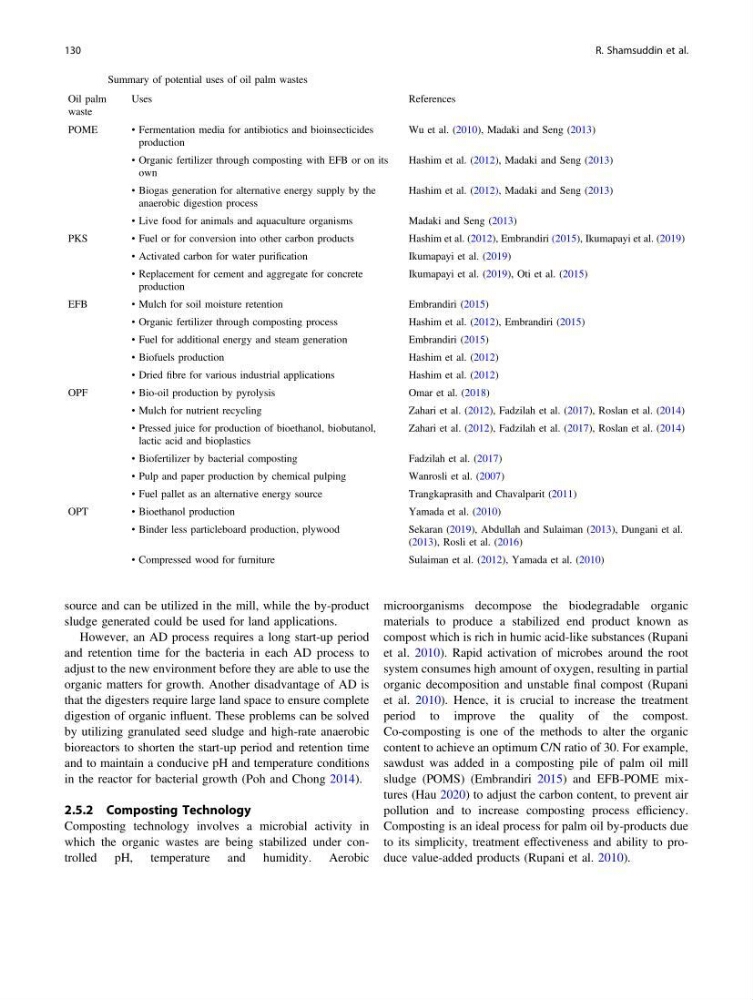
Table 2 Summary of potential uses of oil palm wastes
Oil palm
waste
Uses
References
POME
• Fermentation media for antibiotics and bioinsecticides
production
Wu et al. (2010), Madaki and Seng (2013)
• Organic fertilizer through composting with EFB or on its
own
Hashim et al. (2012), Madaki and Seng (2013)
• Biogas generation for alternative energy supply by the
anaerobic digestion process
Hashim et al. (2012), Madaki and Seng (2013)
• Live food for animals and aquaculture organisms
Madaki and Seng (2013)
PKS
• Fuel or for conversion into other carbon products
Hashim et al. (2012), Embrandiri (2015), Ikumapayi et al. (2019)
• Activated carbon for water purification
Ikumapayi et al. (2019)
• Replacement for cement and aggregate for concrete
production
Ikumapayi et al. (2019), Oti et al. (2015)
EFB
• Mulch for soil moisture retention
Embrandiri (2015)
• Organic fertilizer through composting process
Hashim et al. (2012), Embrandiri (2015)
• Fuel for additional energy and steam generation
Embrandiri (2015)
• Biofuels production
Hashim et al. (2012)
• Dried fibre for various industrial applications
Hashim et al. (2012)
OPF
• Bio-oil production by pyrolysis
Omar et al. (2018)
• Mulch for nutrient recycling
Zahari et al. (2012), Fadzilah et al. (2017), Roslan et al. (2014)
• Pressed juice for production of bioethanol, biobutanol,
lactic acid and bioplastics
Zahari et al. (2012), Fadzilah et al. (2017), Roslan et al. (2014)
• Biofertilizer by bacterial composting
Fadzilah et al. (2017)
• Pulp and paper production by chemical pulping
Wanrosli et al. (2007)
• Fuel pallet as an alternative energy source
Trangkaprasith and Chavalparit (2011)
OPT
• Bioethanol production
Yamada et al. (2010)
• Binder less particleboard production, plywood
Sekaran (2019), Abdullah and Sulaiman (2013), Dungani et al.
(2013), Rosli et al. (2016)
• Compressed wood for furniture
Sulaiman et al. (2012), Yamada et al. (2010)
130
R. Shamsuddin et al.
sludge generated could be used for land applications.
However, an AD process requires a long start-up period
and retention time for the bacteria in each AD process to
adjust to the new environment before they are able to use the
organic matters for growth. Another disadvantage of AD is
that the digesters require large land space to ensure complete
digestion of organic influent. These problems can be solved
by utilizing granulated seed sludge and high-rate anaerobic
bioreactors to shorten the start-up period and retention time
and to maintain a conducive pH and temperature conditions
in the reactor for bacterial growth (Poh and Chong 2014).
2.5.2 Composting Technology
Composting technology involves a microbial activity in
which the organic wastes are being stabilized under controlled pH, temperature and humidity. Aerobic
microorganisms decompose the biodegradable organic
materials to produce a stabilized end product known as
compost which is rich in humic acid-like substances (Rupani
et al. 2010). Rapid activation of microbes around the root
system consumes high amount of oxygen, resulting in partial
organic decomposition and unstable final compost (Rupani
et al. 2010). Hence, it is crucial to increase the treatment
period to improve the quality of the compost.
Co-composting is one of the methods to alter the organic
content to achieve an optimum C/N ratio of 30. For example,
sawdust was added in a composting pile of palm oil mill
sludge (POMS) (Embrandiri 2015) and EFB-POME mixtures (Hau 2020) to adjust the carbon content, to prevent air
pollution and to increase composting process efficiency.
Composting is an ideal process for palm oil by-products due
to its simplicity, treatment effectiveness and ability to produce value-added products (Rupani et al. 2010).
Table 2 Summary of potential uses of oil palm wastes
Oil palm
waste
Uses
References
POME
• Fermentation media for antibiotics and bioinsecticides
production
Wu et al. (2010), Madaki and Seng (2013)
• Organic fertilizer through composting with EFB or on its
own
Hashim et al. (2012), Madaki and Seng (2013)
• Biogas generation for alternative energy supply by the
anaerobic digestion process
Hashim et al. (2012), Madaki and Seng (2013)
• Live food for animals and aquaculture organisms
Madaki and Seng (2013)
PKS
• Fuel or for conversion into other carbon products
Hashim et al. (2012), Embrandiri (2015), Ikumapayi et al. (2019)
• Activated carbon for water purification
Ikumapayi et al. (2019)
• Replacement for cement and aggregate for concrete
production
Ikumapayi et al. (2019), Oti et al. (2015)
EFB
• Mulch for soil moisture retention
Embrandiri (2015)
• Organic fertilizer through composting process
Hashim et al. (2012), Embrandiri (2015)
• Fuel for additional energy and steam generation
Embrandiri (2015)
• Biofuels production
Hashim et al. (2012)
• Dried fibre for various industrial applications
Hashim et al. (2012)
OPF
• Bio-oil production by pyrolysis
Omar et al. (2018)
• Mulch for nutrient recycling
Zahari et al. (2012), Fadzilah et al. (2017), Roslan et al. (2014)
• Pressed juice for production of bioethanol, biobutanol,
lactic acid and bioplastics
Zahari et al. (2012), Fadzilah et al. (2017), Roslan et al. (2014)
• Biofertilizer by bacterial composting
Fadzilah et al. (2017)
• Pulp and paper production by chemical pulping
Wanrosli et al. (2007)
• Fuel pallet as an alternative energy source
Trangkaprasith and Chavalparit (2011)
OPT
• Bioethanol production
Yamada et al. (2010)
• Binder less particleboard production, plywood
Sekaran (2019), Abdullah and Sulaiman (2013), Dungani et al.
(2013), Rosli et al. (2016)
• Compressed wood for furniture
Sulaiman et al. (2012), Yamada et al. (2010)
130
R. Shamsuddin et al.