

8
1 A Comprehensive Approach to Heavy Metal Removal by Adsorption …
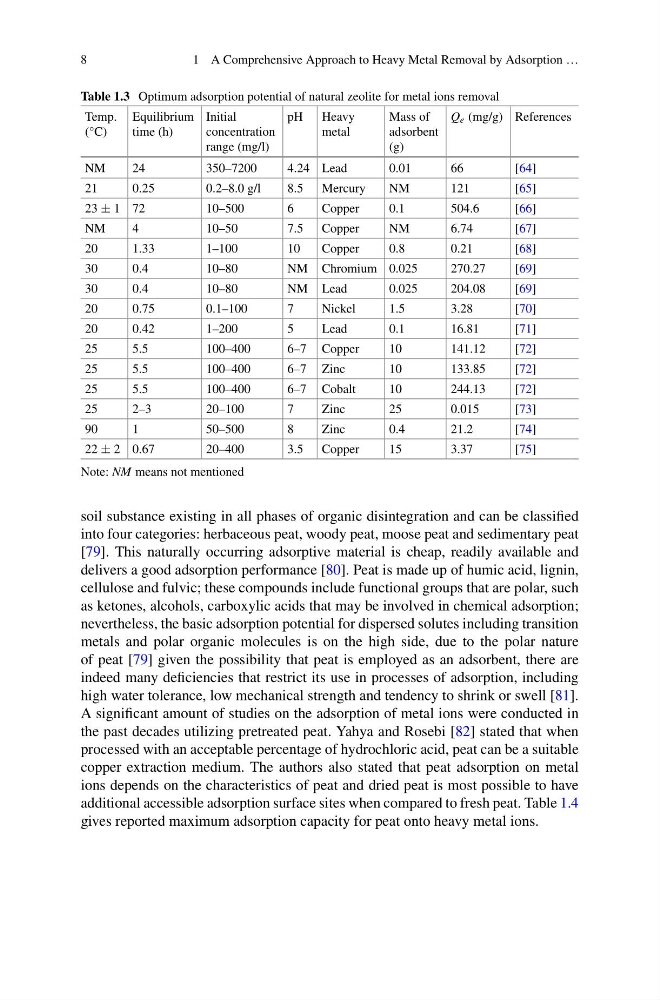
Table 1.3 Optimum adsorption potential of natural zeolite for metal ions removal
Temp.
(°C)
Equilibrium
time (h)
Initial
concentration
range (mg/l)
pH Heavy
metal
Mass of
adsorbent
(g)
Q e (mg/g) References
NM
24
350–7200
4.24 Lead
0.01
66
[64]
21
0.25
0.2–8.0 g/l
8.5 Mercury
NM
121
[65]
23 ± 1 72
10–500
6
Copper
0.1
504.6
[66]
NM
4
10–50
7.5 Copper
NM
6.74
[67]
20
1.33
1–100
10
Copper
0.8
0.21
[68]
30
0.4
10–80
NM Chromium 0.025
270.27
[69]
30
0.4
10–80
NM Lead
0.025
204.08
[69]
20
0.75
0.1–100
7
Nickel
1.5
3.28
[70]
20
0.42
1–200
5
Lead
0.1
16.81
[71]
25
5.5
100–400
6–7 Copper
10
141.12
[72]
25
5.5
100–400
6–7 Zinc
10
133.85
[72]
25
5.5
100–400
6–7 Cobalt
10
244.13
[72]
25
2–3
20–100
7
Zinc
25
0.015
[73]
90
1
50–500
8
Zinc
0.4
21.2
[74]
22 ± 2 0.67
20–400
3.5 Copper
15
3.37
[75]
Note: NM means not mentioned
soil substance existing in all phases of organic disintegration and can be classified
into four categories: herbaceous peat, woody peat, moose peat and sedimentary peat
[79]. This naturally occurring adsorptive material is cheap, readily available and
delivers a good adsorption performance [80]. Peat is made up of humic acid, lignin,
cellulose and fulvic; these compounds include functional groups that are polar, such
as ketones, alcohols, carboxylic acids that may be involved in chemical adsorption;
nevertheless, the basic adsorption potential for dispersed solutes including transition
metals and polar organic molecules is on the high side, due to the polar nature
of peat [79] given the possibility that peat is employed as an adsorbent, there are
indeed many deficiencies that restrict its use in processes of adsorption, including
high water tolerance, low mechanical strength and tendency to shrink or swell [81].
A significant amount of studies on the adsorption of metal ions were conducted in
the past decades utilizing pretreated peat. Yahya and Rosebi [82] stated that when
processed with an acceptable percentage of hydrochloric acid, peat can be a suitable
copper extraction medium. The authors also stated that peat adsorption on metal
ions depends on the characteristics of peat and dried peat is most possible to have
additional accessible adsorption surface sites when compared to fresh peat. Table 1.4
gives reported maximum adsorption capacity for peat onto heavy metal ions.
1 A Comprehensive Approach to Heavy Metal Removal by Adsorption …
Table 1.3 Optimum adsorption potential of natural zeolite for metal ions removal
Temp.
(°C)
Equilibrium
time (h)
Initial
concentration
range (mg/l)
pH Heavy
metal
Mass of
adsorbent
(g)
Q e (mg/g) References
NM
24
350–7200
4.24 Lead
0.01
66
[64]
21
0.25
0.2–8.0 g/l
8.5 Mercury
NM
121
[65]
23 ± 1 72
10–500
6
Copper
0.1
504.6
[66]
NM
4
10–50
7.5 Copper
NM
6.74
[67]
20
1.33
1–100
10
Copper
0.8
0.21
[68]
30
0.4
10–80
NM Chromium 0.025
270.27
[69]
30
0.4
10–80
NM Lead
0.025
204.08
[69]
20
0.75
0.1–100
7
Nickel
1.5
3.28
[70]
20
0.42
1–200
5
Lead
0.1
16.81
[71]
25
5.5
100–400
6–7 Copper
10
141.12
[72]
25
5.5
100–400
6–7 Zinc
10
133.85
[72]
25
5.5
100–400
6–7 Cobalt
10
244.13
[72]
25
2–3
20–100
7
Zinc
25
0.015
[73]
90
1
50–500
8
Zinc
0.4
21.2
[74]
22 ± 2 0.67
20–400
3.5 Copper
15
3.37
[75]
Note: NM means not mentioned
soil substance existing in all phases of organic disintegration and can be classified
into four categories: herbaceous peat, woody peat, moose peat and sedimentary peat
[79]. This naturally occurring adsorptive material is cheap, readily available and
delivers a good adsorption performance [80]. Peat is made up of humic acid, lignin,
cellulose and fulvic; these compounds include functional groups that are polar, such
as ketones, alcohols, carboxylic acids that may be involved in chemical adsorption;
nevertheless, the basic adsorption potential for dispersed solutes including transition
metals and polar organic molecules is on the high side, due to the polar nature
of peat [79] given the possibility that peat is employed as an adsorbent, there are
indeed many deficiencies that restrict its use in processes of adsorption, including
high water tolerance, low mechanical strength and tendency to shrink or swell [81].
A significant amount of studies on the adsorption of metal ions were conducted in
the past decades utilizing pretreated peat. Yahya and Rosebi [82] stated that when
processed with an acceptable percentage of hydrochloric acid, peat can be a suitable
copper extraction medium. The authors also stated that peat adsorption on metal
ions depends on the characteristics of peat and dried peat is most possible to have
additional accessible adsorption surface sites when compared to fresh peat. Table 1.4
gives reported maximum adsorption capacity for peat onto heavy metal ions.