

22
through inundation and degrade the groundwater quality near the coastal areas of
India. Central Water Commission (CWC) has reported that sea level rose at an average of 1.06–1.75 mm per year for the last 40 years in India (http://cwc.gov.in/sites/
default/files/nwauser/climate-chnge11.pdf, accessed on 29.12.2019). CWC also
reported that the sea level rise at the west coast of India is more pronounced compared to its east coast. According to Climate Central (2019), the annual average
flood will affect 36 million people of India due to projected sea level rise by 2050
and flood vulnerability will be highest along the coast of West Bengal and Odisha.
Recent studies have revealed that the estimated sea level rise along the India’s
coast is 1.3 mm/year during the last 40–50 years. At Diamond Harbour in West
Bengal, the rise is about 5.16 mm/year based on recordings over the period from
1948 to 2005. This is followed by Kandla port in Gujarat, Haldia in West Bengal
and Port Blair in Andaman Island where the seal level rise has been recorded as
3.18 mm/year (1950–2005), 2.89 mm/year (1972–2005) and 2.20 mm/year
(1916–1964), respectively (https://www.thehindu.com/news/national/bengal-portrecords-countrys-highest-sea-level-rise-in-50-years/article28364149.ece, accessed
on 15.12.2019).
2.2.4 Waste Management and Circular Economy
The huge population of India along with the consumption pattern is responsible for
enormous generation of municipal solid waste (MSW) with 400 g per capita daily
rate of generation (Bhat et al. 2018). The various categories of MSW are
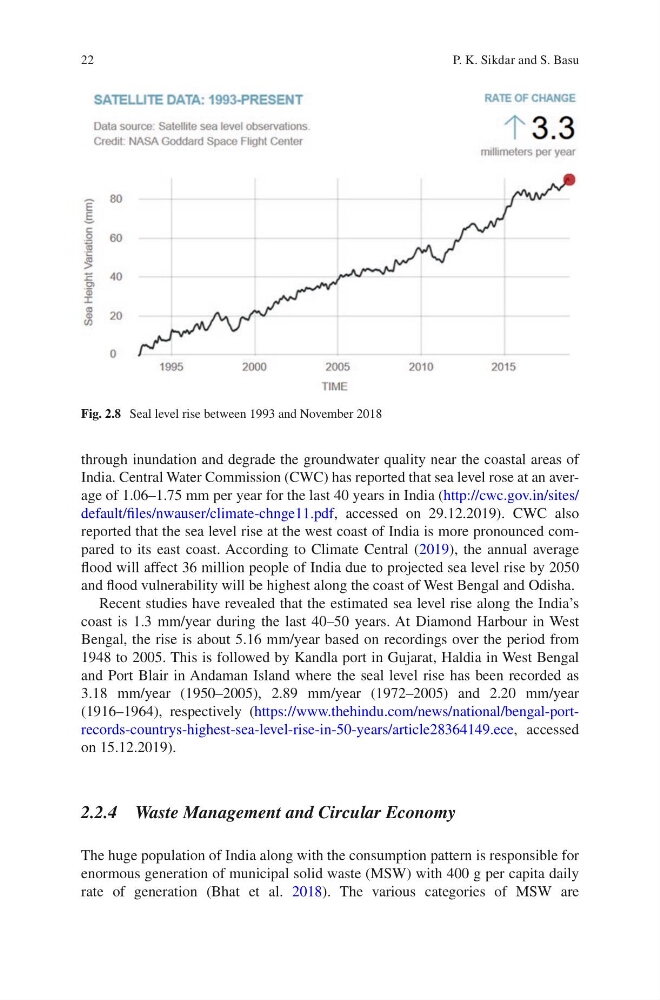
Fig. 2.8 Seal level rise between 1993 and November 2018
P. K. Sikdar and S. Basu
through inundation and degrade the groundwater quality near the coastal areas of
India. Central Water Commission (CWC) has reported that sea level rose at an average of 1.06–1.75 mm per year for the last 40 years in India (http://cwc.gov.in/sites/
default/files/nwauser/climate-chnge11.pdf, accessed on 29.12.2019). CWC also
reported that the sea level rise at the west coast of India is more pronounced compared to its east coast. According to Climate Central (2019), the annual average
flood will affect 36 million people of India due to projected sea level rise by 2050
and flood vulnerability will be highest along the coast of West Bengal and Odisha.
Recent studies have revealed that the estimated sea level rise along the India’s
coast is 1.3 mm/year during the last 40–50 years. At Diamond Harbour in West
Bengal, the rise is about 5.16 mm/year based on recordings over the period from
1948 to 2005. This is followed by Kandla port in Gujarat, Haldia in West Bengal
and Port Blair in Andaman Island where the seal level rise has been recorded as
3.18 mm/year (1950–2005), 2.89 mm/year (1972–2005) and 2.20 mm/year
(1916–1964), respectively (https://www.thehindu.com/news/national/bengal-portrecords-countrys-highest-sea-level-rise-in-50-years/article28364149.ece, accessed
on 15.12.2019).
2.2.4 Waste Management and Circular Economy
The huge population of India along with the consumption pattern is responsible for
enormous generation of municipal solid waste (MSW) with 400 g per capita daily
rate of generation (Bhat et al. 2018). The various categories of MSW are
Fig. 2.8 Seal level rise between 1993 and November 2018
P. K. Sikdar and S. Basu