

305
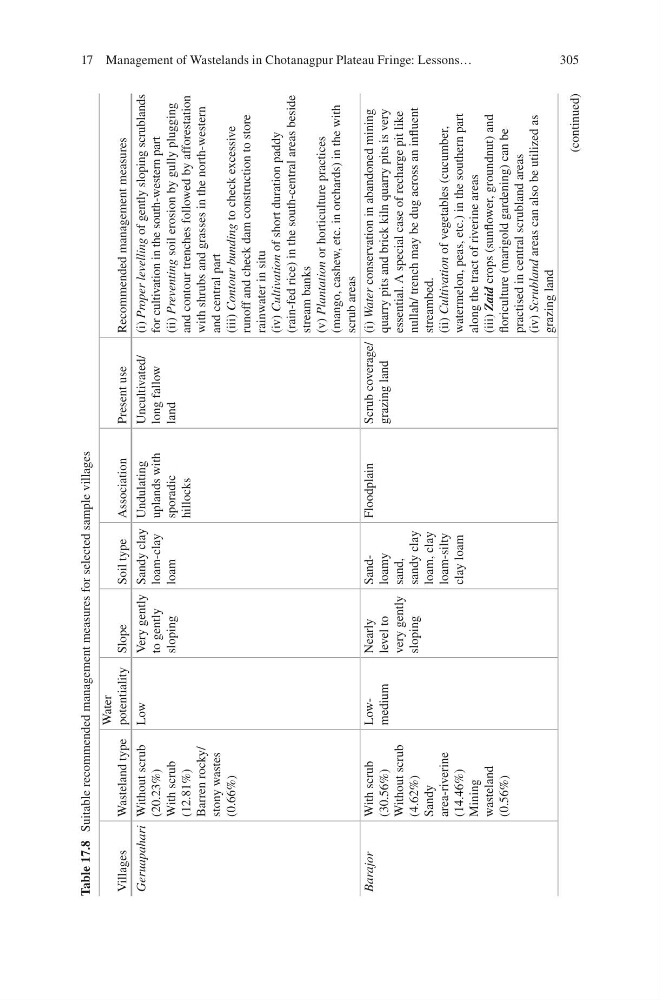
Table 17.8 Suitable recommended management measures for selected sample villages
Villages
Wasteland type
Water
potentiality Slope
Soil type
Association
Present use
Recommended management measures
Geruapahari
Without scrub
(20.23%)
With scrub
(12.81%)
Barren rocky/
stony wastes
(0.66%)
Low
Very gently
to gently
sloping
Sandy clay
loam-clay
loam
Undulating
uplands with
sporadic
hillocks
Uncultivated/
long fallow
land
(i) Proper levelling
of gently sloping scrublands
for cultivation in the south-western part
(ii) Preventing
soil erosion by gully plugging
and contour trenches followed by afforestation
with shrubs and grasses in the north-western
and central part
(iii) Contour bunding
to check excessive
runoff and check dam construction to store
rainwater in situ
(iv) Cultivation
of short duration paddy
(rain-fed rice) in the south-central areas beside
stream banks
(v) Plantation
or horticulture practices
(mango, cashew, etc. in orchards) in the with
scrub areas
Barajor
With scrub
(30.56%)
Without scrub
(4.62%)
Sandy
area- riverine
(14.46%)
Mining
wasteland
(0.56%)
Lowmedium
Nearly
level to
very gently
sloping
Sandloamy
sand,
sandy clay
loam, clay
loam-silty
clay loam
Floodplain
Scrub coverage/
grazing land
(i) Water
conservation in abandoned mining
quarry pits and brick kiln quarry pits is very
essential. A special case of recharge pit like
nullah/ trench may be dug across an influent
streambed.
(ii) Cultivation
of vegetables (cucumber,
watermelon, peas, etc.) in the southern part
along the tract of riverine areas
(iii) Zaid crops (sunflower, groundnut) and
floriculture (marigold gardening) can be
practised in central scrubland areas
(iv) Scrubland
areas can also be utilized as
grazing land
(continued)
17 Management of Wastelands in Chotanagpur Plateau Fringe: Lessons…
Table 17.8 Suitable recommended management measures for selected sample villages
Villages
Wasteland type
Water
potentiality Slope
Soil type
Association
Present use
Recommended management measures
Geruapahari
Without scrub
(20.23%)
With scrub
(12.81%)
Barren rocky/
stony wastes
(0.66%)
Low
Very gently
to gently
sloping
Sandy clay
loam-clay
loam
Undulating
uplands with
sporadic
hillocks
Uncultivated/
long fallow
land
(i) Proper levelling
of gently sloping scrublands
for cultivation in the south-western part
(ii) Preventing
soil erosion by gully plugging
and contour trenches followed by afforestation
with shrubs and grasses in the north-western
and central part
(iii) Contour bunding
to check excessive
runoff and check dam construction to store
rainwater in situ
(iv) Cultivation
of short duration paddy
(rain-fed rice) in the south-central areas beside
stream banks
(v) Plantation
or horticulture practices
(mango, cashew, etc. in orchards) in the with
scrub areas
Barajor
With scrub
(30.56%)
Without scrub
(4.62%)
Sandy
area- riverine
(14.46%)
Mining
wasteland
(0.56%)
Lowmedium
Nearly
level to
very gently
sloping
Sandloamy
sand,
sandy clay
loam, clay
loam-silty
clay loam
Floodplain
Scrub coverage/
grazing land
(i) Water
conservation in abandoned mining
quarry pits and brick kiln quarry pits is very
essential. A special case of recharge pit like
nullah/ trench may be dug across an influent
streambed.
(ii) Cultivation
of vegetables (cucumber,
watermelon, peas, etc.) in the southern part
along the tract of riverine areas
(iii) Zaid crops (sunflower, groundnut) and
floriculture (marigold gardening) can be
practised in central scrubland areas
(iv) Scrubland
areas can also be utilized as
grazing land
(continued)
17 Management of Wastelands in Chotanagpur Plateau Fringe: Lessons…