

for the release, R(t), and uptake, U(t), alpha functions defined in Eqs. (2) and (3),
for those three cases.
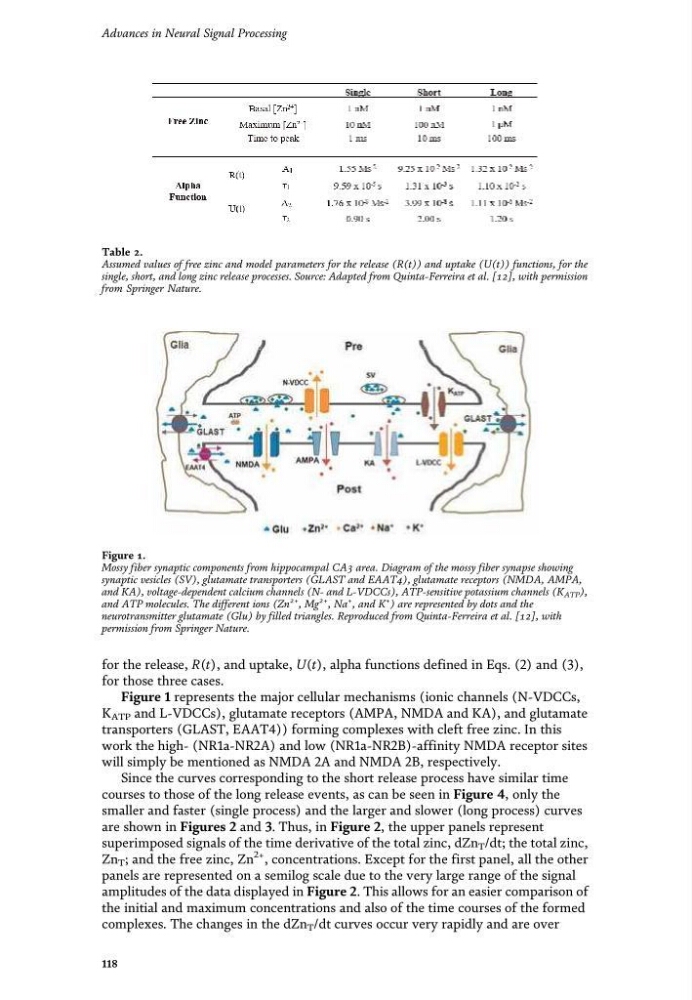
Figure 1 represents the major cellular mechanisms (ionic channels (N-VDCCs,
K ATP and L-VDCCs), glutamate receptors (AMPA, NMDA and KA), and glutamate
transporters (GLAST, EAAT4)) forming complexes with cleft free zinc. In this
work the high- (NR1a-NR2A) and low (NR1a-NR2B)-affinity NMDA receptor sites
will simply be mentioned as NMDA 2A and NMDA 2B, respectively.
Since the curves corresponding to the short release process have similar time
courses to those of the long release events, as can be seen in Figure 4, only the
smaller and faster (single process) and the larger and slower (long process) curves
are shown in Figures 2 and 3. Thus, in Figure 2, the upper panels represent
superimposed signals of the time derivative of the total zinc, dZn T /dt; the total zinc,
Zn T ; and the free zinc, Zn
2+ , concentrations. Except for the first panel, all the other
panels are represented on a semilog scale due to the very large range of the signal
amplitudes of the data displayed in Figure 2. This allows for an easier comparison of
the initial and maximum concentrations and also of the time courses of the formed
complexes. The changes in the dZn T /dt curves occur very rapidly and are over
Table 2.
Assumed values of free zinc and model parameters for the release (R(t)) and uptake (U(t)) functions, for the
single, short, and long zinc release processes. Source: Adapted from Quinta-Ferreira et al. [12], with permission
from Springer Nature.
Figure 1.
Mossy fiber synaptic components from hippocampal CA3 area. Diagram of the mossy fiber synapse showing
synaptic vesicles (SV), glutamate transporters (GLAST and EAAT4), glutamate receptors (NMDA, AMPA,
and KA), voltage-dependent calcium channels (N- and L-VDCCs), ATP-sensitive potassium channels (K ATP ),
and ATP molecules. The different ions (Zn
2+
, Mg
2+
, Na
+
, and K
+
) are represented by dots and the
neurotransmitter glutamate (Glu) by filled triangles. Reproduced from Quinta-Ferreira et al. [12], with
permission from Springer Nature.
118
Advances in Neural Signal Processing
for those three cases.
Figure 1 represents the major cellular mechanisms (ionic channels (N-VDCCs,
K ATP and L-VDCCs), glutamate receptors (AMPA, NMDA and KA), and glutamate
transporters (GLAST, EAAT4)) forming complexes with cleft free zinc. In this
work the high- (NR1a-NR2A) and low (NR1a-NR2B)-affinity NMDA receptor sites
will simply be mentioned as NMDA 2A and NMDA 2B, respectively.
Since the curves corresponding to the short release process have similar time
courses to those of the long release events, as can be seen in Figure 4, only the
smaller and faster (single process) and the larger and slower (long process) curves
are shown in Figures 2 and 3. Thus, in Figure 2, the upper panels represent
superimposed signals of the time derivative of the total zinc, dZn T /dt; the total zinc,
Zn T ; and the free zinc, Zn
2+ , concentrations. Except for the first panel, all the other
panels are represented on a semilog scale due to the very large range of the signal
amplitudes of the data displayed in Figure 2. This allows for an easier comparison of
the initial and maximum concentrations and also of the time courses of the formed
complexes. The changes in the dZn T /dt curves occur very rapidly and are over
Table 2.
Assumed values of free zinc and model parameters for the release (R(t)) and uptake (U(t)) functions, for the
single, short, and long zinc release processes. Source: Adapted from Quinta-Ferreira et al. [12], with permission
from Springer Nature.
Figure 1.
Mossy fiber synaptic components from hippocampal CA3 area. Diagram of the mossy fiber synapse showing
synaptic vesicles (SV), glutamate transporters (GLAST and EAAT4), glutamate receptors (NMDA, AMPA,
and KA), voltage-dependent calcium channels (N- and L-VDCCs), ATP-sensitive potassium channels (K ATP ),
and ATP molecules. The different ions (Zn
2+
, Mg
2+
, Na
+
, and K
+
) are represented by dots and the
neurotransmitter glutamate (Glu) by filled triangles. Reproduced from Quinta-Ferreira et al. [12], with
permission from Springer Nature.
118
Advances in Neural Signal Processing