

comparative activity of o,p-DDT was weak as compared to estradiol. For o,p-DDT,
the (–)-enantiomer was the more vigorous oestrogen mimic, while the hER activity
of (+)-o,p-DDT was insignificant. The existence of the (+)-enantiomer at relatively
high amounts reduced the transcriptional activity of (–)-o,p-DDT.
Another chiral DDT derivative relevant as environmental pollutant is the (+/–)-o,
p-DDD [1,1-dichloro-2-(o-chlorophenyl)-2-( p-chlorophenyl)] ethane]. Basheer and
Ali (2018) reported on the stereoselective uptake and degradation profile of o,
p-DDD in freshwater sediment. The uptake and degradation rates were reported
for (–)-enantiomer compared with the (+)-enantiomer. The levels and enantiomeric
fractions (EFs) for DDT derivatives were determined in freshwater ecosystems
(including fish) by Garrison et al. (2014). The EFs for o,p
0 -DDD enantiomers in
smallmouth buffalo and channel catfish were always below 0.5. These results
indicate the preferential transformation of the (+)-enantiomer.
More details on the enantioselective toxicity and environmental fate of chiral
DDTs can be found in several updated research studies in an earlier chapters of this
monograph (Koblickova et al. 2008; Asp et al. 2010; Munoz-Arnanz and Jimenez
2011; Wang et al. 2013a, b; Jin et al. 2017; Sanchez-Osorio et al. 2017).
10.2.4 Organophosphorus Compounds
In addition to chlorinated pesticides, some phosphorus-based organic pesticides are
also chiral and showed to diverge in their enantioselective toxicity. These pesticides
were entered into the market in 1950s for insect control in vegetables, fruits and
other crops. Malathion is biotransformed into a racemic malaoxon, which has antiacetylcholinesterase (insecticidal) activity (see Chap. 2). Its R-enantiomer has
22 times more inhibitory strength for bovine erythrocyte cholinesterase than the
S-antipode (Rodriguez et al. 1997; Połeć et al. 1998; Zhang et al. 2011). Soman
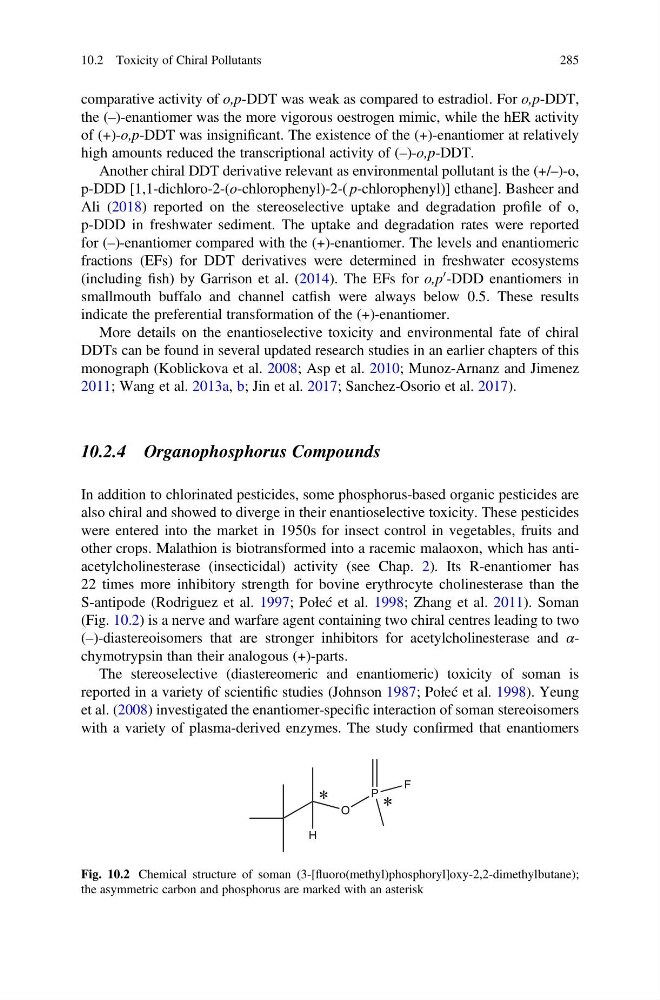
(Fig. 10.2) is a nerve and warfare agent containing two chiral centres leading to two
(–)-diastereoisomers that are stronger inhibitors for acetylcholinesterase and αchymotrypsin than their analogous (+)-parts.
The stereoselective (diastereomeric and enantiomeric) toxicity of soman is
reported in a variety of scientific studies (Johnson 1987; Połeć et al. 1998). Yeung
et al. (2008) investigated the enantiomer-specific interaction of soman stereoisomers
with a variety of plasma-derived enzymes. The study confirmed that enantiomers
*
*
Fig. 10.2 Chemical structure of soman (3-[fluoro(methyl)phosphoryl]oxy-2,2-dimethylbutane);
the asymmetric carbon and phosphorus are marked with an asterisk
10.2 Toxicity of Chiral Pollutants
285
the (–)-enantiomer was the more vigorous oestrogen mimic, while the hER activity
of (+)-o,p-DDT was insignificant. The existence of the (+)-enantiomer at relatively
high amounts reduced the transcriptional activity of (–)-o,p-DDT.
Another chiral DDT derivative relevant as environmental pollutant is the (+/–)-o,
p-DDD [1,1-dichloro-2-(o-chlorophenyl)-2-( p-chlorophenyl)] ethane]. Basheer and
Ali (2018) reported on the stereoselective uptake and degradation profile of o,
p-DDD in freshwater sediment. The uptake and degradation rates were reported
for (–)-enantiomer compared with the (+)-enantiomer. The levels and enantiomeric
fractions (EFs) for DDT derivatives were determined in freshwater ecosystems
(including fish) by Garrison et al. (2014). The EFs for o,p
0 -DDD enantiomers in
smallmouth buffalo and channel catfish were always below 0.5. These results
indicate the preferential transformation of the (+)-enantiomer.
More details on the enantioselective toxicity and environmental fate of chiral
DDTs can be found in several updated research studies in an earlier chapters of this
monograph (Koblickova et al. 2008; Asp et al. 2010; Munoz-Arnanz and Jimenez
2011; Wang et al. 2013a, b; Jin et al. 2017; Sanchez-Osorio et al. 2017).
10.2.4 Organophosphorus Compounds
In addition to chlorinated pesticides, some phosphorus-based organic pesticides are
also chiral and showed to diverge in their enantioselective toxicity. These pesticides
were entered into the market in 1950s for insect control in vegetables, fruits and
other crops. Malathion is biotransformed into a racemic malaoxon, which has antiacetylcholinesterase (insecticidal) activity (see Chap. 2). Its R-enantiomer has
22 times more inhibitory strength for bovine erythrocyte cholinesterase than the
S-antipode (Rodriguez et al. 1997; Połeć et al. 1998; Zhang et al. 2011). Soman
(Fig. 10.2) is a nerve and warfare agent containing two chiral centres leading to two
(–)-diastereoisomers that are stronger inhibitors for acetylcholinesterase and αchymotrypsin than their analogous (+)-parts.
The stereoselective (diastereomeric and enantiomeric) toxicity of soman is
reported in a variety of scientific studies (Johnson 1987; Połeć et al. 1998). Yeung
et al. (2008) investigated the enantiomer-specific interaction of soman stereoisomers
with a variety of plasma-derived enzymes. The study confirmed that enantiomers
*
*
Fig. 10.2 Chemical structure of soman (3-[fluoro(methyl)phosphoryl]oxy-2,2-dimethylbutane);
the asymmetric carbon and phosphorus are marked with an asterisk
10.2 Toxicity of Chiral Pollutants
285