

471
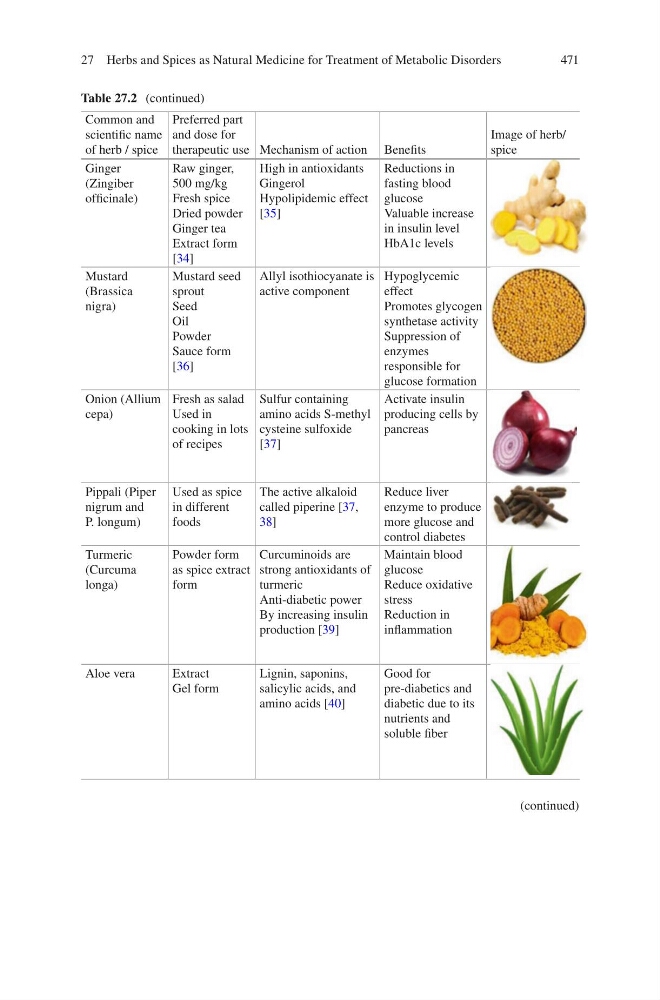
Table 27.2 (continued)
Common and
scientific name
of herb / spice
Preferred part
and dose for
therapeutic use Mechanism of action Benefits
Image of herb/
spice
Ginger
(Zingiber
officinale)
Raw ginger,
500 mg/kg
Fresh spice
Dried powder
Ginger tea
Extract form
[34]
High in antioxidants
Gingerol
Hypolipidemic effect
[35]
Reductions in
fasting blood
glucose
Valuable increase
in insulin level
HbA1c levels
Mustard
(Brassica
nigra)
Mustard seed
sprout
Seed
Oil
Powder
Sauce form
[36]
Allyl isothiocyanate is
active component
Hypoglycemic
effect
Promotes glycogen
synthetase activity
Suppression of
enzymes
responsible for
glucose formation
Onion (Allium
cepa)
Fresh as salad
Used in
cooking in lots
of recipes
Sulfur containing
amino acids S-methyl
cysteine sulfoxide
[37]
Activate insulin
producing cells by
pancreas
Pippali (Piper
nigrum and
P. longum)
Used as spice
in different
foods
The active alkaloid
called piperine [37,
38]
Reduce liver
enzyme to produce
more glucose and
control diabetes
Turmeric
(Curcuma
longa)
Powder form
as spice extract
form
Curcuminoids are
strong antioxidants of
turmeric
Anti-diabetic power
By increasing insulin
production [39]
Maintain blood
glucose
Reduce oxidative
stress
Reduction in
inflammation
Aloe vera
Extract
Gel form
Lignin, saponins,
salicylic acids, and
amino acids [40]
Good for
pre-diabetics and
diabetic due to its
nutrients and
soluble fiber
(continued)
27 Herbs and Spices as Natural Medicine for Treatment of Metabolic Disorders
Table 27.2 (continued)
Common and
scientific name
of herb / spice
Preferred part
and dose for
therapeutic use Mechanism of action Benefits
Image of herb/
spice
Ginger
(Zingiber
officinale)
Raw ginger,
500 mg/kg
Fresh spice
Dried powder
Ginger tea
Extract form
[34]
High in antioxidants
Gingerol
Hypolipidemic effect
[35]
Reductions in
fasting blood
glucose
Valuable increase
in insulin level
HbA1c levels
Mustard
(Brassica
nigra)
Mustard seed
sprout
Seed
Oil
Powder
Sauce form
[36]
Allyl isothiocyanate is
active component
Hypoglycemic
effect
Promotes glycogen
synthetase activity
Suppression of
enzymes
responsible for
glucose formation
Onion (Allium
cepa)
Fresh as salad
Used in
cooking in lots
of recipes
Sulfur containing
amino acids S-methyl
cysteine sulfoxide
[37]
Activate insulin
producing cells by
pancreas
Pippali (Piper
nigrum and
P. longum)
Used as spice
in different
foods
The active alkaloid
called piperine [37,
38]
Reduce liver
enzyme to produce
more glucose and
control diabetes
Turmeric
(Curcuma
longa)
Powder form
as spice extract
form
Curcuminoids are
strong antioxidants of
turmeric
Anti-diabetic power
By increasing insulin
production [39]
Maintain blood
glucose
Reduce oxidative
stress
Reduction in
inflammation
Aloe vera
Extract
Gel form
Lignin, saponins,
salicylic acids, and
amino acids [40]
Good for
pre-diabetics and
diabetic due to its
nutrients and
soluble fiber
(continued)
27 Herbs and Spices as Natural Medicine for Treatment of Metabolic Disorders