

470
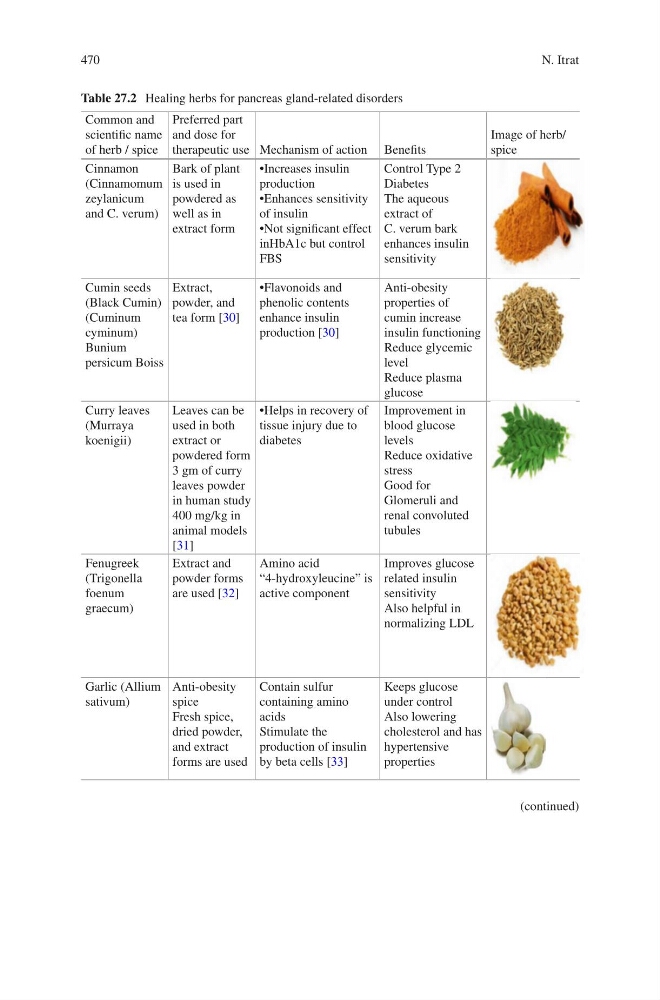
Table 27.2 Healing herbs for pancreas gland-related disorders
Common and
scientific name
of herb / spice
Preferred part
and dose for
therapeutic use Mechanism of action Benefits
Image of herb/
spice
Cinnamon
(Cinnamomum
zeylanicum
and C. verum)
Bark of plant
is used in
powdered as
well as in
extract form
•Increases insulin
production
•Enhances sensitivity
of insulin
•Not significant effect
inHbA1c but control
FBS
Control Type 2
Diabetes
The aqueous
extract of
C. verum bark
enhances insulin
sensitivity
Cumin seeds
(Black Cumin)
(Cuminum
cyminum)
Bunium
persicum Boiss
Extract,
powder, and
tea form [30]
•Flavonoids and
phenolic contents
enhance insulin
production [30]
Anti-obesity
properties of
cumin increase
insulin functioning
Reduce glycemic
level
Reduce plasma
glucose
Curry leaves
(Murraya
koenigii)
Leaves can be
used in both
extract or
powdered form
3 gm of curry
leaves powder
in human study
400 mg/kg in
animal models
[31]
•Helps in recovery of
tissue injury due to
diabetes
Improvement in
blood glucose
levels
Reduce oxidative
stress
Good for
Glomeruli and
renal convoluted
tubules
Fenugreek
(Trigonella
foenum
graecum)
Extract and
powder forms
are used [32]
Amino acid
“4-hydroxyleucine” is
active component
Improves glucose
related insulin
sensitivity
Also helpful in
normalizing LDL
Garlic (Allium
sativum)
Anti-obesity
spice
Fresh spice,
dried powder,
and extract
forms are used
Contain sulfur
containing amino
acids
Stimulate the
production of insulin
by beta cells [33]
Keeps glucose
under control
Also lowering
cholesterol and has
hypertensive
properties
(continued)
N. Itrat
Table 27.2 Healing herbs for pancreas gland-related disorders
Common and
scientific name
of herb / spice
Preferred part
and dose for
therapeutic use Mechanism of action Benefits
Image of herb/
spice
Cinnamon
(Cinnamomum
zeylanicum
and C. verum)
Bark of plant
is used in
powdered as
well as in
extract form
•Increases insulin
production
•Enhances sensitivity
of insulin
•Not significant effect
inHbA1c but control
FBS
Control Type 2
Diabetes
The aqueous
extract of
C. verum bark
enhances insulin
sensitivity
Cumin seeds
(Black Cumin)
(Cuminum
cyminum)
Bunium
persicum Boiss
Extract,
powder, and
tea form [30]
•Flavonoids and
phenolic contents
enhance insulin
production [30]
Anti-obesity
properties of
cumin increase
insulin functioning
Reduce glycemic
level
Reduce plasma
glucose
Curry leaves
(Murraya
koenigii)
Leaves can be
used in both
extract or
powdered form
3 gm of curry
leaves powder
in human study
400 mg/kg in
animal models
[31]
•Helps in recovery of
tissue injury due to
diabetes
Improvement in
blood glucose
levels
Reduce oxidative
stress
Good for
Glomeruli and
renal convoluted
tubules
Fenugreek
(Trigonella
foenum
graecum)
Extract and
powder forms
are used [32]
Amino acid
“4-hydroxyleucine” is
active component
Improves glucose
related insulin
sensitivity
Also helpful in
normalizing LDL
Garlic (Allium
sativum)
Anti-obesity
spice
Fresh spice,
dried powder,
and extract
forms are used
Contain sulfur
containing amino
acids
Stimulate the
production of insulin
by beta cells [33]
Keeps glucose
under control
Also lowering
cholesterol and has
hypertensive
properties
(continued)
N. Itrat