

464
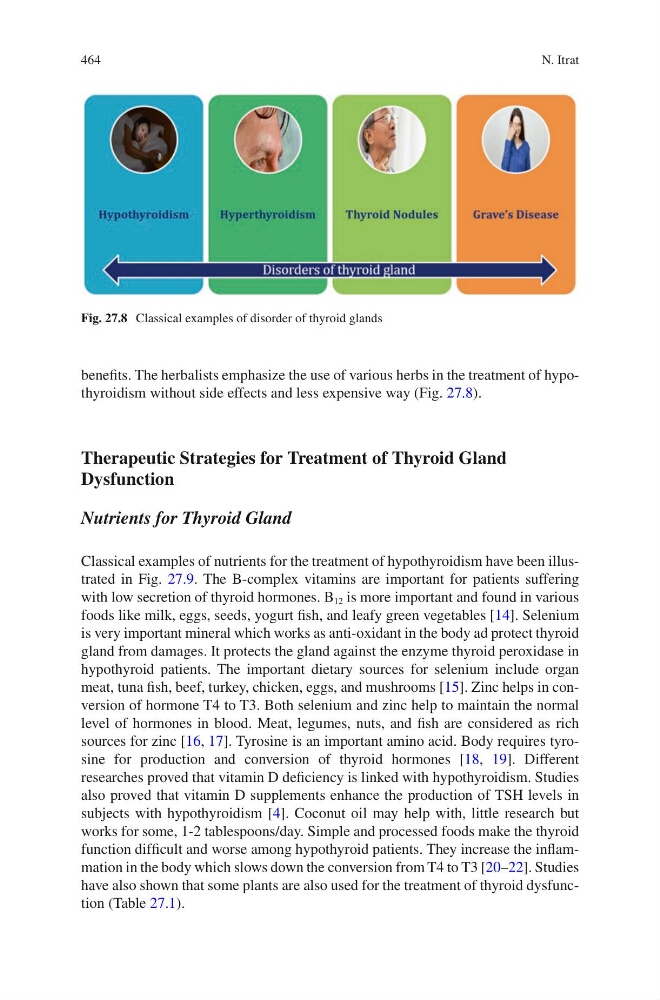
benefits. The herbalists emphasize the use of various herbs in the treatment of hypothyroidism without side effects and less expensive way (Fig. 27.8).
Therapeutic Strategies for Treatment of Thyroid Gland
Dysfunction
Nutrients for Thyroid Gland
Classical examples of nutrients for the treatment of hypothyroidism have been illustrated in Fig. 27.9. The B-complex vitamins are important for patients suffering
with low secretion of thyroid hormones. B 12 is more important and found in various
foods like milk, eggs, seeds, yogurt fish, and leafy green vegetables [14]. Selenium
is very important mineral which works as anti-oxidant in the body ad protect thyroid
gland from damages. It protects the gland against the enzyme thyroid peroxidase in
hypothyroid patients. The important dietary sources for selenium include organ
meat, tuna fish, beef, turkey, chicken, eggs, and mushrooms [15]. Zinc helps in conversion of hormone T4 to T3. Both selenium and zinc help to maintain the normal
level of hormones in blood. Meat, legumes, nuts, and fish are considered as rich
sources for zinc [16, 17]. Tyrosine is an important amino acid. Body requires tyrosine for production and conversion of thyroid hormones [18, 19]. Different
researches proved that vitamin D deficiency is linked with hypothyroidism. Studies
also proved that vitamin D supplements enhance the production of TSH levels in
subjects with hypothyroidism [4]. Coconut oil may help with, little research but
works for some, 1-2 tablespoons/day. Simple and processed foods make the thyroid
function difficult and worse among hypothyroid patients. They increase the inflammation in the body which slows down the conversion from T4 to T3 [20–22]. Studies
have also shown that some plants are also used for the treatment of thyroid dysfunction (Table 27.1).
Fig. 27.8 Classical examples of disorder of thyroid glands
N. Itrat
benefits. The herbalists emphasize the use of various herbs in the treatment of hypothyroidism without side effects and less expensive way (Fig. 27.8).
Therapeutic Strategies for Treatment of Thyroid Gland
Dysfunction
Nutrients for Thyroid Gland
Classical examples of nutrients for the treatment of hypothyroidism have been illustrated in Fig. 27.9. The B-complex vitamins are important for patients suffering
with low secretion of thyroid hormones. B 12 is more important and found in various
foods like milk, eggs, seeds, yogurt fish, and leafy green vegetables [14]. Selenium
is very important mineral which works as anti-oxidant in the body ad protect thyroid
gland from damages. It protects the gland against the enzyme thyroid peroxidase in
hypothyroid patients. The important dietary sources for selenium include organ
meat, tuna fish, beef, turkey, chicken, eggs, and mushrooms [15]. Zinc helps in conversion of hormone T4 to T3. Both selenium and zinc help to maintain the normal
level of hormones in blood. Meat, legumes, nuts, and fish are considered as rich
sources for zinc [16, 17]. Tyrosine is an important amino acid. Body requires tyrosine for production and conversion of thyroid hormones [18, 19]. Different
researches proved that vitamin D deficiency is linked with hypothyroidism. Studies
also proved that vitamin D supplements enhance the production of TSH levels in
subjects with hypothyroidism [4]. Coconut oil may help with, little research but
works for some, 1-2 tablespoons/day. Simple and processed foods make the thyroid
function difficult and worse among hypothyroid patients. They increase the inflammation in the body which slows down the conversion from T4 to T3 [20–22]. Studies
have also shown that some plants are also used for the treatment of thyroid dysfunction (Table 27.1).
Fig. 27.8 Classical examples of disorder of thyroid glands
N. Itrat