

428
microscopy (SPM) having an ultra-high-resolution for size evaluation. This technique is advantageous in terms of providing three-dimensional visualization such as
size, shape, and distribution. It also enables surface characterization. This technique
involves the usage of an atomic-scale probe tip for scanning of submicron level
samples. Based on the properties of the sample use for scanning, it has two different
modes of operation either contact (also called static) mode or non-contact (also
called dynamic) mode. In static mode, the tip of the probe drags across the sample
surface and in each oscillation, the cycle moves completely away from the surface
across the sample to generate the topographical map. On the other hand, in noncontact mode, the probe remains close to the sample surface.
Surface Charge
Zeta potential is an imperative feature of nanocarriers. It explains the physical stability of the particle, targeting capability, and in vivo distribution of NPs. It is the
measure of the zeta potential and it is a significant pointer of the stability of particle.
A minimum surface charge of ±30 mV is required for the physical stability of nanosuspension by sufficient repulsive forces. It is crucial to take surface charge into
account to avoid NPs aggregation. It is also a demonstrator of the loading of the
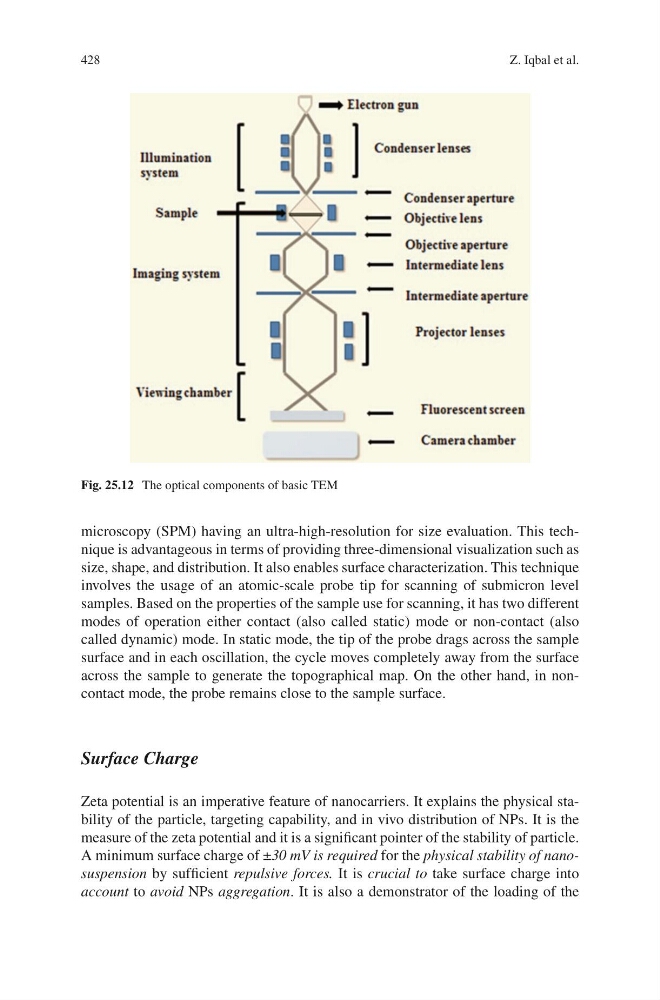
Fig. 25.12 The optical components of basic TEM
Z. Iqbal et al.
microscopy (SPM) having an ultra-high-resolution for size evaluation. This technique is advantageous in terms of providing three-dimensional visualization such as
size, shape, and distribution. It also enables surface characterization. This technique
involves the usage of an atomic-scale probe tip for scanning of submicron level
samples. Based on the properties of the sample use for scanning, it has two different
modes of operation either contact (also called static) mode or non-contact (also
called dynamic) mode. In static mode, the tip of the probe drags across the sample
surface and in each oscillation, the cycle moves completely away from the surface
across the sample to generate the topographical map. On the other hand, in noncontact mode, the probe remains close to the sample surface.
Surface Charge
Zeta potential is an imperative feature of nanocarriers. It explains the physical stability of the particle, targeting capability, and in vivo distribution of NPs. It is the
measure of the zeta potential and it is a significant pointer of the stability of particle.
A minimum surface charge of ±30 mV is required for the physical stability of nanosuspension by sufficient repulsive forces. It is crucial to take surface charge into
account to avoid NPs aggregation. It is also a demonstrator of the loading of the
Fig. 25.12 The optical components of basic TEM
Z. Iqbal et al.