

413
formulation and is applicable to a variety of polymers. It exhibits a better particle
size distribution and does not rely on diffusion to formulate the NPs. There is the
flexibility in the solvent and the surfactant used for formulation emulsificationsolvent evaporation technique.
This method employs sonication or high energy homogenizer. Though these processes are feasible to be carried out for the laboratory scale production, the production at a large scale requires substitute methods employing low-energy emulsification
methods. The use of toxic solvents is involved in this approach. In addition, the
presence of residual surfactants [20], time-consumption, and chances of coalescence
of the nanodroplets while evaporation may influence the morphology and final particle size [21].
Internal phase:
Solution of drug
+ polymer in
water non
miscible solvent
Removal of
solvent
External phase:
Stabilizer+water
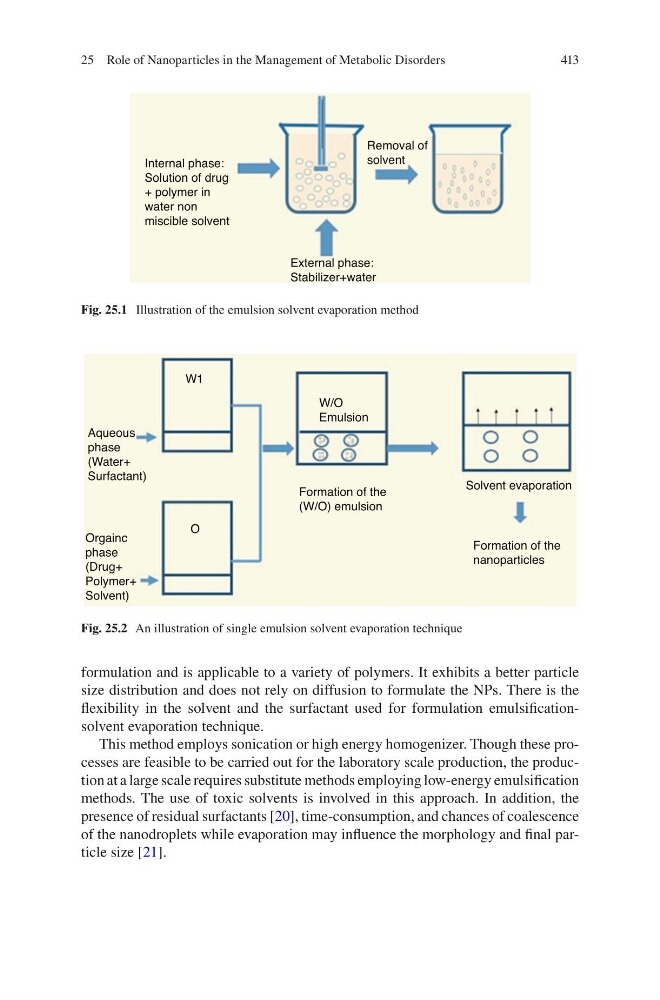
Fig. 25.1 Illustration of the emulsion solvent evaporation method
Aqueous
phase
(Water+
Surfactant)
W1
O
W/O
Emulsion
Formation of the
(W/O) emulsion
Solvent evaporation
Formation of the
nanoparticles
Orgainc
phase
(Drug+
Polymer+
Solvent)
Fig. 25.2 An illustration of single emulsion solvent evaporation technique
25 Role of Nanoparticles in the Management of Metabolic Disorders
formulation and is applicable to a variety of polymers. It exhibits a better particle
size distribution and does not rely on diffusion to formulate the NPs. There is the
flexibility in the solvent and the surfactant used for formulation emulsificationsolvent evaporation technique.
This method employs sonication or high energy homogenizer. Though these processes are feasible to be carried out for the laboratory scale production, the production at a large scale requires substitute methods employing low-energy emulsification
methods. The use of toxic solvents is involved in this approach. In addition, the
presence of residual surfactants [20], time-consumption, and chances of coalescence
of the nanodroplets while evaporation may influence the morphology and final particle size [21].
Internal phase:
Solution of drug
+ polymer in
water non
miscible solvent
Removal of
solvent
External phase:
Stabilizer+water
Fig. 25.1 Illustration of the emulsion solvent evaporation method
Aqueous
phase
(Water+
Surfactant)
W1
O
W/O
Emulsion
Formation of the
(W/O) emulsion
Solvent evaporation
Formation of the
nanoparticles
Orgainc
phase
(Drug+
Polymer+
Solvent)
Fig. 25.2 An illustration of single emulsion solvent evaporation technique
25 Role of Nanoparticles in the Management of Metabolic Disorders