

348
and regulate the adipogenesis and lipid accumulation are called as obesogens [24–
26]. In previous cascade, the list of obeso-genic chemicals that are able to disturb
lipid metabolism has been significantly increased. Exposure of cigarette smoking in
actual can directly enhance the number and size of adipocytes and/or indirectly
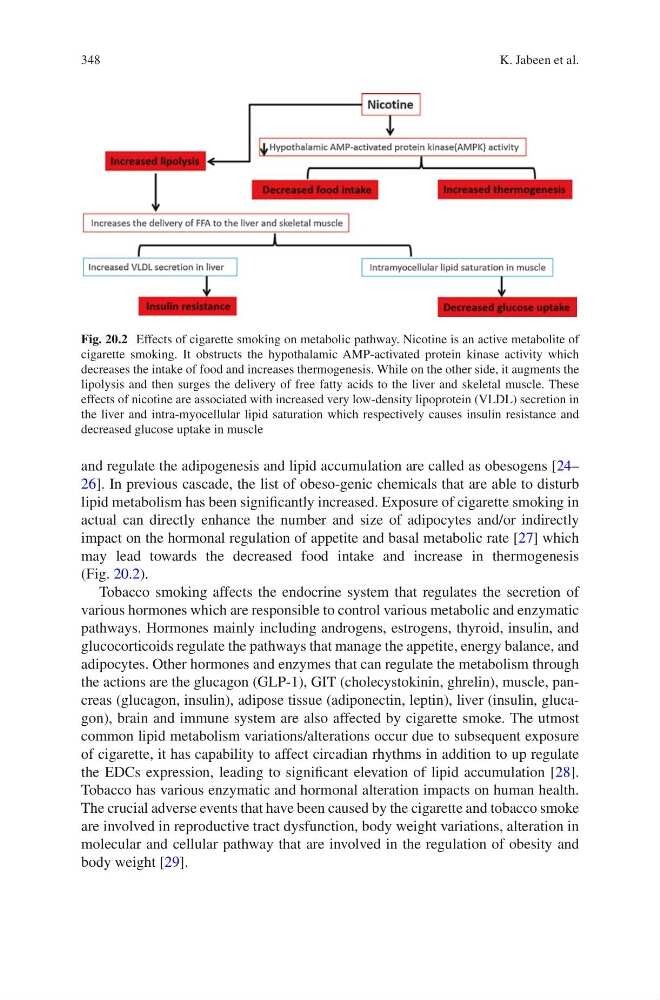
impact on the hormonal regulation of appetite and basal metabolic rate [27] which
may lead towards the decreased food intake and increase in thermogenesis
(Fig. 20.2).
Tobacco smoking affects the endocrine system that regulates the secretion of
various hormones which are responsible to control various metabolic and enzymatic
pathways. Hormones mainly including androgens, estrogens, thyroid, insulin, and
glucocorticoids regulate the pathways that manage the appetite, energy balance, and
adipocytes. Other hormones and enzymes that can regulate the metabolism through
the actions are the glucagon (GLP-1), GIT (cholecystokinin, ghrelin), muscle, pancreas (glucagon, insulin), adipose tissue (adiponectin, leptin), liver (insulin, glucagon), brain and immune system are also affected by cigarette smoke. The utmost
common lipid metabolism variations/alterations occur due to subsequent exposure
of cigarette, it has capability to affect circadian rhythms in addition to up regulate
the EDCs expression, leading to significant elevation of lipid accumulation [28].
Tobacco has various enzymatic and hormonal alteration impacts on human health.
The crucial adverse events that have been caused by the cigarette and tobacco smoke
are involved in reproductive tract dysfunction, body weight variations, alteration in
molecular and cellular pathway that are involved in the regulation of obesity and
body weight [29].
Fig. 20.2 Effects of cigarette smoking on metabolic pathway. Nicotine is an active metabolite of
cigarette smoking. It obstructs the hypothalamic AMP-activated protein kinase activity which
decreases the intake of food and increases thermogenesis. While on the other side, it augments the
lipolysis and then surges the delivery of free fatty acids to the liver and skeletal muscle. These
effects of nicotine are associated with increased very low-density lipoprotein (VLDL) secretion in
the liver and intra-myocellular lipid saturation which respectively causes insulin resistance and
decreased glucose uptake in muscle
K. Jabeen et al.
and regulate the adipogenesis and lipid accumulation are called as obesogens [24–
26]. In previous cascade, the list of obeso-genic chemicals that are able to disturb
lipid metabolism has been significantly increased. Exposure of cigarette smoking in
actual can directly enhance the number and size of adipocytes and/or indirectly
impact on the hormonal regulation of appetite and basal metabolic rate [27] which
may lead towards the decreased food intake and increase in thermogenesis
(Fig. 20.2).
Tobacco smoking affects the endocrine system that regulates the secretion of
various hormones which are responsible to control various metabolic and enzymatic
pathways. Hormones mainly including androgens, estrogens, thyroid, insulin, and
glucocorticoids regulate the pathways that manage the appetite, energy balance, and
adipocytes. Other hormones and enzymes that can regulate the metabolism through
the actions are the glucagon (GLP-1), GIT (cholecystokinin, ghrelin), muscle, pancreas (glucagon, insulin), adipose tissue (adiponectin, leptin), liver (insulin, glucagon), brain and immune system are also affected by cigarette smoke. The utmost
common lipid metabolism variations/alterations occur due to subsequent exposure
of cigarette, it has capability to affect circadian rhythms in addition to up regulate
the EDCs expression, leading to significant elevation of lipid accumulation [28].
Tobacco has various enzymatic and hormonal alteration impacts on human health.
The crucial adverse events that have been caused by the cigarette and tobacco smoke
are involved in reproductive tract dysfunction, body weight variations, alteration in
molecular and cellular pathway that are involved in the regulation of obesity and
body weight [29].
Fig. 20.2 Effects of cigarette smoking on metabolic pathway. Nicotine is an active metabolite of
cigarette smoking. It obstructs the hypothalamic AMP-activated protein kinase activity which
decreases the intake of food and increases thermogenesis. While on the other side, it augments the
lipolysis and then surges the delivery of free fatty acids to the liver and skeletal muscle. These
effects of nicotine are associated with increased very low-density lipoprotein (VLDL) secretion in
the liver and intra-myocellular lipid saturation which respectively causes insulin resistance and
decreased glucose uptake in muscle
K. Jabeen et al.