

287
hypertriglyceridemia [103]. Exposure of PBDE inhibited the adipocyte glucose
oxidation whereas enhanced the isoproterenol induced lipolysis thereby increasing
circulatory FFAs, a substrate for hepatic TG synthesis [104]. Prenatal exposure of
4- nonylphenol may cause lipid abnormalities via high serum cholesterol levels
[105]. Sub-chronic exposure of malathion induced hyperglycemia via accelerating
glycogenolysis and gluconeogenesis [106].
Impaired glucose and lactate handing in both liver and muscles with chronic
intake of DEHP has been reported resulting in variation of glycolytic intermediates
[107]. Exposure of BPA in experimental model animals during lactation and utero
period proved reduction in hepatic glycogen contents. Reduction in hepatic glycogen contents is due to hypo expression of hepatic glucokinase because promoters
of this enzymes were hyper methylated after the exposure of BPA [108]. BPA
exposure in multigenerational animal models also supported that glucose intolerance as well as insulin resistance in F0 and F2 generations was associated with
hypo expression of hepatic glucokinase by hyper methylation of its promoter gene
[109]. These evidences suggest that disruption in hepatic glucose management is a
common mode which is promoted by all MDCs in metabolic dysfunctions
Effects on Epigenetics
Epigenetic markers are specific factors around the DNA that play a major role for
the determination of functional output about the information, stored in the organism’s genome Literature reported that exposure of xenobiotics causes the obesity
which can be transmitted to next generations through these epigenetic markers
[110]. After the initial exposure, a generation will be called transgenerational until
a trait remains persistence in at least two generations [111]. Generally, there are
clear evidences that MDCs causing obesity through directly binding with NRs
receptors recruiting methyl and acetyltransferase which may lead to changes in epigenetic markers that regulate the genetic expression (Fig. 17.13). So, it reveals that
MDCs have ability to change the chromatic state of DNA or histone methyltransferases [112]. Adipogenesis regulating genes such as PPARɤ or some other related
genes are main targets for obesogens. During the developing stage, differentiation
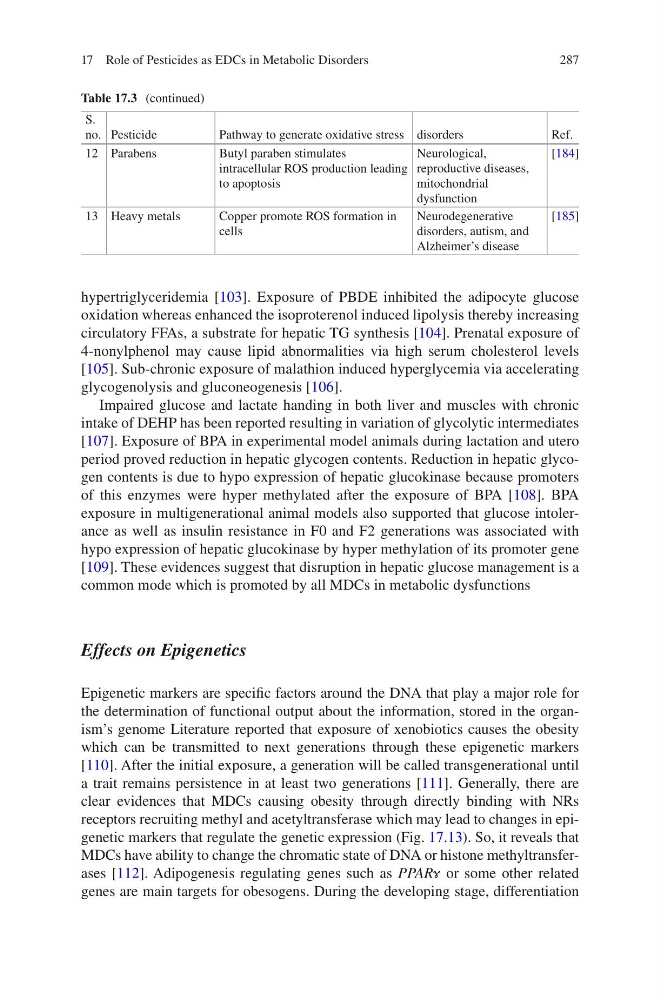
Table 17.3 (continued)
S.
no. Pesticide
Pathway to generate oxidative stress disorders
Ref.
12 Parabens
Butyl paraben stimulates
intracellular ROS production leading
to apoptosis
Neurological,
reproductive diseases,
mitochondrial
dysfunction
[184]
13 Heavy metals
Copper promote ROS formation in
cells
Neurodegenerative
disorders, autism, and
Alzheimer’s disease
[185]
17 Role of Pesticides as EDCs in Metabolic Disorders
hypertriglyceridemia [103]. Exposure of PBDE inhibited the adipocyte glucose
oxidation whereas enhanced the isoproterenol induced lipolysis thereby increasing
circulatory FFAs, a substrate for hepatic TG synthesis [104]. Prenatal exposure of
4- nonylphenol may cause lipid abnormalities via high serum cholesterol levels
[105]. Sub-chronic exposure of malathion induced hyperglycemia via accelerating
glycogenolysis and gluconeogenesis [106].
Impaired glucose and lactate handing in both liver and muscles with chronic
intake of DEHP has been reported resulting in variation of glycolytic intermediates
[107]. Exposure of BPA in experimental model animals during lactation and utero
period proved reduction in hepatic glycogen contents. Reduction in hepatic glycogen contents is due to hypo expression of hepatic glucokinase because promoters
of this enzymes were hyper methylated after the exposure of BPA [108]. BPA
exposure in multigenerational animal models also supported that glucose intolerance as well as insulin resistance in F0 and F2 generations was associated with
hypo expression of hepatic glucokinase by hyper methylation of its promoter gene
[109]. These evidences suggest that disruption in hepatic glucose management is a
common mode which is promoted by all MDCs in metabolic dysfunctions
Effects on Epigenetics
Epigenetic markers are specific factors around the DNA that play a major role for
the determination of functional output about the information, stored in the organism’s genome Literature reported that exposure of xenobiotics causes the obesity
which can be transmitted to next generations through these epigenetic markers
[110]. After the initial exposure, a generation will be called transgenerational until
a trait remains persistence in at least two generations [111]. Generally, there are
clear evidences that MDCs causing obesity through directly binding with NRs
receptors recruiting methyl and acetyltransferase which may lead to changes in epigenetic markers that regulate the genetic expression (Fig. 17.13). So, it reveals that
MDCs have ability to change the chromatic state of DNA or histone methyltransferases [112]. Adipogenesis regulating genes such as PPARɤ or some other related
genes are main targets for obesogens. During the developing stage, differentiation
Table 17.3 (continued)
S.
no. Pesticide
Pathway to generate oxidative stress disorders
Ref.
12 Parabens
Butyl paraben stimulates
intracellular ROS production leading
to apoptosis
Neurological,
reproductive diseases,
mitochondrial
dysfunction
[184]
13 Heavy metals
Copper promote ROS formation in
cells
Neurodegenerative
disorders, autism, and
Alzheimer’s disease
[185]
17 Role of Pesticides as EDCs in Metabolic Disorders