

6
Pituitary Gland
Hypothalamus constitutes the inferior part of diencephalons; in addition, it is present directly above the brainstem. The pituitary gland is connected by a slender stem
(infundibulum) to the bottom of the hypothalamus. There are two regions, i.e., (a)
the anterior pituitary gland (anterior lobe or adenohypophysis) (b) the posterior
pituitary gland (neurohypophysis or posterior lobe). Hypothalamus involves in
(Gonadotropic hormones)
Follicle - stimulating
hormone (FSH)
Luteinizing
hormone (LH)
act on
ovaries
Testes
Melanocyte-stimulating
hormone (MSH)
skin melanocytes
Growth hormone
(GH)
Adrenocorticotropic
hormone (ACTH)
Thyroid-stimulating
horomone(TSH)
Antidiuretic
hormone (ADH)
(muscles of uterus)
bone and soft tissues
adrenal cortex
Thyroid
kidney tubules
Blood
inflow
ANTERIOR
PITUITARY
Blood
outflow
Blood
outflow
Blood
inflow
POSTERIOR
PITUITARY
Oxytocin,Prolactin
mammary glands
Neurosecretory
cells
Hypothalamus
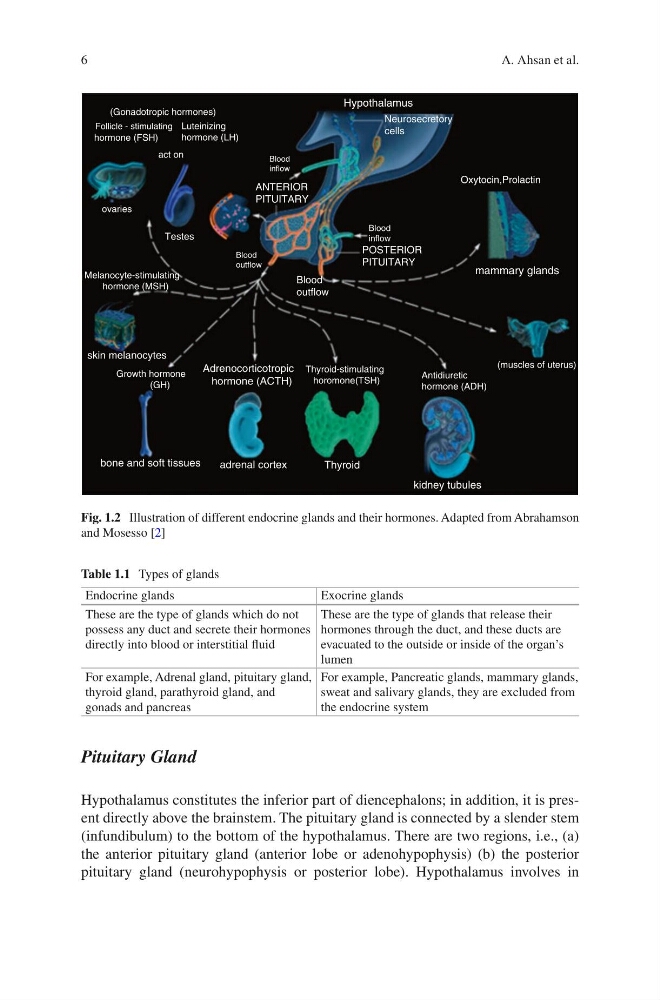
Fig. 1.2 Illustration of different endocrine glands and their hormones. Adapted from Abrahamson
and Mosesso [2]
Table 1.1 Types of glands
Endocrine glands
Exocrine glands
These are the type of glands which do not
possess any duct and secrete their hormones
directly into blood or interstitial fluid
These are the type of glands that release their
hormones through the duct, and these ducts are
evacuated to the outside or inside of the organ’s
lumen
For example, Adrenal gland, pituitary gland,
thyroid gland, parathyroid gland, and
gonads and pancreas
For example, Pancreatic glands, mammary glands,
sweat and salivary glands, they are excluded from
the endocrine system
A. Ahsan et al.
Pituitary Gland
Hypothalamus constitutes the inferior part of diencephalons; in addition, it is present directly above the brainstem. The pituitary gland is connected by a slender stem
(infundibulum) to the bottom of the hypothalamus. There are two regions, i.e., (a)
the anterior pituitary gland (anterior lobe or adenohypophysis) (b) the posterior
pituitary gland (neurohypophysis or posterior lobe). Hypothalamus involves in
(Gonadotropic hormones)
Follicle - stimulating
hormone (FSH)
Luteinizing
hormone (LH)
act on
ovaries
Testes
Melanocyte-stimulating
hormone (MSH)
skin melanocytes
Growth hormone
(GH)
Adrenocorticotropic
hormone (ACTH)
Thyroid-stimulating
horomone(TSH)
Antidiuretic
hormone (ADH)
(muscles of uterus)
bone and soft tissues
adrenal cortex
Thyroid
kidney tubules
Blood
inflow
ANTERIOR
PITUITARY
Blood
outflow
Blood
outflow
Blood
inflow
POSTERIOR
PITUITARY
Oxytocin,Prolactin
mammary glands
Neurosecretory
cells
Hypothalamus
Fig. 1.2 Illustration of different endocrine glands and their hormones. Adapted from Abrahamson
and Mosesso [2]
Table 1.1 Types of glands
Endocrine glands
Exocrine glands
These are the type of glands which do not
possess any duct and secrete their hormones
directly into blood or interstitial fluid
These are the type of glands that release their
hormones through the duct, and these ducts are
evacuated to the outside or inside of the organ’s
lumen
For example, Adrenal gland, pituitary gland,
thyroid gland, parathyroid gland, and
gonads and pancreas
For example, Pancreatic glands, mammary glands,
sweat and salivary glands, they are excluded from
the endocrine system
A. Ahsan et al.