

210
Arsenic can induce oxidative stress by suppressing the antioxidant enzyme [48].
Arsenic can induce adverse effects on health by increasing the production of reactive oxygen species [49]. The chief house for the production of reactive oxygen
species is mitochondria which may be due to the alteration in electron transfer
through respiratory chain that enhances the production of hydrogen peroxide,
hydroxyl radicals and superoxide anion [50].
Sulfhydryl group present in glucose transporter at the outer surface of the plasma
membrane can form a bond with a polypeptide chain of insulin [51]. This sulfhydryl
group has an essential role in the transportation of glucose either insulin-dependent
or insulin-independent [52]. Arsenic has a high affinity for enzyme-containing thiols group and inhibits the binding of a substrate with the active site of an enzyme
(Fig. 13.4). Trivalent arsenate reacts with molecules containing sulfhydryl group
such as glutathione and cysteine [53]. Arsenic can induce alteration in the expression of genes that causes diabetes. Due to arsenic, the expression of mRNA and
secretion of insulin is decreased [54]. The most important gene for a transcription
factor peroxisome proliferative-activated receptor-γ control expression of a gene for
the sensitivity of insulin. Arsenic has the ability to alter the expression of this gene
and as a result synthesis of mRNA is inhibited and adipocytes differentiation is
reversed [55].
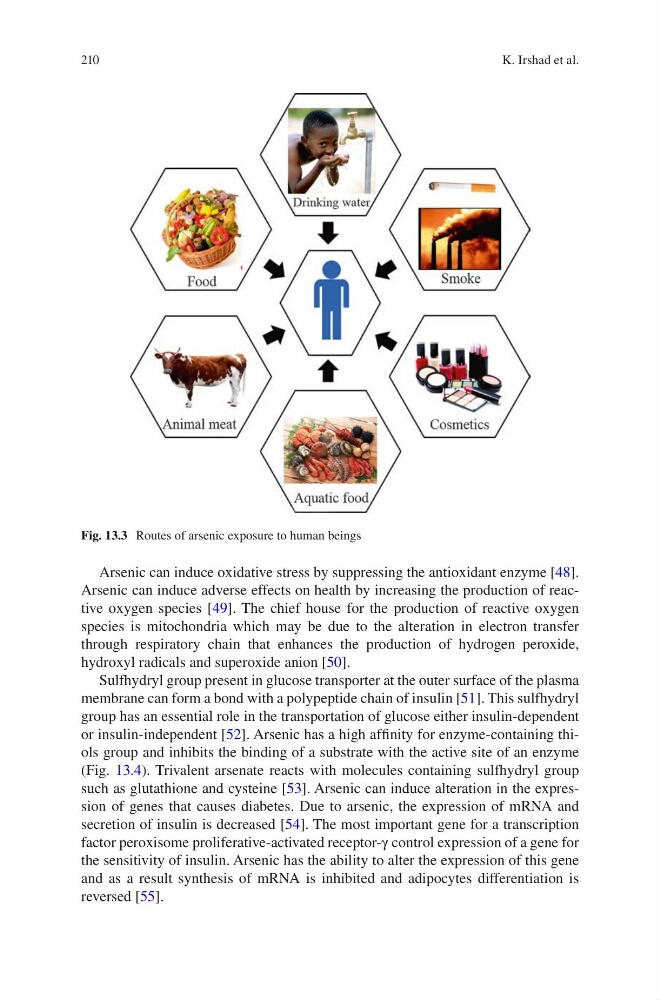
Fig. 13.3 Routes of arsenic exposure to human beings
K. Irshad et al.
Arsenic can induce oxidative stress by suppressing the antioxidant enzyme [48].
Arsenic can induce adverse effects on health by increasing the production of reactive oxygen species [49]. The chief house for the production of reactive oxygen
species is mitochondria which may be due to the alteration in electron transfer
through respiratory chain that enhances the production of hydrogen peroxide,
hydroxyl radicals and superoxide anion [50].
Sulfhydryl group present in glucose transporter at the outer surface of the plasma
membrane can form a bond with a polypeptide chain of insulin [51]. This sulfhydryl
group has an essential role in the transportation of glucose either insulin-dependent
or insulin-independent [52]. Arsenic has a high affinity for enzyme-containing thiols group and inhibits the binding of a substrate with the active site of an enzyme
(Fig. 13.4). Trivalent arsenate reacts with molecules containing sulfhydryl group
such as glutathione and cysteine [53]. Arsenic can induce alteration in the expression of genes that causes diabetes. Due to arsenic, the expression of mRNA and
secretion of insulin is decreased [54]. The most important gene for a transcription
factor peroxisome proliferative-activated receptor-γ control expression of a gene for
the sensitivity of insulin. Arsenic has the ability to alter the expression of this gene
and as a result synthesis of mRNA is inhibited and adipocytes differentiation is
reversed [55].
Fig. 13.3 Routes of arsenic exposure to human beings
K. Irshad et al.