

140
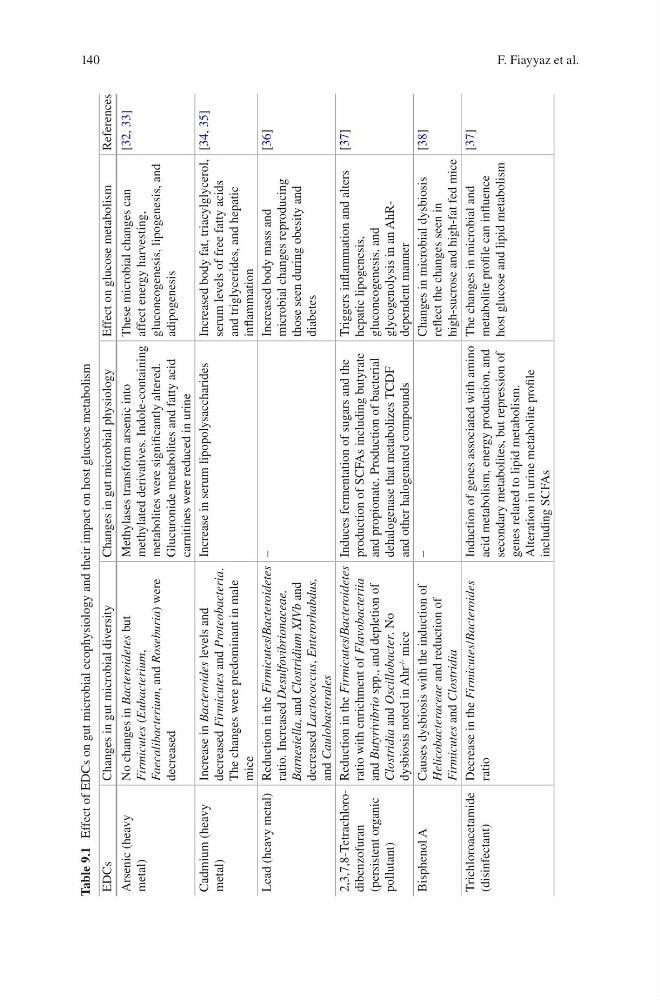
Table 9.1 Effect of EDCs on gut microbial ecophysiology and their impact on host glucose metabolism
EDCs
Changes in gut microbial diversity
Changes in gut microbial physiology
Effect on glucose metabolism
References
Arsenic (heavy
metal)
No changes in Bacteroidetes
but
Firmicutes
(Eubacterium,
Faecalibacterium,
and Roseburia)
were
decreased
Methylases transform arsenic into
methylated derivatives. Indole-containing
metabolites were significantly altered.
Glucuronide metabolites and fatty acid
carnitines were reduced in urine
These microbial changes can
affect energy harvesting,
gluconeogenesis, lipogenesis, and
adipogenesis
[32, 33]
Cadmium (heavy
metal)
Increase in Bacteroides
levels and
decreased Firmicutes
and Proteobacteria.
The changes were predominant in male
mice
Increase in serum lipopolysaccharides
Increased body fat, triacylglycerol,
serum levels of free fatty acids
and triglycerides, and hepatic
inflammation
[34, 35]
Lead (heavy metal) Reduction in the Firmicutes/Bacteroidetes
ratio. Increased Desulfovibrionaceae,
Barnesiella,
and Clostridium XIVb
and
decreased Lactococcus, Enterorhabdus,
and Caulobacterales
–
Increased body mass and
microbial changes reproducing
those seen during obesity and
diabetes
[36]
2,3,7,8-Tetrachlorodibenzofuran
(persistent organic
pollutant)
Reduction in the Firmicutes/Bacteroidetes
ratio with enrichment of Flavobacteriia
and Butyrivibrio
spp., and depletion of
Clostridia
and Oscillobacter.
No
dysbiosis noted in Ahr
-/mice
Induces fermentation of sugars and the
production of SCFAs including butyrate
and propionate. Production of bacterial
dehalogenase that metabolizes TCDF
and other halogenated compounds
Triggers inflammation and alters
hepatic lipogenesis,
gluconeogenesis, and
glycogenolysis in an AhRdependent manner
[37]
Bisphenol A
Causes dysbiosis with the induction of
Helicobacteraceae
and reduction of
Firmicutes
and Clostridia
–
Changes in microbial dysbiosis
reflect the changes seen in
high-sucrose and high-fat fed mice
[38]
Trichloroacetamide
(disinfectant)
Decrease in the Firmicutes/Bacteroides
ratio
Induction of genes associated with amino
acid metabolism, energy production, and
secondary metabolites, but repression of
genes related to lipid metabolism.
Alteration in urine metabolite profile
including SCFAs
The changes in microbial and
metabolite profile can influence
host glucose and lipid metabolism
[37]
F. Fiayyaz et al.
Table 9.1 Effect of EDCs on gut microbial ecophysiology and their impact on host glucose metabolism
EDCs
Changes in gut microbial diversity
Changes in gut microbial physiology
Effect on glucose metabolism
References
Arsenic (heavy
metal)
No changes in Bacteroidetes
but
Firmicutes
(Eubacterium,
Faecalibacterium,
and Roseburia)
were
decreased
Methylases transform arsenic into
methylated derivatives. Indole-containing
metabolites were significantly altered.
Glucuronide metabolites and fatty acid
carnitines were reduced in urine
These microbial changes can
affect energy harvesting,
gluconeogenesis, lipogenesis, and
adipogenesis
[32, 33]
Cadmium (heavy
metal)
Increase in Bacteroides
levels and
decreased Firmicutes
and Proteobacteria.
The changes were predominant in male
mice
Increase in serum lipopolysaccharides
Increased body fat, triacylglycerol,
serum levels of free fatty acids
and triglycerides, and hepatic
inflammation
[34, 35]
Lead (heavy metal) Reduction in the Firmicutes/Bacteroidetes
ratio. Increased Desulfovibrionaceae,
Barnesiella,
and Clostridium XIVb
and
decreased Lactococcus, Enterorhabdus,
and Caulobacterales
–
Increased body mass and
microbial changes reproducing
those seen during obesity and
diabetes
[36]
2,3,7,8-Tetrachlorodibenzofuran
(persistent organic
pollutant)
Reduction in the Firmicutes/Bacteroidetes
ratio with enrichment of Flavobacteriia
and Butyrivibrio
spp., and depletion of
Clostridia
and Oscillobacter.
No
dysbiosis noted in Ahr
-/mice
Induces fermentation of sugars and the
production of SCFAs including butyrate
and propionate. Production of bacterial
dehalogenase that metabolizes TCDF
and other halogenated compounds
Triggers inflammation and alters
hepatic lipogenesis,
gluconeogenesis, and
glycogenolysis in an AhRdependent manner
[37]
Bisphenol A
Causes dysbiosis with the induction of
Helicobacteraceae
and reduction of
Firmicutes
and Clostridia
–
Changes in microbial dysbiosis
reflect the changes seen in
high-sucrose and high-fat fed mice
[38]
Trichloroacetamide
(disinfectant)
Decrease in the Firmicutes/Bacteroides
ratio
Induction of genes associated with amino
acid metabolism, energy production, and
secondary metabolites, but repression of
genes related to lipid metabolism.
Alteration in urine metabolite profile
including SCFAs
The changes in microbial and
metabolite profile can influence
host glucose and lipid metabolism
[37]
F. Fiayyaz et al.