

129
Antibiotic Resistance in Obesity
Obesity is a major metabolic concern for both developed and developing countries
as it is a risk factor of many health conditions. According to the investigations of
WHO, in 2014 the global prevalence of obesity was above 600 million which was
estimated to be 13% of the world’s adult population and this rate is increasing at a
fast rate [30]. Antibiotics are associated with changing the gut microbiota which can
in turn affect the lipid metabolism and hence causing obesity [31]. As with the
increase in the level of fat content and its deposition in liver, mitochondria become
dysfunctional and mitochondrial dysfunction is a chief contributor in the pathogenesis of many metabolic disorders [32]. Another major outcome of obesity is insulin
resistance which may be due to mitochondrial dysfunctions [33]. Mitochondrial
dysfunction in obesity can ultimately lead to antibiotic resistance; hence, due to
altered gut microbiota obese patients show resistance to the many antibiotics.
Another research based evidence also suggests that the unregulated usage of antibiotics in early childhood can increase the vulnerability to many metabolic disorders
[30]. Figure 8.2 represents the inter-relationship between obesity and misuse of
antibiotics.
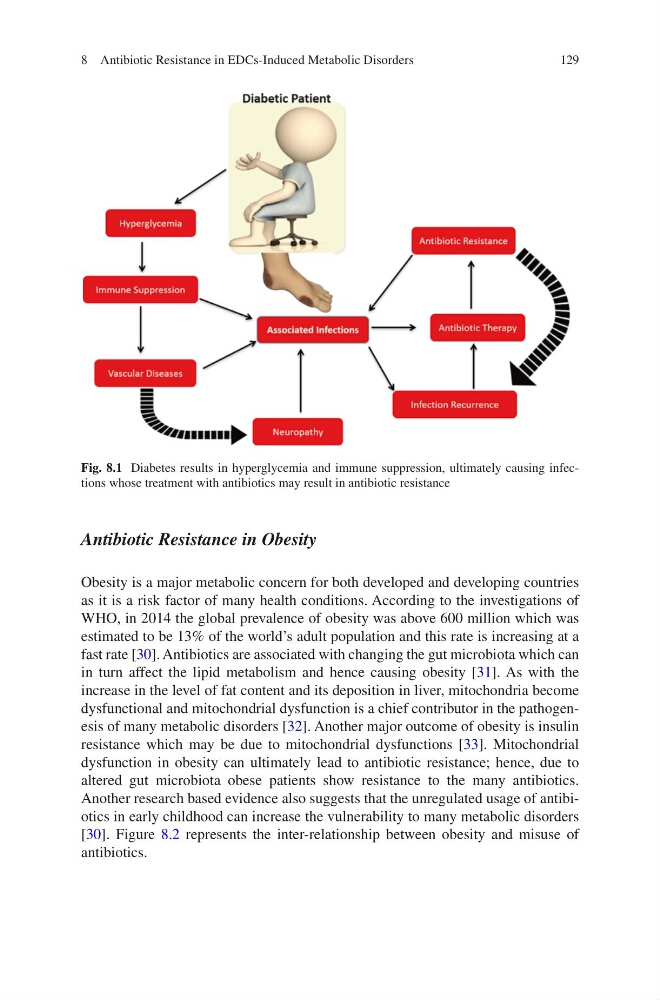
Fig. 8.1 Diabetes results in hyperglycemia and immune suppression, ultimately causing infections whose treatment with antibiotics may result in antibiotic resistance
8 Antibiotic Resistance in EDCs-Induced Metabolic Disorders
Antibiotic Resistance in Obesity
Obesity is a major metabolic concern for both developed and developing countries
as it is a risk factor of many health conditions. According to the investigations of
WHO, in 2014 the global prevalence of obesity was above 600 million which was
estimated to be 13% of the world’s adult population and this rate is increasing at a
fast rate [30]. Antibiotics are associated with changing the gut microbiota which can
in turn affect the lipid metabolism and hence causing obesity [31]. As with the
increase in the level of fat content and its deposition in liver, mitochondria become
dysfunctional and mitochondrial dysfunction is a chief contributor in the pathogenesis of many metabolic disorders [32]. Another major outcome of obesity is insulin
resistance which may be due to mitochondrial dysfunctions [33]. Mitochondrial
dysfunction in obesity can ultimately lead to antibiotic resistance; hence, due to
altered gut microbiota obese patients show resistance to the many antibiotics.
Another research based evidence also suggests that the unregulated usage of antibiotics in early childhood can increase the vulnerability to many metabolic disorders
[30]. Figure 8.2 represents the inter-relationship between obesity and misuse of
antibiotics.
Fig. 8.1 Diabetes results in hyperglycemia and immune suppression, ultimately causing infections whose treatment with antibiotics may result in antibiotic resistance
8 Antibiotic Resistance in EDCs-Induced Metabolic Disorders