

119
hormones and reproduction, DDT was among the first identified endocrine disruptors. There is a plethora of fertility issues linked with DDT. Several studies suggest
that excessive DDT exposures adversely affect the fertility of both male and female.
As with most endocrine-disrupting chemicals, exposure to DDT is most conspicuous for health when it occurs during the development of fetuses and childhood.
DDT exposure has been proved to contributing to the early start of puberty in girls;
adolescent studies suggest the prolonged menstruation and untimed menopause are
also linked with exposure to DDTs, and it may cause disturbance to the menstrual
cycle throughout life [12]. Based on several epidemiological studies, there is a
strong link between the DDT metabolite DDE and type 2 diabetes risk [13] as
shown in Fig. 7.2.
Exposure
Environmental chemicals exposure is lifelong, exposure differs depending upon
people’s habits and choices, and the places where they work and live. Humans are
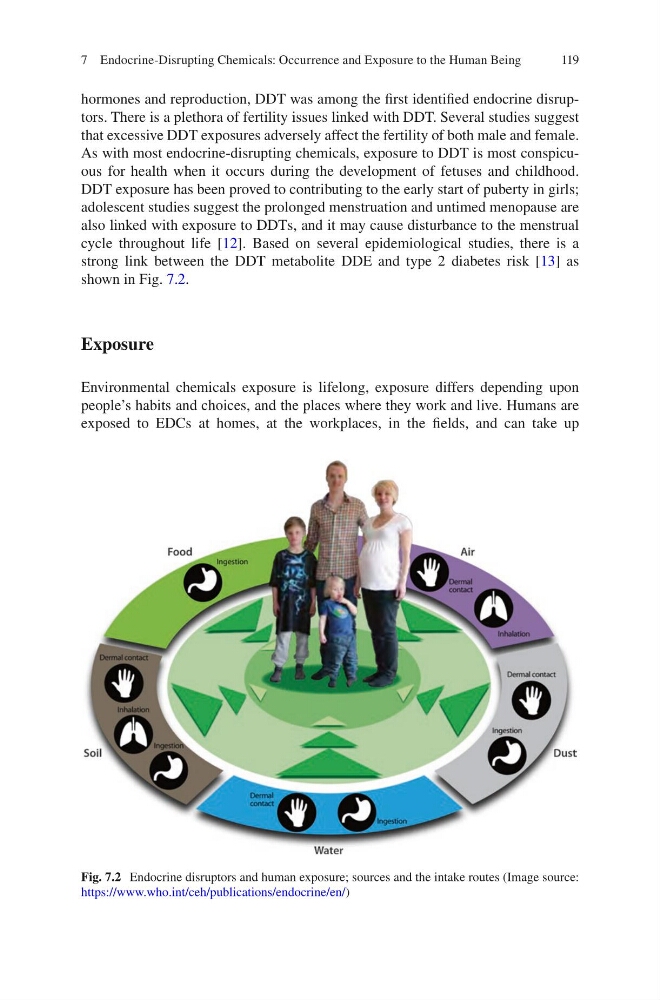
exposed to EDCs at homes, at the workplaces, in the fields, and can take up
Fig. 7.2 Endocrine disruptors and human exposure; sources and the intake routes (Image source:
https://www.who.int/ceh/publications/endocrine/en/)
7 Endocrine-Disrupting Chemicals: Occurrence and Exposure to the Human Being
hormones and reproduction, DDT was among the first identified endocrine disruptors. There is a plethora of fertility issues linked with DDT. Several studies suggest
that excessive DDT exposures adversely affect the fertility of both male and female.
As with most endocrine-disrupting chemicals, exposure to DDT is most conspicuous for health when it occurs during the development of fetuses and childhood.
DDT exposure has been proved to contributing to the early start of puberty in girls;
adolescent studies suggest the prolonged menstruation and untimed menopause are
also linked with exposure to DDTs, and it may cause disturbance to the menstrual
cycle throughout life [12]. Based on several epidemiological studies, there is a
strong link between the DDT metabolite DDE and type 2 diabetes risk [13] as
shown in Fig. 7.2.
Exposure
Environmental chemicals exposure is lifelong, exposure differs depending upon
people’s habits and choices, and the places where they work and live. Humans are
exposed to EDCs at homes, at the workplaces, in the fields, and can take up
Fig. 7.2 Endocrine disruptors and human exposure; sources and the intake routes (Image source:
https://www.who.int/ceh/publications/endocrine/en/)
7 Endocrine-Disrupting Chemicals: Occurrence and Exposure to the Human Being