

88
preventive/prophylactic effect on liver decompensation. In addition to this, five
drugs have been entered in phase 3 development for treating NASH [34].
Type 2 Diabetes Mellitus
Among other metabolic disorders involving lipid-impaired metabolism, diabetes is
the most prevalent metabolic disorder that ultimately leads towards disruption in
metabolic pathways. Currently, T2DM has become a global health problem, with
the prevalence of 8.8% and its incidence is promptly increasing. The major consequence of T2DM is production of hazardous metabolites that consequently leads
towards total organ failure [37, 38]. Insulin resistance, which is a major triggering
factor possesses strong association with T2D and also linked with other metabolic
disorders such as hypertension, hyperglycemia, and obesity [39, 40].
Although the exact underlying molecular mechanism responsible for insulin
resistance is still unclear, many studies have dictated strong association between
abnormal lipid metabolism and insulin resistance [41]. Also, deposition of bioactive
lipids in the non-adipose tissues such as muscle and liver is also strongly interlinked
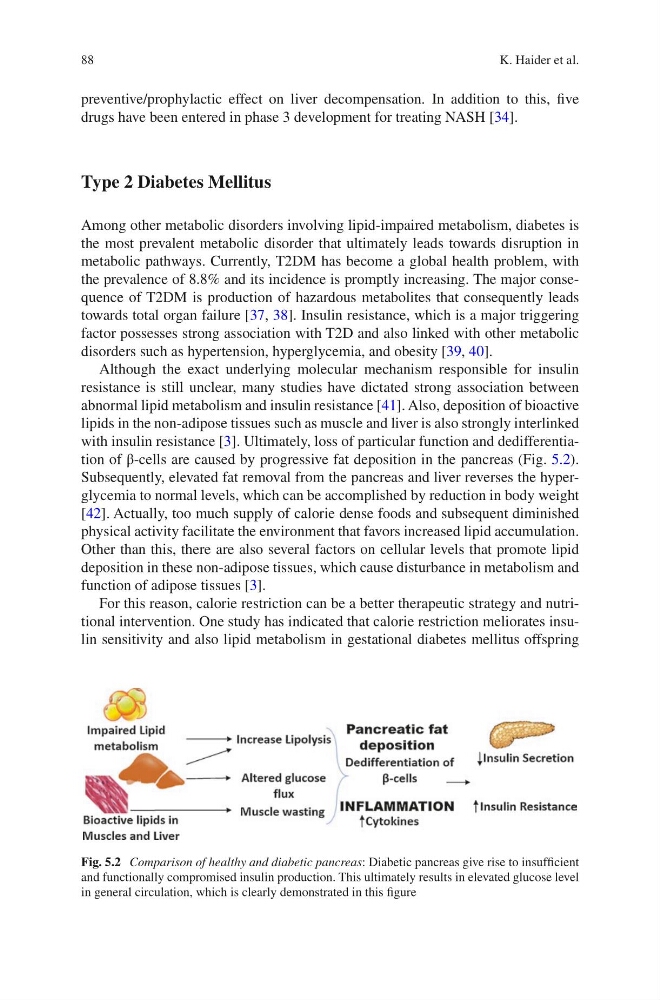
with insulin resistance [3]. Ultimately, loss of particular function and dedifferentiation of β-cells are caused by progressive fat deposition in the pancreas (Fig. 5.2).
Subsequently, elevated fat removal from the pancreas and liver reverses the hyperglycemia to normal levels, which can be accomplished by reduction in body weight
[42]. Actually, too much supply of calorie dense foods and subsequent diminished
physical activity facilitate the environment that favors increased lipid accumulation.
Other than this, there are also several factors on cellular levels that promote lipid
deposition in these non-adipose tissues, which cause disturbance in metabolism and
function of adipose tissues [3].
For this reason, calorie restriction can be a better therapeutic strategy and nutritional intervention. One study has indicated that calorie restriction meliorates insulin sensitivity and also lipid metabolism in gestational diabetes mellitus offspring
Fig. 5.2 Comparison of healthy and diabetic pancreas: Diabetic pancreas give rise to insufficient
and functionally compromised insulin production. This ultimately results in elevated glucose level
in general circulation, which is clearly demonstrated in this figure
K. Haider et al.
preventive/prophylactic effect on liver decompensation. In addition to this, five
drugs have been entered in phase 3 development for treating NASH [34].
Type 2 Diabetes Mellitus
Among other metabolic disorders involving lipid-impaired metabolism, diabetes is
the most prevalent metabolic disorder that ultimately leads towards disruption in
metabolic pathways. Currently, T2DM has become a global health problem, with
the prevalence of 8.8% and its incidence is promptly increasing. The major consequence of T2DM is production of hazardous metabolites that consequently leads
towards total organ failure [37, 38]. Insulin resistance, which is a major triggering
factor possesses strong association with T2D and also linked with other metabolic
disorders such as hypertension, hyperglycemia, and obesity [39, 40].
Although the exact underlying molecular mechanism responsible for insulin
resistance is still unclear, many studies have dictated strong association between
abnormal lipid metabolism and insulin resistance [41]. Also, deposition of bioactive
lipids in the non-adipose tissues such as muscle and liver is also strongly interlinked
with insulin resistance [3]. Ultimately, loss of particular function and dedifferentiation of β-cells are caused by progressive fat deposition in the pancreas (Fig. 5.2).
Subsequently, elevated fat removal from the pancreas and liver reverses the hyperglycemia to normal levels, which can be accomplished by reduction in body weight
[42]. Actually, too much supply of calorie dense foods and subsequent diminished
physical activity facilitate the environment that favors increased lipid accumulation.
Other than this, there are also several factors on cellular levels that promote lipid
deposition in these non-adipose tissues, which cause disturbance in metabolism and
function of adipose tissues [3].
For this reason, calorie restriction can be a better therapeutic strategy and nutritional intervention. One study has indicated that calorie restriction meliorates insulin sensitivity and also lipid metabolism in gestational diabetes mellitus offspring
Fig. 5.2 Comparison of healthy and diabetic pancreas: Diabetic pancreas give rise to insufficient
and functionally compromised insulin production. This ultimately results in elevated glucose level
in general circulation, which is clearly demonstrated in this figure
K. Haider et al.