

with 88% being in sandy or sandy-skeletal particle-size
classes; 87% in the mixed soil mineral class; and only 23%
in a CEC activity class.
Entisols are covered by temperate mixed forest (39%),
temperate broad-leaved forest (21%), lowland mixed forest
(16%), and low broad-leaved (16%). The parent materials
for Great Lakes Entisols include lacustrine-glaciolacustrine
sediments (48%), outwash (16%), alluvium (12%), eolian
(10%), and till (8%). The landforms include lake
terraces-plains (44%), glacial lake benches (14%), beach
ridges (10%), outwash plains (10%), floodplains (9%), till
plains (4%), and dunes (4%). Some Entisols may be among
the oldest in the Great Lakes region. An example is the
Plainfield series, which has remained a Udipsamments for 13
kyr or more, due to a lack of pedogenic intertia, i.e., lack of
weatherable minerals.
Analytical data for soil series representative of five of the
eight great groups of Entisols in the GLCZ are provided in
Table 5.4. The Entisols are the most poorly developed soils,
often containing only an ochric horizon and occasionally
having an albic subsurface horizon (Nordhouse soil series).
5.6
Mollisols
There are 73 Mollisol soil series in the Great Lakes region.
They are most evident on the Lake Michigan shore, occur to
a lesser extent along the Huron, Erie, and Superior shores,
and are absent along Lake Ontario. Nearly two-thirds (63%)
of the Mollisols in the GLCZ are Aquolls with restricted
drainage; the remaining 37% are Udolls or Rendolls with
good drainage. The dominant great groups are Endoaquolls
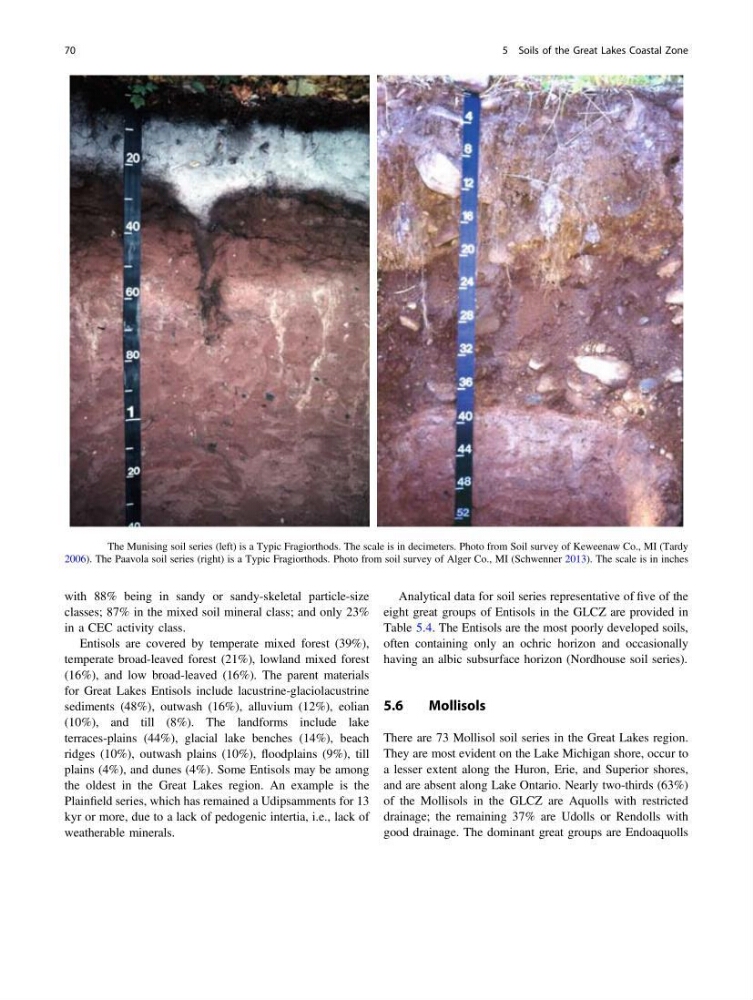
Fig. 5.8 The Munising soil series (left) is a Typic Fragiorthods. The scale is in decimeters. Photo from Soil survey of Keweenaw Co., MI (Tardy
2006). The Paavola soil series (right) is a Typic Fragiorthods. Photo from soil survey of Alger Co., MI (Schwenner 2013). The scale is in inches
70
5 Soils of the Great Lakes Coastal Zone
classes; 87% in the mixed soil mineral class; and only 23%
in a CEC activity class.
Entisols are covered by temperate mixed forest (39%),
temperate broad-leaved forest (21%), lowland mixed forest
(16%), and low broad-leaved (16%). The parent materials
for Great Lakes Entisols include lacustrine-glaciolacustrine
sediments (48%), outwash (16%), alluvium (12%), eolian
(10%), and till (8%). The landforms include lake
terraces-plains (44%), glacial lake benches (14%), beach
ridges (10%), outwash plains (10%), floodplains (9%), till
plains (4%), and dunes (4%). Some Entisols may be among
the oldest in the Great Lakes region. An example is the
Plainfield series, which has remained a Udipsamments for 13
kyr or more, due to a lack of pedogenic intertia, i.e., lack of
weatherable minerals.
Analytical data for soil series representative of five of the
eight great groups of Entisols in the GLCZ are provided in
Table 5.4. The Entisols are the most poorly developed soils,
often containing only an ochric horizon and occasionally
having an albic subsurface horizon (Nordhouse soil series).
5.6
Mollisols
There are 73 Mollisol soil series in the Great Lakes region.
They are most evident on the Lake Michigan shore, occur to
a lesser extent along the Huron, Erie, and Superior shores,
and are absent along Lake Ontario. Nearly two-thirds (63%)
of the Mollisols in the GLCZ are Aquolls with restricted
drainage; the remaining 37% are Udolls or Rendolls with
good drainage. The dominant great groups are Endoaquolls
Fig. 5.8 The Munising soil series (left) is a Typic Fragiorthods. The scale is in decimeters. Photo from Soil survey of Keweenaw Co., MI (Tardy
2006). The Paavola soil series (right) is a Typic Fragiorthods. Photo from soil survey of Alger Co., MI (Schwenner 2013). The scale is in inches
70
5 Soils of the Great Lakes Coastal Zone