

The Paavola, Yalmer, Montreal, and Munising soil series
are commonly occurring Fragiorthods, primarily around
Lake Superior. The Munising and Paavola are Typic Fragiorthods (Fig. 5.8). The Munising soil series (Fig. 5.8a) is a
Typic Fragiorthods derived from loamy till. The soil is
bisequal, with the upper sequum contain a black A horizon,
a pinkish gray E horizon, and a dark reddish brown spodic
(Bhs, Bs) horizon to 16 in. (40 cm). The fragipan includes
the Bx horizon (16 to 22 in.; 40 to 55 cm) and the (B/E)x (22
to 35 in.; 55 to 90 cm). The latter horizon contains reddish
brown material with tongues of pinkish gray material. The
Bt horizon has a reddish brown color and extends beyond 55
in. (140 cm). The Paavola soil series (Fig. 5.8b) is an Alfic
Oxyaquic Fragiorthods derived from wave-washed till.
A bisequal soil, the Paavola has a dark reddish brown A
horizon and a series of Bhs and Bs (spodic) horizons to 30
in. (76 cm). The lower sequum has a dark reddish gray 2
(E/B)x horizon from 30 to 38 in. (76–97 cm) and a reddish
brown 2Btx (argillic and fragipan) to 59 in. (150 cm). The
latter horizon has masses of Fe accumulation.
The Finch and Saugatuck soil series are commonly
occurring Duraquods, especially along Lakes Huron and
Michigan. The Finch soil series, a Typic Duraquods, is
derived from sandy lacustrine sediments (Fig. 5.9). The
profile contains a black A horizon, a light gray E horizon, a
dark reddish brown Bhsm horizon, and a yellowish red Bsm
horizon to about 40 in. (102 cm). A somewhat poorly
drained soil, the Finch has standing water at 52 in. (132 cm).
The Allendale soil series (Fig. 5.10) is an Alfic Epiaquods
derived from sandy over clayey lacustrine deposits. The
profile has a very dark gray A horizon, a gray E horizon, a
dark brown Bhs horizon, and a yellowish brown Bs horizon
to 32 in. (81 cm) in the upper sequum. The lower sequum
contains a pale brown E’ and a 2Bt (argillic) horizon to 34
in. (86 cm) over brown clayey materials. The Skanee soil
series (not shown) is a commonly occurring Epiaquods
around Lake Superior.
The Wallace soil series (Fig. 5.11) is a frequently
occurring Durorthods around Lakes Michigan, Huron, and
Superior. Derived from sandy lacustrine and outwash
deposits, the Wallace soil series has a black Oe horizon,
underlain by a light brownish gray E, dark reddish brown
Bhs, and brown Bhsm and Bsm to a depth of 51 in. (80 cm).
The ortstein layer is strongly and exists as a continuous
horizon but extends as tongues to 55 in. (140 cm).
The majority (89%) of the Spodosol soil series have a
frigid soil-climate regime; the remaining 11% are in the
mesic soil-temperature class (see Fig. 4.3). Nearly two-thirds
(61%) of the Spodosols in the GLCZ are in the sandy
particle-size class and 25% are coarse-loamy. More than
three-quarters (82%) of the Spodosol soil series have a
mixed mineralogy; 18% are in the isotic soil mineral class.
The majority (59%) of the Spodosols in the GLCZ have
minimal CEC activity; however, 41% of the Spodosol soil
series are in semiactive, active, or superactive classes.
Spodosols in the GLCZ support either temperate mixed
coniferous and broad-leaved forests (70%) or temperate
broad-leaved forest (23%). It is of interest that about
two-thirds of the Spodosols supporting broad-leaved forest
have an argillic horizon and/or a fragipan. The dominant
parent materials of Spodosols are lacustrine-glaciolacustrine
deposits (40%), till (27%), or outwash (24%). Predominant
landforms include lake plains-terraces (47%), moraines-till
plains (26%), and outwash plains (13%). Although some
Spodosols may form in the GLCZ in as little as 5.3 kyr, a
more appropriate time frame is 11.2 kyr (see Figs. 4.16 and
4.17).
Analytical data for soil series representative of each of the
seven great groups of Spodosols in the GLCZ are provided
in Table 5.2. The key properties of Spodosols are the presence of a spodic horizon containing 85% or more spodic
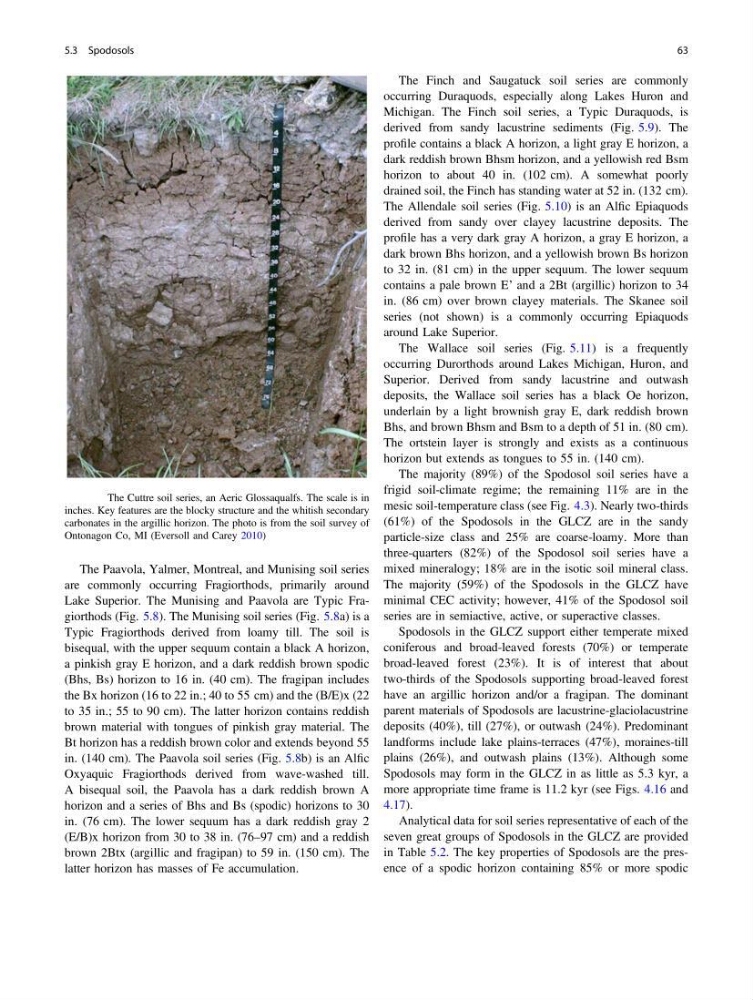
Fig. 5.5 The Cuttre soil series, an Aeric Glossaqualfs. The scale is in
inches. Key features are the blocky structure and the whitish secondary
carbonates in the argillic horizon. The photo is from the soil survey of
Ontonagon Co, MI (Eversoll and Carey 2010)
5.3 Spodosols
63
are commonly occurring Fragiorthods, primarily around
Lake Superior. The Munising and Paavola are Typic Fragiorthods (Fig. 5.8). The Munising soil series (Fig. 5.8a) is a
Typic Fragiorthods derived from loamy till. The soil is
bisequal, with the upper sequum contain a black A horizon,
a pinkish gray E horizon, and a dark reddish brown spodic
(Bhs, Bs) horizon to 16 in. (40 cm). The fragipan includes
the Bx horizon (16 to 22 in.; 40 to 55 cm) and the (B/E)x (22
to 35 in.; 55 to 90 cm). The latter horizon contains reddish
brown material with tongues of pinkish gray material. The
Bt horizon has a reddish brown color and extends beyond 55
in. (140 cm). The Paavola soil series (Fig. 5.8b) is an Alfic
Oxyaquic Fragiorthods derived from wave-washed till.
A bisequal soil, the Paavola has a dark reddish brown A
horizon and a series of Bhs and Bs (spodic) horizons to 30
in. (76 cm). The lower sequum has a dark reddish gray 2
(E/B)x horizon from 30 to 38 in. (76–97 cm) and a reddish
brown 2Btx (argillic and fragipan) to 59 in. (150 cm). The
latter horizon has masses of Fe accumulation.
The Finch and Saugatuck soil series are commonly
occurring Duraquods, especially along Lakes Huron and
Michigan. The Finch soil series, a Typic Duraquods, is
derived from sandy lacustrine sediments (Fig. 5.9). The
profile contains a black A horizon, a light gray E horizon, a
dark reddish brown Bhsm horizon, and a yellowish red Bsm
horizon to about 40 in. (102 cm). A somewhat poorly
drained soil, the Finch has standing water at 52 in. (132 cm).
The Allendale soil series (Fig. 5.10) is an Alfic Epiaquods
derived from sandy over clayey lacustrine deposits. The
profile has a very dark gray A horizon, a gray E horizon, a
dark brown Bhs horizon, and a yellowish brown Bs horizon
to 32 in. (81 cm) in the upper sequum. The lower sequum
contains a pale brown E’ and a 2Bt (argillic) horizon to 34
in. (86 cm) over brown clayey materials. The Skanee soil
series (not shown) is a commonly occurring Epiaquods
around Lake Superior.
The Wallace soil series (Fig. 5.11) is a frequently
occurring Durorthods around Lakes Michigan, Huron, and
Superior. Derived from sandy lacustrine and outwash
deposits, the Wallace soil series has a black Oe horizon,
underlain by a light brownish gray E, dark reddish brown
Bhs, and brown Bhsm and Bsm to a depth of 51 in. (80 cm).
The ortstein layer is strongly and exists as a continuous
horizon but extends as tongues to 55 in. (140 cm).
The majority (89%) of the Spodosol soil series have a
frigid soil-climate regime; the remaining 11% are in the
mesic soil-temperature class (see Fig. 4.3). Nearly two-thirds
(61%) of the Spodosols in the GLCZ are in the sandy
particle-size class and 25% are coarse-loamy. More than
three-quarters (82%) of the Spodosol soil series have a
mixed mineralogy; 18% are in the isotic soil mineral class.
The majority (59%) of the Spodosols in the GLCZ have
minimal CEC activity; however, 41% of the Spodosol soil
series are in semiactive, active, or superactive classes.
Spodosols in the GLCZ support either temperate mixed
coniferous and broad-leaved forests (70%) or temperate
broad-leaved forest (23%). It is of interest that about
two-thirds of the Spodosols supporting broad-leaved forest
have an argillic horizon and/or a fragipan. The dominant
parent materials of Spodosols are lacustrine-glaciolacustrine
deposits (40%), till (27%), or outwash (24%). Predominant
landforms include lake plains-terraces (47%), moraines-till
plains (26%), and outwash plains (13%). Although some
Spodosols may form in the GLCZ in as little as 5.3 kyr, a
more appropriate time frame is 11.2 kyr (see Figs. 4.16 and
4.17).
Analytical data for soil series representative of each of the
seven great groups of Spodosols in the GLCZ are provided
in Table 5.2. The key properties of Spodosols are the presence of a spodic horizon containing 85% or more spodic
Fig. 5.5 The Cuttre soil series, an Aeric Glossaqualfs. The scale is in
inches. Key features are the blocky structure and the whitish secondary
carbonates in the argillic horizon. The photo is from the soil survey of
Ontonagon Co, MI (Eversoll and Carey 2010)
5.3 Spodosols
63