

plains (24%), glacial lake plains (17%), and outwash plains
(14%) (Fig. 4.10).
In the US portion of the GLCZ, till accounts for 32% of
the coastal zone parent materials, followed by glaciolacustrine (19%), lacustrine (18%), and outwash (16%)
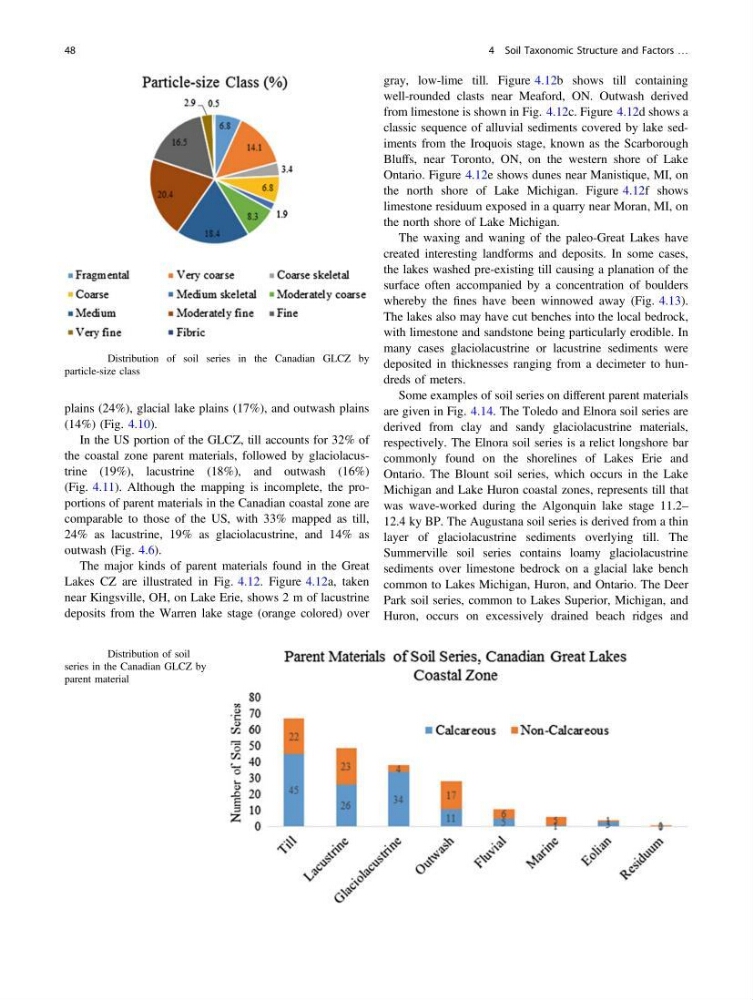
(Fig. 4.11). Although the mapping is incomplete, the proportions of parent materials in the Canadian coastal zone are
comparable to those of the US, with 33% mapped as till,
24% as lacustrine, 19% as glaciolacustrine, and 14% as
outwash (Fig. 4.6).
The major kinds of parent materials found in the Great
Lakes CZ are illustrated in Fig. 4.12. Figure 4.12a, taken
near Kingsville, OH, on Lake Erie, shows 2 m of lacustrine
deposits from the Warren lake stage (orange colored) over
gray, low-lime till. Figure 4.12b shows till containing
well-rounded clasts near Meaford, ON. Outwash derived
from limestone is shown in Fig. 4.12c. Figure 4.12d shows a
classic sequence of alluvial sediments covered by lake sediments from the Iroquois stage, known as the Scarborough
Bluffs, near Toronto, ON, on the western shore of Lake
Ontario. Figure 4.12e shows dunes near Manistique, MI, on
the north shore of Lake Michigan. Figure 4.12f shows
limestone residuum exposed in a quarry near Moran, MI, on
the north shore of Lake Michigan.
The waxing and waning of the paleo-Great Lakes have
created interesting landforms and deposits. In some cases,
the lakes washed pre-existing till causing a planation of the
surface often accompanied by a concentration of boulders
whereby the fines have been winnowed away (Fig. 4.13).
The lakes also may have cut benches into the local bedrock,
with limestone and sandstone being particularly erodible. In
many cases glaciolacustrine or lacustrine sediments were
deposited in thicknesses ranging from a decimeter to hundreds of meters.
Some examples of soil series on different parent materials
are given in Fig. 4.14. The Toledo and Elnora soil series are
derived from clay and sandy glaciolacustrine materials,
respectively. The Elnora soil series is a relict longshore bar
commonly found on the shorelines of Lakes Erie and
Ontario. The Blount soil series, which occurs in the Lake
Michigan and Lake Huron coastal zones, represents till that
was wave-worked during the Algonquin lake stage 11.2–
12.4 ky BP. The Augustana soil series is derived from a thin
layer of glaciolacustrine sediments overlying till. The
Summerville soil series contains loamy glaciolacustrine
sediments over limestone bedrock on a glacial lake bench
common to Lakes Michigan, Huron, and Ontario. The Deer
Park soil series, common to Lakes Superior, Michigan, and
Huron, occurs on excessively drained beach ridges and
Fig. 4.5 Distribution of soil series in the Canadian GLCZ by
particle-size class
Fig. 4.6 Distribution of soil
series in the Canadian GLCZ by
parent material
48
4 Soil Taxonomic Structure and Factors …
(14%) (Fig. 4.10).
In the US portion of the GLCZ, till accounts for 32% of
the coastal zone parent materials, followed by glaciolacustrine (19%), lacustrine (18%), and outwash (16%)
(Fig. 4.11). Although the mapping is incomplete, the proportions of parent materials in the Canadian coastal zone are
comparable to those of the US, with 33% mapped as till,
24% as lacustrine, 19% as glaciolacustrine, and 14% as
outwash (Fig. 4.6).
The major kinds of parent materials found in the Great
Lakes CZ are illustrated in Fig. 4.12. Figure 4.12a, taken
near Kingsville, OH, on Lake Erie, shows 2 m of lacustrine
deposits from the Warren lake stage (orange colored) over
gray, low-lime till. Figure 4.12b shows till containing
well-rounded clasts near Meaford, ON. Outwash derived
from limestone is shown in Fig. 4.12c. Figure 4.12d shows a
classic sequence of alluvial sediments covered by lake sediments from the Iroquois stage, known as the Scarborough
Bluffs, near Toronto, ON, on the western shore of Lake
Ontario. Figure 4.12e shows dunes near Manistique, MI, on
the north shore of Lake Michigan. Figure 4.12f shows
limestone residuum exposed in a quarry near Moran, MI, on
the north shore of Lake Michigan.
The waxing and waning of the paleo-Great Lakes have
created interesting landforms and deposits. In some cases,
the lakes washed pre-existing till causing a planation of the
surface often accompanied by a concentration of boulders
whereby the fines have been winnowed away (Fig. 4.13).
The lakes also may have cut benches into the local bedrock,
with limestone and sandstone being particularly erodible. In
many cases glaciolacustrine or lacustrine sediments were
deposited in thicknesses ranging from a decimeter to hundreds of meters.
Some examples of soil series on different parent materials
are given in Fig. 4.14. The Toledo and Elnora soil series are
derived from clay and sandy glaciolacustrine materials,
respectively. The Elnora soil series is a relict longshore bar
commonly found on the shorelines of Lakes Erie and
Ontario. The Blount soil series, which occurs in the Lake
Michigan and Lake Huron coastal zones, represents till that
was wave-worked during the Algonquin lake stage 11.2–
12.4 ky BP. The Augustana soil series is derived from a thin
layer of glaciolacustrine sediments overlying till. The
Summerville soil series contains loamy glaciolacustrine
sediments over limestone bedrock on a glacial lake bench
common to Lakes Michigan, Huron, and Ontario. The Deer
Park soil series, common to Lakes Superior, Michigan, and
Huron, occurs on excessively drained beach ridges and
Fig. 4.5 Distribution of soil series in the Canadian GLCZ by
particle-size class
Fig. 4.6 Distribution of soil
series in the Canadian GLCZ by
parent material
48
4 Soil Taxonomic Structure and Factors …