

4.3
Factors Affecting Soil Distribution
in the Great Lakes Coastal Zone
Four soil-forming factors appear to have special importance
with regards to the distribution of soil taxa in the Great
Lakes Coastal Zone, including climate, vegetation, parent
material, and time.
4.3.1 Climate and Soil Distribution
The Great Lakes Tension Zone was illustrated in Fig. 2.6.
Not only does this tension zone separate mixed broad-leaved
and coniferous forest from broad-leaved forest, but also it
separates the mesic and frigid soil-temperature classes (Hole
1976; Bockheim and Schliemann 2014). Figure 4.7 shows
that the frigid soil temperature zone contains dominantly
Haplorthods, Endoaquods, Fragiorthods, Fragiaquods,
Durorthods, and a large portion of the Glossudalfs. In contrast, the mesic soil-temperature zone contains primarily
Hapludalfs, Endoaquepts, Endoaquolls, and Endoaqualfs.
4.3.2 Vegetation and Soil Distribution
There is a correspondence between ecosystem type and soil
great group in the Great Lakes Coastal Zone (Fig. 4.8).
Lowland Deciduous Forest, Lowland Mixed Forest, and
Lowland Shrubs are contained in Endo- and Epi-great
groups of Aquolls, Aquepts, and Aquents and in the
Haplosaprist and Haplohemist great groups. Temperate
Deciduous Forest is underlain primarily by Alfisols (52%)
and Spodosols (15%). In contrast, Temperate Mixed Forest
contains 25% Alfisols and 24% Spodosols. There were only
three soil series supporting prairie vegetation, two of which
were Argiudolls and one an Argiaquolls.
4.3.3 Landforms, Parent Material and Soil
Distribution
The dominant landforms in the US coastal zone are lake
plains-terraces (26%), till plains (26%), and glacial lake
plains (16%) (Fig. 4.9). The dominant landforms on the
Canadian portion of the GLCZ include moraines (36%), lake
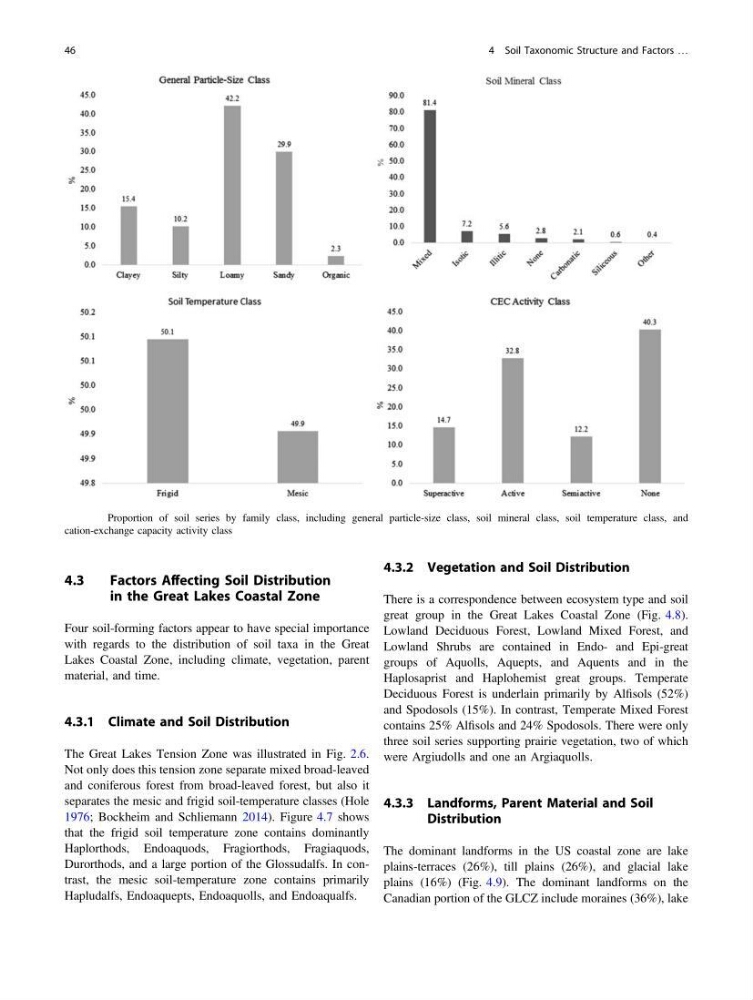
Fig. 4.3 Proportion of soil series by family class, including general particle-size class, soil mineral class, soil temperature class, and
cation-exchange capacity activity class
46
4 Soil Taxonomic Structure and Factors …
Factors Affecting Soil Distribution
in the Great Lakes Coastal Zone
Four soil-forming factors appear to have special importance
with regards to the distribution of soil taxa in the Great
Lakes Coastal Zone, including climate, vegetation, parent
material, and time.
4.3.1 Climate and Soil Distribution
The Great Lakes Tension Zone was illustrated in Fig. 2.6.
Not only does this tension zone separate mixed broad-leaved
and coniferous forest from broad-leaved forest, but also it
separates the mesic and frigid soil-temperature classes (Hole
1976; Bockheim and Schliemann 2014). Figure 4.7 shows
that the frigid soil temperature zone contains dominantly
Haplorthods, Endoaquods, Fragiorthods, Fragiaquods,
Durorthods, and a large portion of the Glossudalfs. In contrast, the mesic soil-temperature zone contains primarily
Hapludalfs, Endoaquepts, Endoaquolls, and Endoaqualfs.
4.3.2 Vegetation and Soil Distribution
There is a correspondence between ecosystem type and soil
great group in the Great Lakes Coastal Zone (Fig. 4.8).
Lowland Deciduous Forest, Lowland Mixed Forest, and
Lowland Shrubs are contained in Endo- and Epi-great
groups of Aquolls, Aquepts, and Aquents and in the
Haplosaprist and Haplohemist great groups. Temperate
Deciduous Forest is underlain primarily by Alfisols (52%)
and Spodosols (15%). In contrast, Temperate Mixed Forest
contains 25% Alfisols and 24% Spodosols. There were only
three soil series supporting prairie vegetation, two of which
were Argiudolls and one an Argiaquolls.
4.3.3 Landforms, Parent Material and Soil
Distribution
The dominant landforms in the US coastal zone are lake
plains-terraces (26%), till plains (26%), and glacial lake
plains (16%) (Fig. 4.9). The dominant landforms on the
Canadian portion of the GLCZ include moraines (36%), lake
Fig. 4.3 Proportion of soil series by family class, including general particle-size class, soil mineral class, soil temperature class, and
cation-exchange capacity activity class
46
4 Soil Taxonomic Structure and Factors …