

et al. 2002). This lake drained in various directions but often
drained catastrophically into the Lake Superior basin and
through the Great Lakes and St. Lawrence River into the
Atlantic Ocean by what are called “outbursts”.
The glacial and post-glacial lake features described herein
occur within 5 km of the current lake shores. However, there
is geological evidence that shoreline features occur up to 100
miles (165 km) from the modern shorelines. In areas featuring negative isostatic rebound, particularly along the
south shore of Lake Erie, paleo-shoreline features may be
buried beneath the modern lakes.
2.7
Land Use and Population
Although forest is still prevalent in the Superior and Huron
basins, clearing for agricultural and urbanization has reduced
the forest cover to 50% or less in the Ontario, Michigan, and
Erie basins. Agriculture accounts for 58% of the Erie shore,
36% of the Michigan shore, and 28% of the Ontario shore
(Fig. 2.16). Twenty percent of the shorelines of Lakes
Michigan and Ontario are urbanized. The total population of
the Great Lakes shoreline is over 35 million, with the
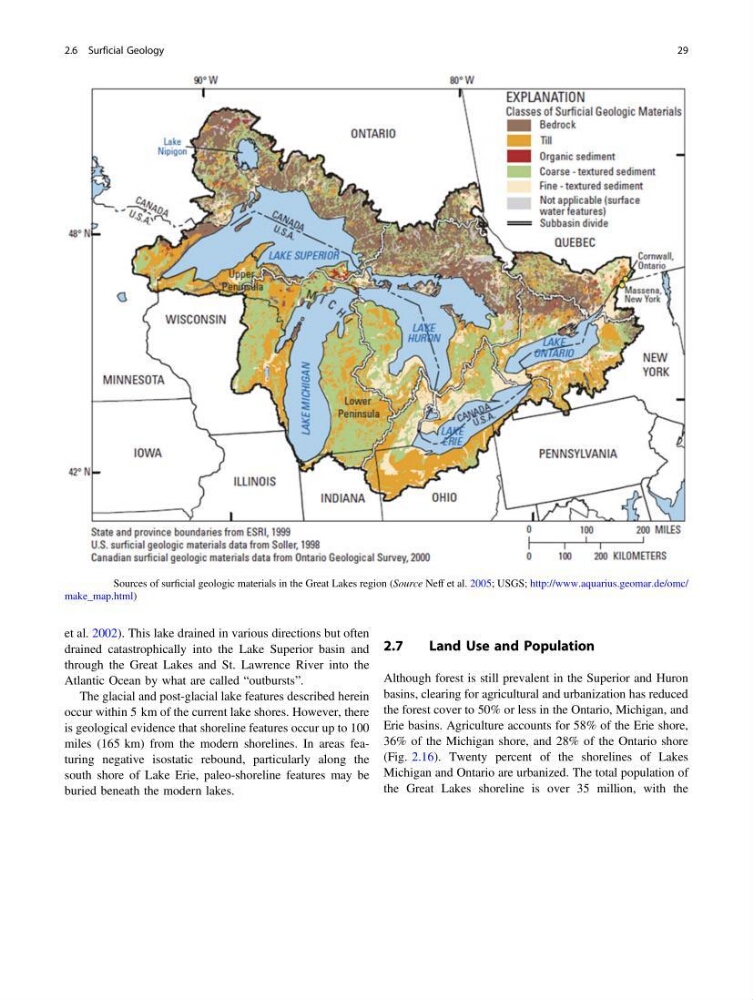
Fig. 2.13 Sources of surficial geologic materials in the Great Lakes region (Source Neff et al. 2005; USGS; http://www.aquarius.geomar.de/omc/
make_map.html)
2.6 Surficial Geology
29
drained catastrophically into the Lake Superior basin and
through the Great Lakes and St. Lawrence River into the
Atlantic Ocean by what are called “outbursts”.
The glacial and post-glacial lake features described herein
occur within 5 km of the current lake shores. However, there
is geological evidence that shoreline features occur up to 100
miles (165 km) from the modern shorelines. In areas featuring negative isostatic rebound, particularly along the
south shore of Lake Erie, paleo-shoreline features may be
buried beneath the modern lakes.
2.7
Land Use and Population
Although forest is still prevalent in the Superior and Huron
basins, clearing for agricultural and urbanization has reduced
the forest cover to 50% or less in the Ontario, Michigan, and
Erie basins. Agriculture accounts for 58% of the Erie shore,
36% of the Michigan shore, and 28% of the Ontario shore
(Fig. 2.16). Twenty percent of the shorelines of Lakes
Michigan and Ontario are urbanized. The total population of
the Great Lakes shoreline is over 35 million, with the
Fig. 2.13 Sources of surficial geologic materials in the Great Lakes region (Source Neff et al. 2005; USGS; http://www.aquarius.geomar.de/omc/
make_map.html)
2.6 Surficial Geology
29