

Dune fields are common on the shores of the Great Lakes.
Inland dune fields represent shorelines of the ancestral Great
Lakes. Figure 14.5 shows coastal and interior dune fields at
the maximum extent of the ancestral Great Lakes.
Schaetzl et al. (2016) identified 49 relict spits along the
Glacial Lake Algonquin shoreline in the Lake Michigan and
Lake Huron basins (Fig. 14.6). Figure 14.7 is a section of
the Ardtrea Island South spit north of the present Lake
Simcoe near Barrie, Ontario (Schaetzl et al. 2016; site 47).
Ardtrea was an island in the Huron Lowland during the Main
Algonquin.
Castle Rock (Fig. 14.8) is an Algonquin sea stack 59 m
(194 ft) above the current level of Lake Huron at St. Ignace,
Michigan.
Deltas deposited in the ancestral Great Lakes have been
uplifted by glacio-isostatic adjustment and now appear
above the current lake level. The St. Clair delta is one of the
largest in the Great Lakes. Figure 14.9 is a cross-section of a
portion of the delta showing the uplifted portion (premodern
delta), the modern delta, and the underlying glaciolacustrine
deposits. The delta surface is 1.5 m above Lake St. Clair and
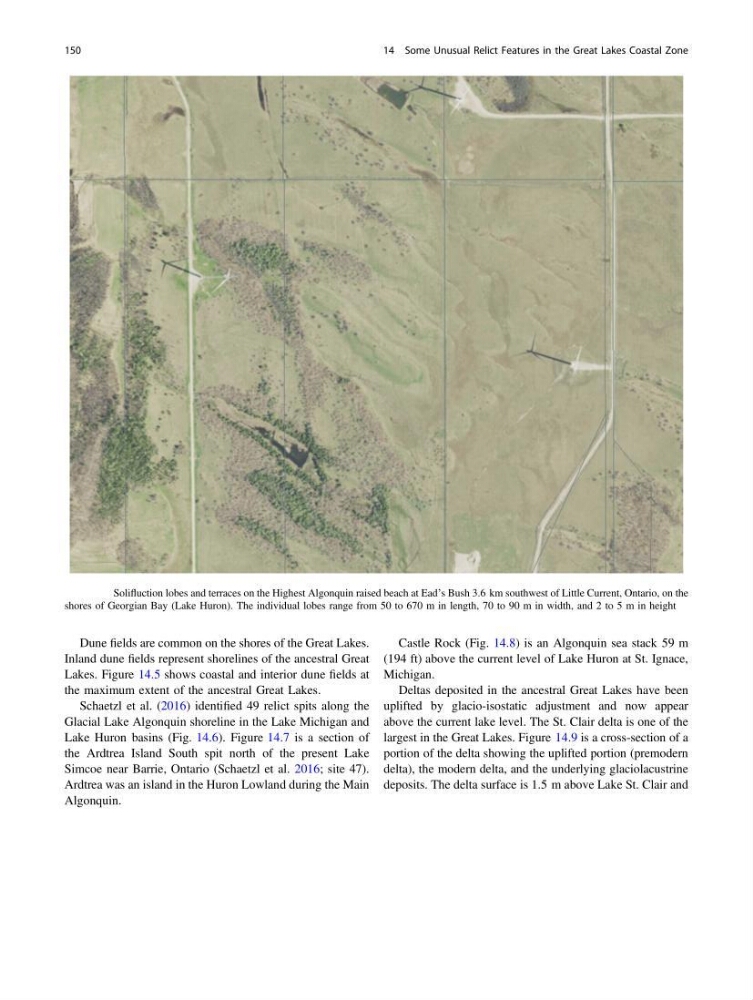
Fig. 14.1 Solifluction lobes and terraces on the Highest Algonquin raised beach at Ead’s Bush 3.6 km southwest of Little Current, Ontario, on the
shores of Georgian Bay (Lake Huron). The individual lobes range from 50 to 670 m in length, 70 to 90 m in width, and 2 to 5 m in height
150
14 Some Unusual Relict Features in the Great Lakes Coastal Zone
Inland dune fields represent shorelines of the ancestral Great
Lakes. Figure 14.5 shows coastal and interior dune fields at
the maximum extent of the ancestral Great Lakes.
Schaetzl et al. (2016) identified 49 relict spits along the
Glacial Lake Algonquin shoreline in the Lake Michigan and
Lake Huron basins (Fig. 14.6). Figure 14.7 is a section of
the Ardtrea Island South spit north of the present Lake
Simcoe near Barrie, Ontario (Schaetzl et al. 2016; site 47).
Ardtrea was an island in the Huron Lowland during the Main
Algonquin.
Castle Rock (Fig. 14.8) is an Algonquin sea stack 59 m
(194 ft) above the current level of Lake Huron at St. Ignace,
Michigan.
Deltas deposited in the ancestral Great Lakes have been
uplifted by glacio-isostatic adjustment and now appear
above the current lake level. The St. Clair delta is one of the
largest in the Great Lakes. Figure 14.9 is a cross-section of a
portion of the delta showing the uplifted portion (premodern
delta), the modern delta, and the underlying glaciolacustrine
deposits. The delta surface is 1.5 m above Lake St. Clair and
Fig. 14.1 Solifluction lobes and terraces on the Highest Algonquin raised beach at Ead’s Bush 3.6 km southwest of Little Current, Ontario, on the
shores of Georgian Bay (Lake Huron). The individual lobes range from 50 to 670 m in length, 70 to 90 m in width, and 2 to 5 m in height
150
14 Some Unusual Relict Features in the Great Lakes Coastal Zone