

210
S. Namany and T. Al-Ansari
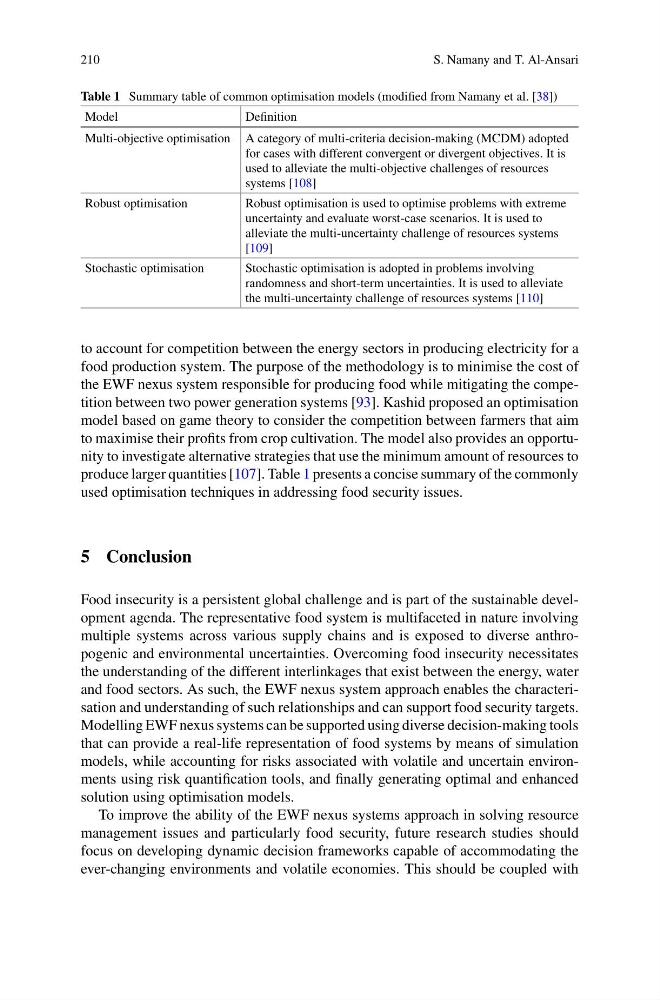
Table 1 Summary table of common optimisation models (modified from Namany et al. [38])
Model
Definition
Multi-objective optimisation A category of multi-criteria decision-making (MCDM) adopted
for cases with different convergent or divergent objectives. It is
used to alleviate the multi-objective challenges of resources
systems [108]
Robust optimisation
Robust optimisation is used to optimise problems with extreme
uncertainty and evaluate worst-case scenarios. It is used to
alleviate the multi-uncertainty challenge of resources systems
[109]
Stochastic optimisation
Stochastic optimisation is adopted in problems involving
randomness and short-term uncertainties. It is used to alleviate
the multi-uncertainty challenge of resources systems [110]
to account for competition between the energy sectors in producing electricity for a
food production system. The purpose of the methodology is to minimise the cost of
the EWF nexus system responsible for producing food while mitigating the competition between two power generation systems [93]. Kashid proposed an optimisation
model based on game theory to consider the competition between farmers that aim
to maximise their profits from crop cultivation. The model also provides an opportunity to investigate alternative strategies that use the minimum amount of resources to
produce larger quantities [107]. Table 1 presents a concise summary of the commonly
used optimisation techniques in addressing food security issues.
5 Conclusion
Food insecurity is a persistent global challenge and is part of the sustainable development agenda. The representative food system is multifaceted in nature involving
multiple systems across various supply chains and is exposed to diverse anthropogenic and environmental uncertainties. Overcoming food insecurity necessitates
the understanding of the different interlinkages that exist between the energy, water
and food sectors. As such, the EWF nexus system approach enables the characterisation and understanding of such relationships and can support food security targets.
Modelling EWF nexus systems can be supported using diverse decision-making tools
that can provide a real-life representation of food systems by means of simulation
models, while accounting for risks associated with volatile and uncertain environments using risk quantification tools, and finally generating optimal and enhanced
solution using optimisation models.
To improve the ability of the EWF nexus systems approach in solving resource
management issues and particularly food security, future research studies should
focus on developing dynamic decision frameworks capable of accommodating the
ever-changing environments and volatile economies. This should be coupled with
S. Namany and T. Al-Ansari
Table 1 Summary table of common optimisation models (modified from Namany et al. [38])
Model
Definition
Multi-objective optimisation A category of multi-criteria decision-making (MCDM) adopted
for cases with different convergent or divergent objectives. It is
used to alleviate the multi-objective challenges of resources
systems [108]
Robust optimisation
Robust optimisation is used to optimise problems with extreme
uncertainty and evaluate worst-case scenarios. It is used to
alleviate the multi-uncertainty challenge of resources systems
[109]
Stochastic optimisation
Stochastic optimisation is adopted in problems involving
randomness and short-term uncertainties. It is used to alleviate
the multi-uncertainty challenge of resources systems [110]
to account for competition between the energy sectors in producing electricity for a
food production system. The purpose of the methodology is to minimise the cost of
the EWF nexus system responsible for producing food while mitigating the competition between two power generation systems [93]. Kashid proposed an optimisation
model based on game theory to consider the competition between farmers that aim
to maximise their profits from crop cultivation. The model also provides an opportunity to investigate alternative strategies that use the minimum amount of resources to
produce larger quantities [107]. Table 1 presents a concise summary of the commonly
used optimisation techniques in addressing food security issues.
5 Conclusion
Food insecurity is a persistent global challenge and is part of the sustainable development agenda. The representative food system is multifaceted in nature involving
multiple systems across various supply chains and is exposed to diverse anthropogenic and environmental uncertainties. Overcoming food insecurity necessitates
the understanding of the different interlinkages that exist between the energy, water
and food sectors. As such, the EWF nexus system approach enables the characterisation and understanding of such relationships and can support food security targets.
Modelling EWF nexus systems can be supported using diverse decision-making tools
that can provide a real-life representation of food systems by means of simulation
models, while accounting for risks associated with volatile and uncertain environments using risk quantification tools, and finally generating optimal and enhanced
solution using optimisation models.
To improve the ability of the EWF nexus systems approach in solving resource
management issues and particularly food security, future research studies should
focus on developing dynamic decision frameworks capable of accommodating the
ever-changing environments and volatile economies. This should be coupled with