

118
R. de Castro Sobrosa Neto et al.
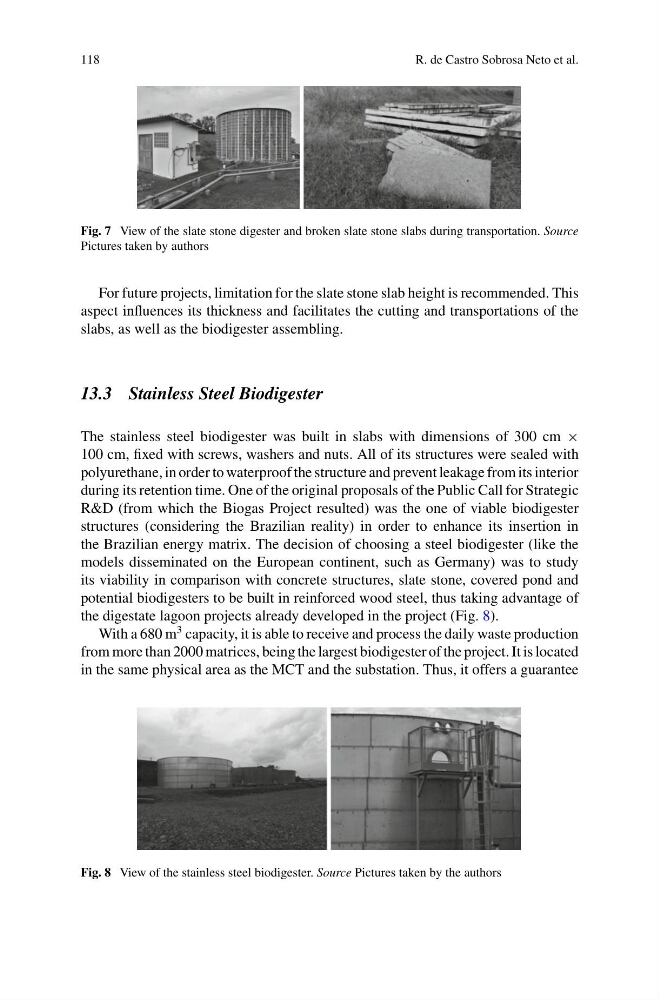
Fig. 7 View of the slate stone digester and broken slate stone slabs during transportation. Source
Pictures taken by authors
For future projects, limitation for the slate stone slab height is recommended. This
aspect influences its thickness and facilitates the cutting and transportations of the
slabs, as well as the biodigester assembling.
13.3 Stainless Steel Biodigester
The stainless steel biodigester was built in slabs with dimensions of 300 cm ×
100 cm, fixed with screws, washers and nuts. All of its structures were sealed with
polyurethane, in order to waterproof the structure and prevent leakage from its interior
during its retention time. One of the original proposals of the Public Call for Strategic
R&D (from which the Biogas Project resulted) was the one of viable biodigester
structures (considering the Brazilian reality) in order to enhance its insertion in
the Brazilian energy matrix. The decision of choosing a steel biodigester (like the
models disseminated on the European continent, such as Germany) was to study
its viability in comparison with concrete structures, slate stone, covered pond and
potential biodigesters to be built in reinforced wood steel, thus taking advantage of
the digestate lagoon projects already developed in the project (Fig. 8).
With a 680 m
3 capacity, it is able to receive and process the daily waste production
from more than 2000 matrices, being the largest biodigester of the project. It is located
in the same physical area as the MCT and the substation. Thus, it offers a guarantee
Fig. 8 View of the stainless steel biodigester. Source Pictures taken by the authors
R. de Castro Sobrosa Neto et al.
Fig. 7 View of the slate stone digester and broken slate stone slabs during transportation. Source
Pictures taken by authors
For future projects, limitation for the slate stone slab height is recommended. This
aspect influences its thickness and facilitates the cutting and transportations of the
slabs, as well as the biodigester assembling.
13.3 Stainless Steel Biodigester
The stainless steel biodigester was built in slabs with dimensions of 300 cm ×
100 cm, fixed with screws, washers and nuts. All of its structures were sealed with
polyurethane, in order to waterproof the structure and prevent leakage from its interior
during its retention time. One of the original proposals of the Public Call for Strategic
R&D (from which the Biogas Project resulted) was the one of viable biodigester
structures (considering the Brazilian reality) in order to enhance its insertion in
the Brazilian energy matrix. The decision of choosing a steel biodigester (like the
models disseminated on the European continent, such as Germany) was to study
its viability in comparison with concrete structures, slate stone, covered pond and
potential biodigesters to be built in reinforced wood steel, thus taking advantage of
the digestate lagoon projects already developed in the project (Fig. 8).
With a 680 m
3 capacity, it is able to receive and process the daily waste production
from more than 2000 matrices, being the largest biodigester of the project. It is located
in the same physical area as the MCT and the substation. Thus, it offers a guarantee
Fig. 8 View of the stainless steel biodigester. Source Pictures taken by the authors