

63
5.3.1 Intimate Relationships with the Land
A typical reflection of living with nature and having a deep understanding and intimate relationship
with the land is mentioned in the introduction to the Yawuru Cultural Management Plan:
For thousands of years our ancestors have lived along the foreshores of Roebuck Bay, across the pindan plains,
as far inland as the Walan-garr, the Edgar Ranges, and along the fringes of the Great Sandy Desert. Our Country
is land and sea moulded by the cycle of seasonal change. We live by the seasons, reading the signs to know when
and where we should go to harvest the riches of our country. When the first south-east winds start to blow across
Roebuck Bay, bringing the colder weather, we head to the beaches and tidal creeks to fish for salmon. When the
weather warms and the winds blow from the west, we head for the reefs to fish for bluebone and the myriads of
other reef fish (Yawuru RNTBC, 2011, pp. 28-29).
The establishment of camps was based upon the knowledge and traditions passed down from generation to generation from ancestors (Elkin, 1977). Knowledge of the environment was passed on
from Elders to young children when they went hunting, fishing, camping and engaged in discussion
during gatherings. Understanding the subtle changes in Country and following the seasons was used
as a guide to where to gather food, establish settlements and how and when to look after the resources
of the land.
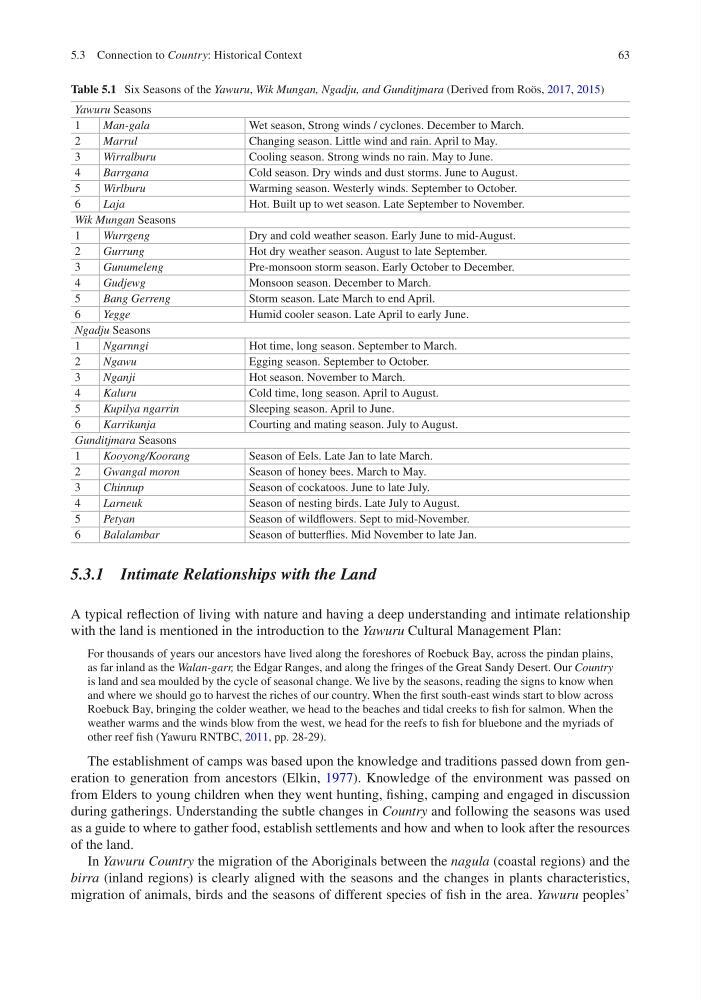
In Yawuru Country the migration of the Aboriginals between the nagula (coastal regions) and the
birra (inland regions) is clearly aligned with the seasons and the changes in plants characteristics,
migration of animals, birds and the seasons of different species of fish in the area. Yawuru peoples’
Table 5.1 Six Seasons of the Yawuru, Wik Mungan, Ngadju, and Gunditjmara (Derived from Roös, 2017, 2015)
Yawuru Seasons
1
Man-gala
Wet season, Strong winds / cyclones. December to March.
2
Marrul
Changing season. Little wind and rain. April to May.
3
Wirralburu
Cooling season. Strong winds no rain. May to June.
4
Barrgana
Cold season. Dry winds and dust storms. June to August.
5
Wirlburu
Warming season. Westerly winds. September to October.
6
Laja
Hot. Built up to wet season. Late September to November.
Wik Mungan Seasons
1
Wurrgeng
Dry and cold weather season. Early June to mid-August.
2
Gurrung
Hot dry weather season. August to late September.
3
Gunumeleng
Pre-monsoon storm season. Early October to December.
4
Gudjewg
Monsoon season. December to March.
5
Bang Gerreng
Storm season. Late March to end April.
6
Yegge
Humid cooler season. Late April to early June.
Ngadju Seasons
1
Ngarnngi
Hot time, long season. September to March.
2
Ngawu
Egging season. September to October.
3
Nganji
Hot season. November to March.
4
Kaluru
Cold time, long season. April to August.
5
Kupilya ngarrin
Sleeping season. April to June.
6
Karrikunja
Courting and mating season. July to August.
Gunditjmara Seasons
1
Kooyong/Koorang
Season of Eels. Late Jan to late March.
2
Gwangal moron
Season of honey bees. March to May.
3
Chinnup
Season of cockatoos. June to late July.
4
Larneuk
Season of nesting birds. Late July to August.
5
Petyan
Season of wildflowers. Sept to mid-November.
6
Balalambar
Season of butterflies. Mid November to late Jan.
5.3 Connection to Country: Historical Context
5.3.1 Intimate Relationships with the Land
A typical reflection of living with nature and having a deep understanding and intimate relationship
with the land is mentioned in the introduction to the Yawuru Cultural Management Plan:
For thousands of years our ancestors have lived along the foreshores of Roebuck Bay, across the pindan plains,
as far inland as the Walan-garr, the Edgar Ranges, and along the fringes of the Great Sandy Desert. Our Country
is land and sea moulded by the cycle of seasonal change. We live by the seasons, reading the signs to know when
and where we should go to harvest the riches of our country. When the first south-east winds start to blow across
Roebuck Bay, bringing the colder weather, we head to the beaches and tidal creeks to fish for salmon. When the
weather warms and the winds blow from the west, we head for the reefs to fish for bluebone and the myriads of
other reef fish (Yawuru RNTBC, 2011, pp. 28-29).
The establishment of camps was based upon the knowledge and traditions passed down from generation to generation from ancestors (Elkin, 1977). Knowledge of the environment was passed on
from Elders to young children when they went hunting, fishing, camping and engaged in discussion
during gatherings. Understanding the subtle changes in Country and following the seasons was used
as a guide to where to gather food, establish settlements and how and when to look after the resources
of the land.
In Yawuru Country the migration of the Aboriginals between the nagula (coastal regions) and the
birra (inland regions) is clearly aligned with the seasons and the changes in plants characteristics,
migration of animals, birds and the seasons of different species of fish in the area. Yawuru peoples’
Table 5.1 Six Seasons of the Yawuru, Wik Mungan, Ngadju, and Gunditjmara (Derived from Roös, 2017, 2015)
Yawuru Seasons
1
Man-gala
Wet season, Strong winds / cyclones. December to March.
2
Marrul
Changing season. Little wind and rain. April to May.
3
Wirralburu
Cooling season. Strong winds no rain. May to June.
4
Barrgana
Cold season. Dry winds and dust storms. June to August.
5
Wirlburu
Warming season. Westerly winds. September to October.
6
Laja
Hot. Built up to wet season. Late September to November.
Wik Mungan Seasons
1
Wurrgeng
Dry and cold weather season. Early June to mid-August.
2
Gurrung
Hot dry weather season. August to late September.
3
Gunumeleng
Pre-monsoon storm season. Early October to December.
4
Gudjewg
Monsoon season. December to March.
5
Bang Gerreng
Storm season. Late March to end April.
6
Yegge
Humid cooler season. Late April to early June.
Ngadju Seasons
1
Ngarnngi
Hot time, long season. September to March.
2
Ngawu
Egging season. September to October.
3
Nganji
Hot season. November to March.
4
Kaluru
Cold time, long season. April to August.
5
Kupilya ngarrin
Sleeping season. April to June.
6
Karrikunja
Courting and mating season. July to August.
Gunditjmara Seasons
1
Kooyong/Koorang
Season of Eels. Late Jan to late March.
2
Gwangal moron
Season of honey bees. March to May.
3
Chinnup
Season of cockatoos. June to late July.
4
Larneuk
Season of nesting birds. Late July to August.
5
Petyan
Season of wildflowers. Sept to mid-November.
6
Balalambar
Season of butterflies. Mid November to late Jan.
5.3 Connection to Country: Historical Context