

165
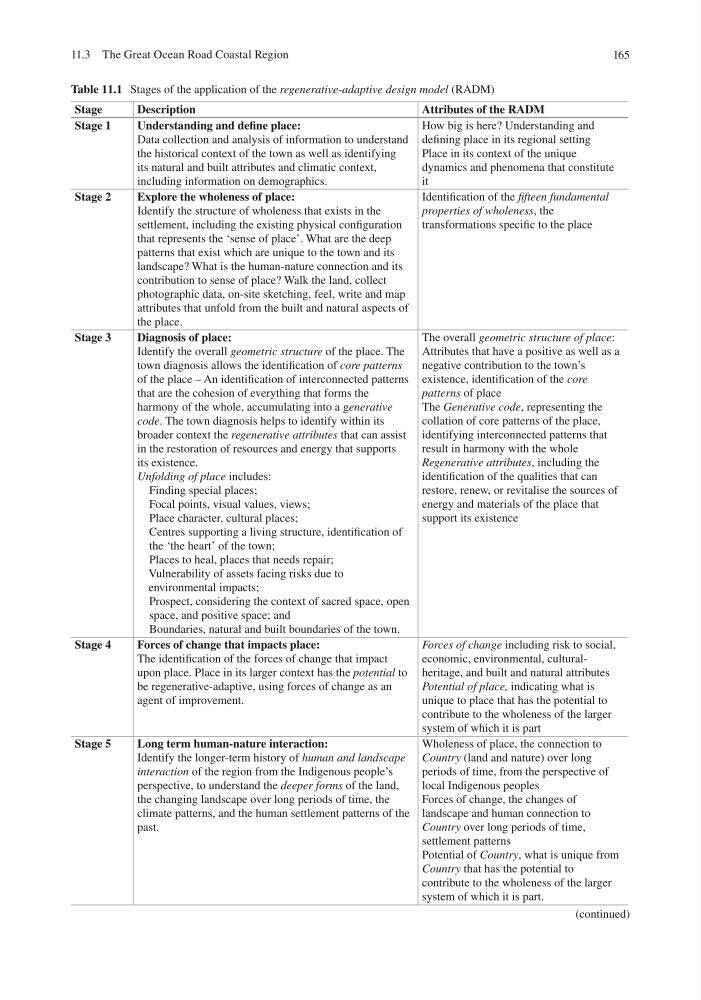
Table 11.1 Stages of the application of the regenerative- adaptive design model (RADM)
Stage
Description
Attributes of the RADM
Stage 1
Understanding and define place:
Data collection and analysis of information to understand
the historical context of the town as well as identifying
its natural and built attributes and climatic context,
including information on demographics.
How big is here? Understanding and
defining place in its regional setting
Place in its context of the unique
dynamics and phenomena that constitute
it
Stage 2
Explore the wholeness of place:
Identify the structure of wholeness that exists in the
settlement, including the existing physical configuration
that represents the ‘sense of place’. What are the deep
patterns that exist which are unique to the town and its
landscape? What is the human-nature connection and its
contribution to sense of place? Walk the land, collect
photographic data, on-site sketching, feel, write and map
attributes that unfold from the built and natural aspects of
the place.
Identification of the fifteen fundamental
properties of wholeness, the
transformations specific to the place
Stage 3
Diagnosis of place:
Identify the overall geometric structure of the place. The
town diagnosis allows the identification of core patterns
of the place – An identification of interconnected patterns
that are the cohesion of everything that forms the
harmony of the whole, accumulating into a generative
code. The town diagnosis helps to identify within its
broader context the regenerative attributes that can assist
in the restoration of resources and energy that supports
its existence.
Unfolding of place includes:
Finding special places;
Focal points, visual values, views;
Place character, cultural places;
Centres supporting a living structure, identification of
the ‘the heart’ of the town;
Places to heal, places that needs repair;
Vulnerability of assets facing risks due to
environmental impacts;
Prospect, considering the context of sacred space, open
space, and positive space; and
Boundaries, natural and built boundaries of the town.
The overall geometric structure of place:
Attributes that have a positive as well as a
negative contribution to the town’s
existence, identification of the core
patterns of place
The Generative code, representing the
collation of core patterns of the place,
identifying interconnected patterns that
result in harmony with the whole
Regenerative attributes, including the
identification of the qualities that can
restore, renew, or revitalise the sources of
energy and materials of the place that
support its existence
Stage 4
Forces of change that impacts place:
The identification of the forces of change that impact
upon place. Place in its larger context has the potential to
be regenerative-adaptive, using forces of change as an
agent of improvement.
Forces of change including risk to social,
economic, environmental, culturalheritage, and built and natural attributes
Potential of place, indicating what is
unique to place that has the potential to
contribute to the wholeness of the larger
system of which it is part
Stage 5
Long term human-nature interaction:
Identify the longer-term history of human and landscape
interaction of the region from the Indigenous people’s
perspective, to understand the deeper forms of the land,
the changing landscape over long periods of time, the
climate patterns, and the human settlement patterns of the
past.
Wholeness of place, the connection to
Country (land and nature) over long
periods of time, from the perspective of
local Indigenous peoples
Forces of change, the changes of
landscape and human connection to
Country over long periods of time,
settlement patterns
Potential of Country, what is unique from
Country that has the potential to
contribute to the wholeness of the larger
system of which it is part.
(continued)
11.3 The Great Ocean Road Coastal Region
Table 11.1 Stages of the application of the regenerative- adaptive design model (RADM)
Stage
Description
Attributes of the RADM
Stage 1
Understanding and define place:
Data collection and analysis of information to understand
the historical context of the town as well as identifying
its natural and built attributes and climatic context,
including information on demographics.
How big is here? Understanding and
defining place in its regional setting
Place in its context of the unique
dynamics and phenomena that constitute
it
Stage 2
Explore the wholeness of place:
Identify the structure of wholeness that exists in the
settlement, including the existing physical configuration
that represents the ‘sense of place’. What are the deep
patterns that exist which are unique to the town and its
landscape? What is the human-nature connection and its
contribution to sense of place? Walk the land, collect
photographic data, on-site sketching, feel, write and map
attributes that unfold from the built and natural aspects of
the place.
Identification of the fifteen fundamental
properties of wholeness, the
transformations specific to the place
Stage 3
Diagnosis of place:
Identify the overall geometric structure of the place. The
town diagnosis allows the identification of core patterns
of the place – An identification of interconnected patterns
that are the cohesion of everything that forms the
harmony of the whole, accumulating into a generative
code. The town diagnosis helps to identify within its
broader context the regenerative attributes that can assist
in the restoration of resources and energy that supports
its existence.
Unfolding of place includes:
Finding special places;
Focal points, visual values, views;
Place character, cultural places;
Centres supporting a living structure, identification of
the ‘the heart’ of the town;
Places to heal, places that needs repair;
Vulnerability of assets facing risks due to
environmental impacts;
Prospect, considering the context of sacred space, open
space, and positive space; and
Boundaries, natural and built boundaries of the town.
The overall geometric structure of place:
Attributes that have a positive as well as a
negative contribution to the town’s
existence, identification of the core
patterns of place
The Generative code, representing the
collation of core patterns of the place,
identifying interconnected patterns that
result in harmony with the whole
Regenerative attributes, including the
identification of the qualities that can
restore, renew, or revitalise the sources of
energy and materials of the place that
support its existence
Stage 4
Forces of change that impacts place:
The identification of the forces of change that impact
upon place. Place in its larger context has the potential to
be regenerative-adaptive, using forces of change as an
agent of improvement.
Forces of change including risk to social,
economic, environmental, culturalheritage, and built and natural attributes
Potential of place, indicating what is
unique to place that has the potential to
contribute to the wholeness of the larger
system of which it is part
Stage 5
Long term human-nature interaction:
Identify the longer-term history of human and landscape
interaction of the region from the Indigenous people’s
perspective, to understand the deeper forms of the land,
the changing landscape over long periods of time, the
climate patterns, and the human settlement patterns of the
past.
Wholeness of place, the connection to
Country (land and nature) over long
periods of time, from the perspective of
local Indigenous peoples
Forces of change, the changes of
landscape and human connection to
Country over long periods of time,
settlement patterns
Potential of Country, what is unique from
Country that has the potential to
contribute to the wholeness of the larger
system of which it is part.
(continued)
11.3 The Great Ocean Road Coastal Region