

138
A Generative code resulted from the need to apply these principles of a Pattern Language and
Morphogenetic sequences to the built environment. Alexander realized that his pattern language was
guilty of a typical ‘template’ limitation (Alexander et al., 2005). If language is used to come up with
a design planned in advance without considering a careful generative process for adapting the form,
then the form will not have a ‘living’ quality that is so obvious in the forms of nature (Mehaffy, 2009b,
p. 6). The 15 fundamental properties arose naturally as a result of the natural transformations in
nature, and living structures are a result of the process of morphogenesis. To overcome the static ‘template’ limitation in the design and planning of the urban environment, a generative code would follow
the steps of ‘unfolding’ similar to those in nature. Thus the 15 fundamental properties need to be
considered.
Neis explains that the Generative code (an urban code) is a new process that is supposed to include
all the information needed to actually design, develop and build a neighbourhood in a way that creates
living neighbourhoods. This includes not only the order in which the planning and building process
must proceed, but also needs a coherent form that:
… describes all the human interaction, practical and legal and procedural details, to get an actual living neighbourhood to appear on the ground as a result of interactions among the people who live and work there (Neis
et al., 2012, p. 5).
When generative codes are used in the process of designing and building a new neighbourhood or
precinct, the following characteristics are visible (Alexander et al., 2005, p. 4):
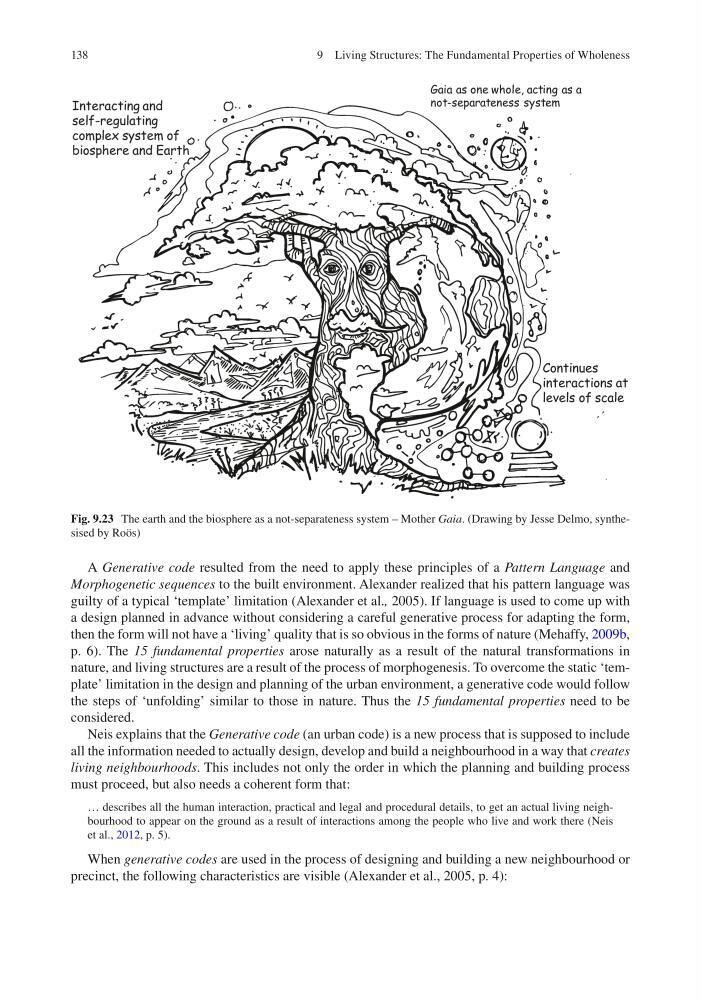
Fig. 9.23 The earth and the biosphere as a not-separateness system – Mother Gaia. (Drawing by Jesse Delmo, synthesised by Roös)
9 Living Structures: The Fundamental Properties of Wholeness
A Generative code resulted from the need to apply these principles of a Pattern Language and
Morphogenetic sequences to the built environment. Alexander realized that his pattern language was
guilty of a typical ‘template’ limitation (Alexander et al., 2005). If language is used to come up with
a design planned in advance without considering a careful generative process for adapting the form,
then the form will not have a ‘living’ quality that is so obvious in the forms of nature (Mehaffy, 2009b,
p. 6). The 15 fundamental properties arose naturally as a result of the natural transformations in
nature, and living structures are a result of the process of morphogenesis. To overcome the static ‘template’ limitation in the design and planning of the urban environment, a generative code would follow
the steps of ‘unfolding’ similar to those in nature. Thus the 15 fundamental properties need to be
considered.
Neis explains that the Generative code (an urban code) is a new process that is supposed to include
all the information needed to actually design, develop and build a neighbourhood in a way that creates
living neighbourhoods. This includes not only the order in which the planning and building process
must proceed, but also needs a coherent form that:
… describes all the human interaction, practical and legal and procedural details, to get an actual living neighbourhood to appear on the ground as a result of interactions among the people who live and work there (Neis
et al., 2012, p. 5).
When generative codes are used in the process of designing and building a new neighbourhood or
precinct, the following characteristics are visible (Alexander et al., 2005, p. 4):
Fig. 9.23 The earth and the biosphere as a not-separateness system – Mother Gaia. (Drawing by Jesse Delmo, synthesised by Roös)
9 Living Structures: The Fundamental Properties of Wholeness