

132
on a Zebra, the virtual archetypes in atoms, the slight variations in the cells of a honeycomb, and even
in the formations of waves in the sea.
9.6.12 Echoes
During the processes of growing and forming in nature, geometric forms are left behind in the static
structure of systems. The structure indicates the repetition of certain angles, proportions and shapes
over and over again, which determines the morphological character of the system and its parts.
Alexander named the repetitive forms echoes; distinctive characteristics that repeat themselves over
and over ‘echoing’ what was there before. Similar growth processes in the different components of the
Lily flower shows that characteristic curves and the same delicate proportions are repetitive (Fig. 9.19).
The lips of the petal, the stems, and the stamens all have the same proportions, reflecting echoes in
the system.
It can be argued that the morphological echoes of growth and their traces over time result in deep
character, especially evident in the aging of a human face. The aging face has a certain rugged character which appears in the nose, eyebrows, cheeks and chin. The process of skin tightening, sagging,
and weathering overtime repeats similar combinations of angles over and over again (Alexander,
2001–2005a, p. 281). This is what gives a unique character to an old person’s face – in essence, a
landscape painted over years, resulting in echoes of time, as indicated in Fig. 9.20.
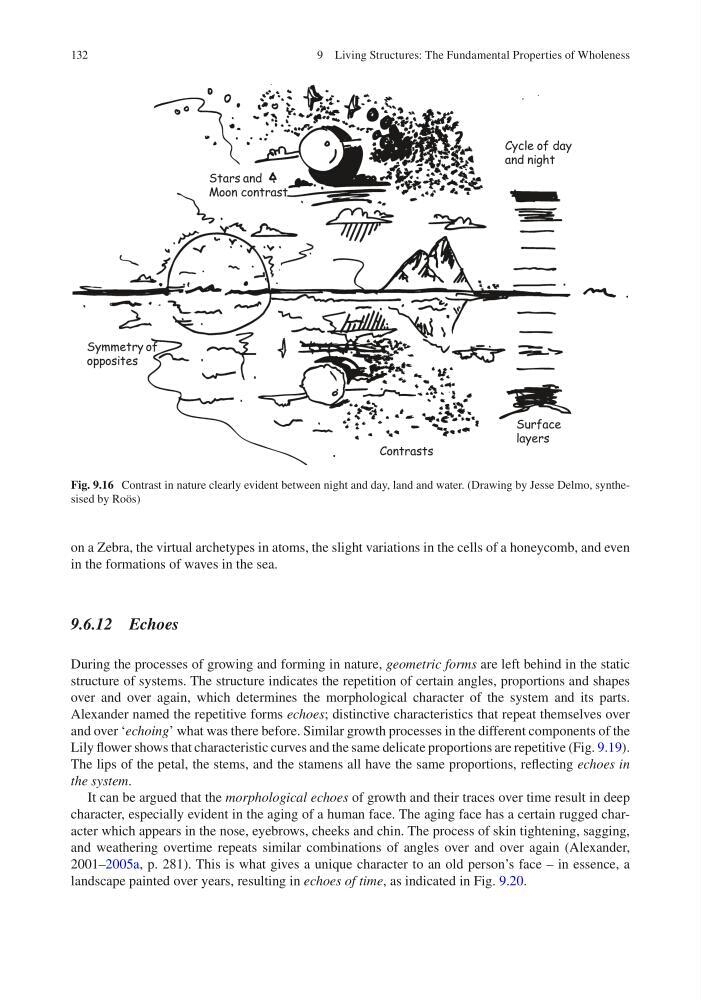
Fig. 9.16 Contrast in nature clearly evident between night and day, land and water. (Drawing by Jesse Delmo, synthesised by Roös)
9 Living Structures: The Fundamental Properties of Wholeness
on a Zebra, the virtual archetypes in atoms, the slight variations in the cells of a honeycomb, and even
in the formations of waves in the sea.
9.6.12 Echoes
During the processes of growing and forming in nature, geometric forms are left behind in the static
structure of systems. The structure indicates the repetition of certain angles, proportions and shapes
over and over again, which determines the morphological character of the system and its parts.
Alexander named the repetitive forms echoes; distinctive characteristics that repeat themselves over
and over ‘echoing’ what was there before. Similar growth processes in the different components of the
Lily flower shows that characteristic curves and the same delicate proportions are repetitive (Fig. 9.19).
The lips of the petal, the stems, and the stamens all have the same proportions, reflecting echoes in
the system.
It can be argued that the morphological echoes of growth and their traces over time result in deep
character, especially evident in the aging of a human face. The aging face has a certain rugged character which appears in the nose, eyebrows, cheeks and chin. The process of skin tightening, sagging,
and weathering overtime repeats similar combinations of angles over and over again (Alexander,
2001–2005a, p. 281). This is what gives a unique character to an old person’s face – in essence, a
landscape painted over years, resulting in echoes of time, as indicated in Fig. 9.20.
Fig. 9.16 Contrast in nature clearly evident between night and day, land and water. (Drawing by Jesse Delmo, synthesised by Roös)
9 Living Structures: The Fundamental Properties of Wholeness