

104
8.1 Introduction
In shaping the places where we live, we shape the patterns of our own behaviour. Over the past century or so, we
have built into the landscape behaviour patterns that derive from attitudes about the nature of the earth and the
human relationship with it that go back at least to the Renaissance. Expanded and driven by fossil fuels and
exploding population, they are now not only outmoded but dangerous. For our culture to survive, for the human
environment to become sustainable, we will have to change some of those patterns, which means, changing not
only our behaviour but our environment. It is not just a matter of fine tuning, not even a matter of overhaul. What
is needed is redesign (Lyle, 1991a [1985], p. ix).
Regenerative design theories emerged from earlier concepts of sustainable development. Sustainable
development attempted to integrate environmental responsibility, social equity, and economic viability
(Lyle, 1994). Sustainable design strives to minimise harm and be ‘ecologically neutral’. In a sustainable system, lost ecological systems are not returned to existence or being regenerated. In a regenerative system, those lost systems can ultimately ‘regenerate’ themselves back into existence. Lyle’s
theory focuses on the ecological component of regenerative design, and concerns the community at a
larger landscape scale. He contends that with respect to a given population, the landscape must be
designed for supporting on going supplies of energy and materials for habitat, daily living and economic activity (Lyle, 1994). Accomplishing this regenerative state requires replacing the present linear
system of material flow (Figs. 8.1 and 8.2), with cyclical flows at sources. A regenerative community
or settlement provides for continuous replacement of the energy and materials used in its operation
through its own functional processes (Lyle, 1991a [1985]; 1984). Many of the mechanisms and processes of regenerative design are inherently performed by nature (Cole, 2012). These processes are
adaptive and constantly replacing and adapting resources to create living structures.
Regenerative design relates to people, and seeks to develop approaches that support ‘the coevolution of human and natural systems’ so that both natural and social capital are supported (Cole,
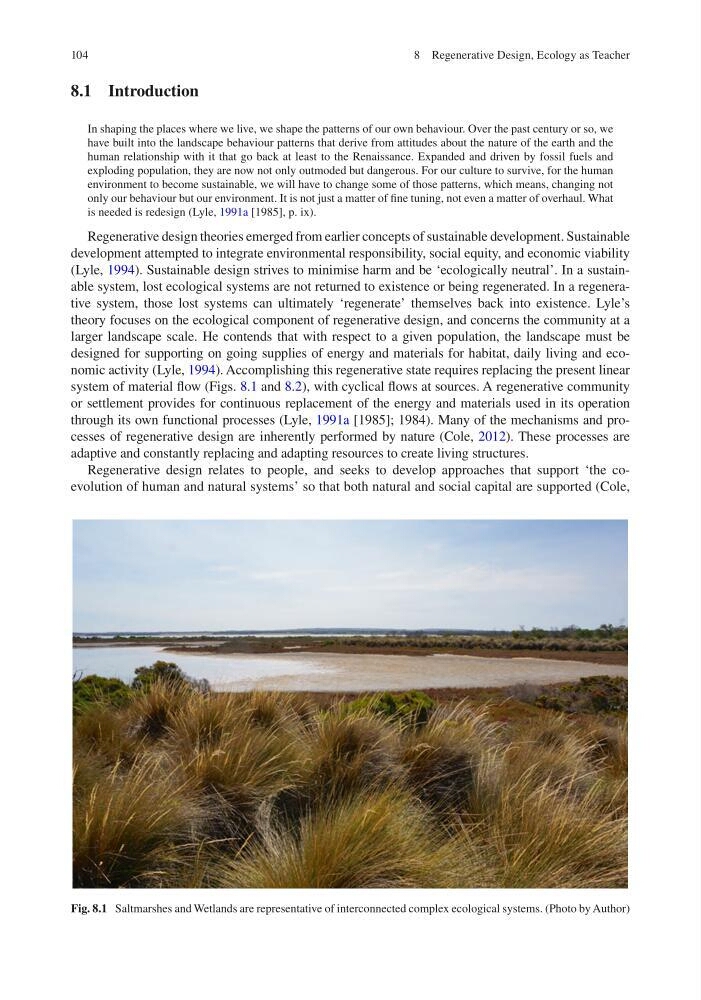
Fig. 8.1 Saltmarshes and Wetlands are representative of interconnected complex ecological systems. (Photo by Author)
8 Regenerative Design, Ecology as Teacher
8.1 Introduction
In shaping the places where we live, we shape the patterns of our own behaviour. Over the past century or so, we
have built into the landscape behaviour patterns that derive from attitudes about the nature of the earth and the
human relationship with it that go back at least to the Renaissance. Expanded and driven by fossil fuels and
exploding population, they are now not only outmoded but dangerous. For our culture to survive, for the human
environment to become sustainable, we will have to change some of those patterns, which means, changing not
only our behaviour but our environment. It is not just a matter of fine tuning, not even a matter of overhaul. What
is needed is redesign (Lyle, 1991a [1985], p. ix).
Regenerative design theories emerged from earlier concepts of sustainable development. Sustainable
development attempted to integrate environmental responsibility, social equity, and economic viability
(Lyle, 1994). Sustainable design strives to minimise harm and be ‘ecologically neutral’. In a sustainable system, lost ecological systems are not returned to existence or being regenerated. In a regenerative system, those lost systems can ultimately ‘regenerate’ themselves back into existence. Lyle’s
theory focuses on the ecological component of regenerative design, and concerns the community at a
larger landscape scale. He contends that with respect to a given population, the landscape must be
designed for supporting on going supplies of energy and materials for habitat, daily living and economic activity (Lyle, 1994). Accomplishing this regenerative state requires replacing the present linear
system of material flow (Figs. 8.1 and 8.2), with cyclical flows at sources. A regenerative community
or settlement provides for continuous replacement of the energy and materials used in its operation
through its own functional processes (Lyle, 1991a [1985]; 1984). Many of the mechanisms and processes of regenerative design are inherently performed by nature (Cole, 2012). These processes are
adaptive and constantly replacing and adapting resources to create living structures.
Regenerative design relates to people, and seeks to develop approaches that support ‘the coevolution of human and natural systems’ so that both natural and social capital are supported (Cole,
Fig. 8.1 Saltmarshes and Wetlands are representative of interconnected complex ecological systems. (Photo by Author)
8 Regenerative Design, Ecology as Teacher