

95
The ecological inventory summarized the patterns, with the outcomes represented as the land uses
deemed suitable for particular locations, with alternatives indicated in the suitability maps. The development of McHarg’s ecological approach through ‘the ecological inventory’ method, as previously
indicated in the Potomac River Basin Study (1965–66), resulted in his scientific theory called creative
fitting, which both explained and validated Design with Nature (1992 [1969]), and lent scientific
integrity to his approach. McHarg’s method was classified as ecological scientific, not only because it
used ecological data, but also because the outcomes of the method matched the processes of adaptation and evolution (McHarg & Steiner, 2006, pp. 124–125). This theory helped determine where
proposed uses of buildings, roads and infrastructure could fit on the land. Creative fitting locates the
fittest environment for both human and natural uses integrated in various land use proposals, so that
the land uses fit in with a changed landscape. Because of the ‘fit for purpose’ principles connecting
with the landscape, it could be reasoned that creative fitting fulfilled the basic principles of ecological
planning. Creative fitting was explained by McHarg as a theory that ‘has absolutely no status whatsoever, except insofar as all the parts have been derived from excellent scientists’ (McHarg, 2007, p. 21);
it was a theory that conjoined the scientific theories of Charles Darwin’s The Origin of Species
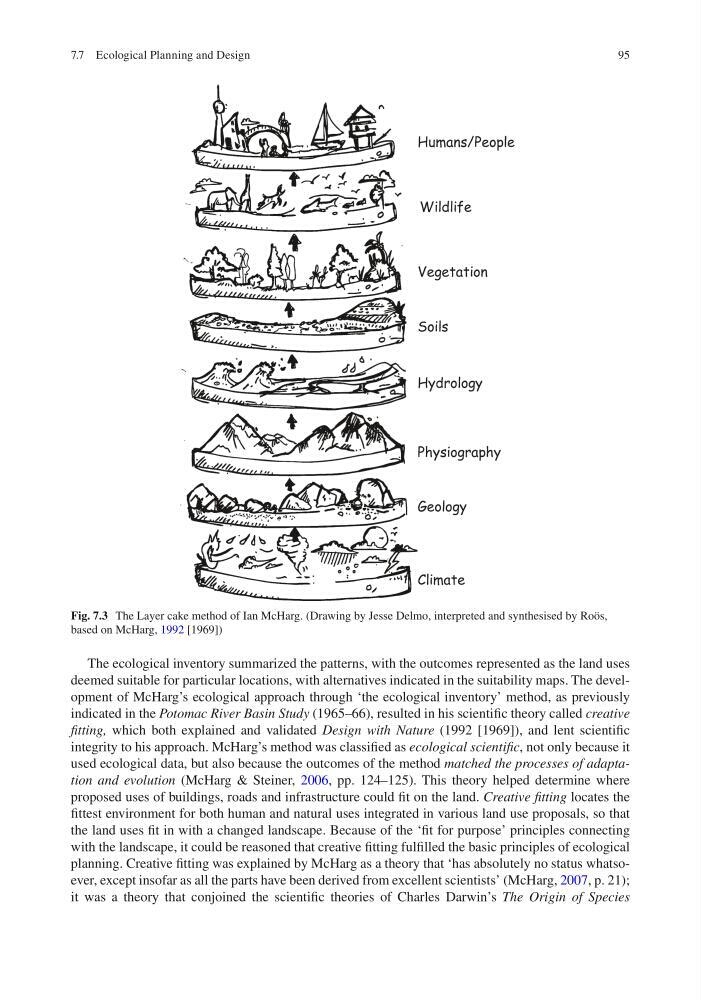
Fig. 7.3 The Layer cake method of Ian McHarg. (Drawing by Jesse Delmo, interpreted and synthesised by Roös,
based on McHarg, 1992 [1969])
7.7 Ecological Planning and Design
The ecological inventory summarized the patterns, with the outcomes represented as the land uses
deemed suitable for particular locations, with alternatives indicated in the suitability maps. The development of McHarg’s ecological approach through ‘the ecological inventory’ method, as previously
indicated in the Potomac River Basin Study (1965–66), resulted in his scientific theory called creative
fitting, which both explained and validated Design with Nature (1992 [1969]), and lent scientific
integrity to his approach. McHarg’s method was classified as ecological scientific, not only because it
used ecological data, but also because the outcomes of the method matched the processes of adaptation and evolution (McHarg & Steiner, 2006, pp. 124–125). This theory helped determine where
proposed uses of buildings, roads and infrastructure could fit on the land. Creative fitting locates the
fittest environment for both human and natural uses integrated in various land use proposals, so that
the land uses fit in with a changed landscape. Because of the ‘fit for purpose’ principles connecting
with the landscape, it could be reasoned that creative fitting fulfilled the basic principles of ecological
planning. Creative fitting was explained by McHarg as a theory that ‘has absolutely no status whatsoever, except insofar as all the parts have been derived from excellent scientists’ (McHarg, 2007, p. 21);
it was a theory that conjoined the scientific theories of Charles Darwin’s The Origin of Species
Fig. 7.3 The Layer cake method of Ian McHarg. (Drawing by Jesse Delmo, interpreted and synthesised by Roös,
based on McHarg, 1992 [1969])
7.7 Ecological Planning and Design