

251
photo-oxidative stress that causes mass bleaching events. Even with respect to the
approximately 1°C increase in average global temperature over the past 40–50 years,
ozone depletion is estimated to have contributed about 20% of that warming.
Rising atmospheric CO 2 concentrations are clearly major threats to the future of
coral reefs. But threats to reefs extend far beyond and also amplify the consequences
of global warming and ocean acidification. Indeed, the range of threats increases
with the ever-increasing human populations. The Montreal Protocol was successful
in halting the decline in stratospheric ozone, but recovery has been minimal over the
past 20–25 years and use of certain CFS has been increasing since 2012. The consequences of local and regional activities are vast, including the ever-expanding
impacts of environmental pollutants, coastal development, land-use in the watersheds, and even desertification in distant places that result in dust and smoke plumes
that cross oceans and carry microbes. If a diversity of coral species and many other
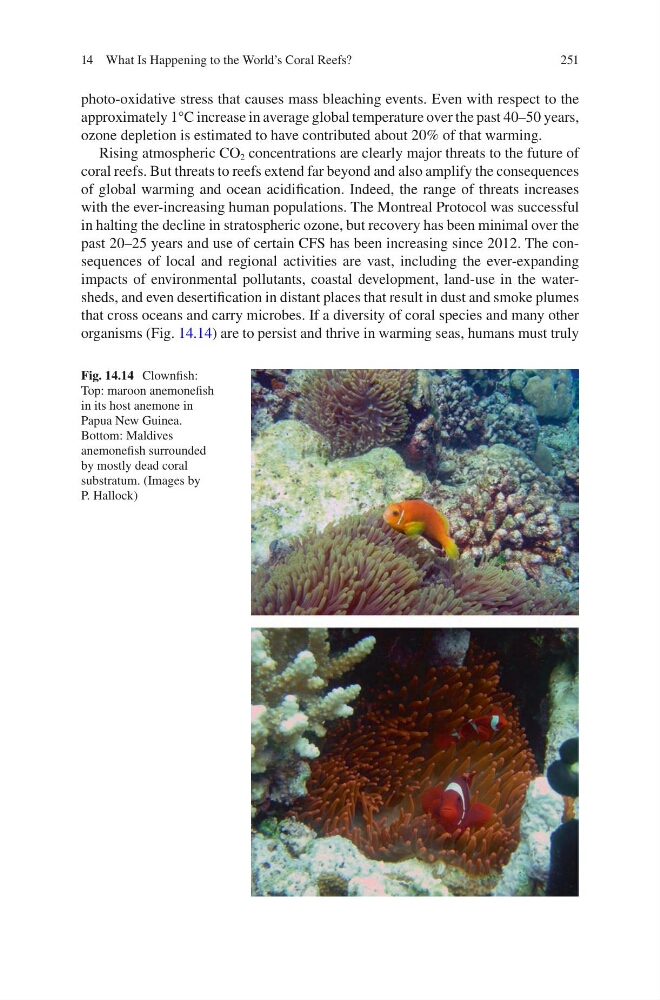
organisms (Fig. 14.14) are to persist and thrive in warming seas, humans must truly
Fig. 14.14 Clownfish:
Top: maroon anemonefish
in its host anemone in
Papua New Guinea.
Bottom: Maldives
anemonefish surrounded
by mostly dead coral
substratum. (Images by
P. Hallock)
14 What Is Happening to the World’s Coral Reefs?
photo-oxidative stress that causes mass bleaching events. Even with respect to the
approximately 1°C increase in average global temperature over the past 40–50 years,
ozone depletion is estimated to have contributed about 20% of that warming.
Rising atmospheric CO 2 concentrations are clearly major threats to the future of
coral reefs. But threats to reefs extend far beyond and also amplify the consequences
of global warming and ocean acidification. Indeed, the range of threats increases
with the ever-increasing human populations. The Montreal Protocol was successful
in halting the decline in stratospheric ozone, but recovery has been minimal over the
past 20–25 years and use of certain CFS has been increasing since 2012. The consequences of local and regional activities are vast, including the ever-expanding
impacts of environmental pollutants, coastal development, land-use in the watersheds, and even desertification in distant places that result in dust and smoke plumes
that cross oceans and carry microbes. If a diversity of coral species and many other
organisms (Fig. 14.14) are to persist and thrive in warming seas, humans must truly
Fig. 14.14 Clownfish:
Top: maroon anemonefish
in its host anemone in
Papua New Guinea.
Bottom: Maldives
anemonefish surrounded
by mostly dead coral
substratum. (Images by
P. Hallock)
14 What Is Happening to the World’s Coral Reefs?