

249
stratospheric ozone caused by the 1982 eruption of El Chichon volcano. Similarly,
the eruption of Mt. Pinatubo in 1991 contributed to the lowest levels of stratospheric
ozone ever recorded by the mid-1990s, and stratospheric ozone levels have remained
low since. Thus, the record 1997–1998 El Niño occurred when globally the stratospheric ozone was near its lowest concentration. Since then, bleaching events have
occurred at increased frequencies as warming events are increasing while the stratospheric ozone has shown minimal recovery.
What Does the Future Hold for Coral Reefs, and Why Should
We Care?
My career has been spent watching corals die. In the mid-1990s, I concluded a book
chapter on reef history predicting what is now recognized as the Anthropocene
Mass Extinction Event. Yet I do not conclude that all corals are doomed. However,
construction of reefs by surviving corals will likely end in the near future, if it hasn’t
already in most parts of the world, as the result of declining populations of the major
reef-building coral species, combined with increasing rates of breakdown of reef
structure by bioerosion and physical processes. The consequences of termination of
reef construction will be most consequential for the many organisms that have
adapted to live in and around coral reefs. In addition, humans will be impacted in a
variety of ways. Human populations on atolls and other low-lying coastal regions
are already facing the consequences of increased storm intensities. With accelerating rates of sea-level rise, reefs are becoming less effective as offshore breakwaters
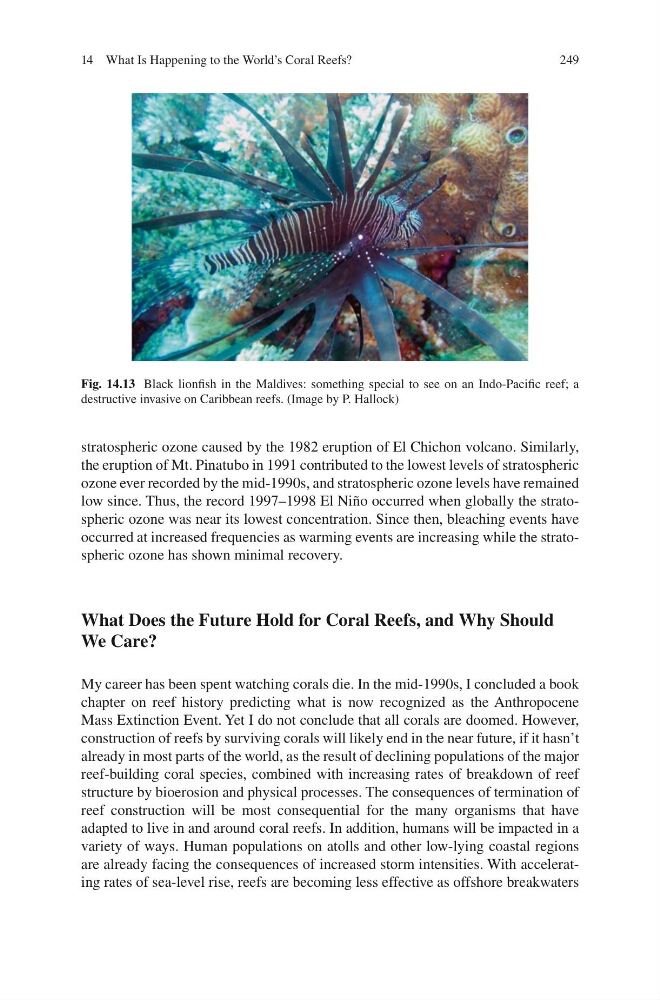
Fig. 14.13 Black lionfish in the Maldives: something special to see on an Indo-Pacific reef; a
destructive invasive on Caribbean reefs. (Image by P. Hallock)
14 What Is Happening to the World’s Coral Reefs?
stratospheric ozone caused by the 1982 eruption of El Chichon volcano. Similarly,
the eruption of Mt. Pinatubo in 1991 contributed to the lowest levels of stratospheric
ozone ever recorded by the mid-1990s, and stratospheric ozone levels have remained
low since. Thus, the record 1997–1998 El Niño occurred when globally the stratospheric ozone was near its lowest concentration. Since then, bleaching events have
occurred at increased frequencies as warming events are increasing while the stratospheric ozone has shown minimal recovery.
What Does the Future Hold for Coral Reefs, and Why Should
We Care?
My career has been spent watching corals die. In the mid-1990s, I concluded a book
chapter on reef history predicting what is now recognized as the Anthropocene
Mass Extinction Event. Yet I do not conclude that all corals are doomed. However,
construction of reefs by surviving corals will likely end in the near future, if it hasn’t
already in most parts of the world, as the result of declining populations of the major
reef-building coral species, combined with increasing rates of breakdown of reef
structure by bioerosion and physical processes. The consequences of termination of
reef construction will be most consequential for the many organisms that have
adapted to live in and around coral reefs. In addition, humans will be impacted in a
variety of ways. Human populations on atolls and other low-lying coastal regions
are already facing the consequences of increased storm intensities. With accelerating rates of sea-level rise, reefs are becoming less effective as offshore breakwaters
Fig. 14.13 Black lionfish in the Maldives: something special to see on an Indo-Pacific reef; a
destructive invasive on Caribbean reefs. (Image by P. Hallock)
14 What Is Happening to the World’s Coral Reefs?