

237
coastal pollution evident. Otherwise the waters were clear, the corals spectacular,
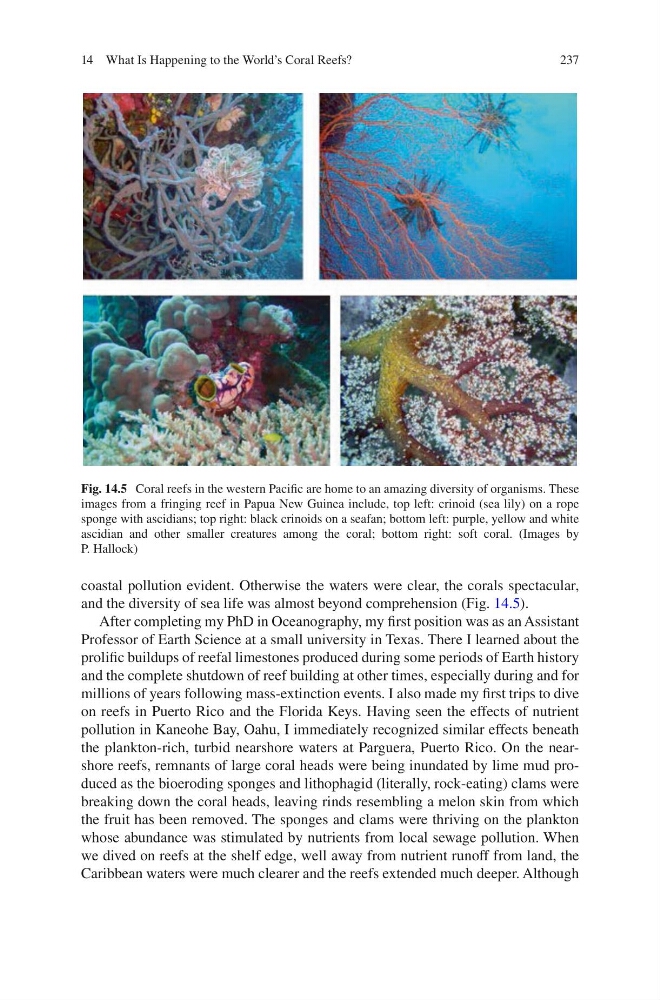
and the diversity of sea life was almost beyond comprehension (Fig. 14.5).
After completing my PhD in Oceanography, my first position was as an Assistant
Professor of Earth Science at a small university in Texas. There I learned about the
prolific buildups of reefal limestones produced during some periods of Earth history
and the complete shutdown of reef building at other times, especially during and for
millions of years following mass-extinction events. I also made my first trips to dive
on reefs in Puerto Rico and the Florida Keys. Having seen the effects of nutrient
pollution in Kaneohe Bay, Oahu, I immediately recognized similar effects beneath
the plankton-rich, turbid nearshore waters at Parguera, Puerto Rico. On the nearshore reefs, remnants of large coral heads were being inundated by lime mud produced as the bioeroding sponges and lithophagid (literally, rock-eating) clams were
breaking down the coral heads, leaving rinds resembling a melon skin from which
the fruit has been removed. The sponges and clams were thriving on the plankton
whose abundance was stimulated by nutrients from local sewage pollution. When
we dived on reefs at the shelf edge, well away from nutrient runoff from land, the
Caribbean waters were much clearer and the reefs extended much deeper. Although
Fig. 14.5 Coral reefs in the western Pacific are home to an amazing diversity of organisms. These
images from a fringing reef in Papua New Guinea include, top left: crinoid (sea lily) on a rope
sponge with ascidians; top right: black crinoids on a seafan; bottom left: purple, yellow and white
ascidian and other smaller creatures among the coral; bottom right: soft coral. (Images by
P. Hallock)
14 What Is Happening to the World’s Coral Reefs?
coastal pollution evident. Otherwise the waters were clear, the corals spectacular,
and the diversity of sea life was almost beyond comprehension (Fig. 14.5).
After completing my PhD in Oceanography, my first position was as an Assistant
Professor of Earth Science at a small university in Texas. There I learned about the
prolific buildups of reefal limestones produced during some periods of Earth history
and the complete shutdown of reef building at other times, especially during and for
millions of years following mass-extinction events. I also made my first trips to dive
on reefs in Puerto Rico and the Florida Keys. Having seen the effects of nutrient
pollution in Kaneohe Bay, Oahu, I immediately recognized similar effects beneath
the plankton-rich, turbid nearshore waters at Parguera, Puerto Rico. On the nearshore reefs, remnants of large coral heads were being inundated by lime mud produced as the bioeroding sponges and lithophagid (literally, rock-eating) clams were
breaking down the coral heads, leaving rinds resembling a melon skin from which
the fruit has been removed. The sponges and clams were thriving on the plankton
whose abundance was stimulated by nutrients from local sewage pollution. When
we dived on reefs at the shelf edge, well away from nutrient runoff from land, the
Caribbean waters were much clearer and the reefs extended much deeper. Although
Fig. 14.5 Coral reefs in the western Pacific are home to an amazing diversity of organisms. These
images from a fringing reef in Papua New Guinea include, top left: crinoid (sea lily) on a rope
sponge with ascidians; top right: black crinoids on a seafan; bottom left: purple, yellow and white
ascidian and other smaller creatures among the coral; bottom right: soft coral. (Images by
P. Hallock)
14 What Is Happening to the World’s Coral Reefs?