

235
sponges. Live corals were definitely in the minority and generally pretty small.
Since we were comparing our observations to those made at the same sites in 2013,
the working hypothesis was that we were surveying recovery since the 2013 bleaching event, during which unusually warm ocean waters had stressed the corals, causing them to expel the symbiotic algae that provide the coral with food and provide
the vivid colors. Many corals subsequently died.
As a scientist with an interest in longer histories, I informally interviewed some
of the crew members to get their impressions of what has happened to the corals.
The Captain told me he thought the 2010 bleaching event was much more destructive than the 2013 event. The Dive Master argued that it was the 1997 bleaching.
They were both right from their perspectives and experience, given the number of
years each had worked in this area. The reefs have experienced warm-water events
with increasing frequency since the nearly worldwide coral bleaching in 1997.
Because a dynamic reef community can require decades to fully recover from a
destructive event, and centuries for individual coral heads to grow to gigantic dimensions of meters high and tens of meters in diameter, storm or even bleaching events
occurring at decadal intervals are very destructive but recovery can get well underway between events. Bleaching events that occur every 3–5 years simply do not
allow the long-lived coral species sufficient time to reestablish.
I learned to SCUBA dive in 1970 as a graduate student at the University of
Hawai’i. I started my studies in oceanography at the time that the Crown-of-Thorns
starfish populations were exploding on reefs around the Pacific, decimating populations of some of the faster-growing coral species (Fig. 14.4). My teaching assistantship involved weekend field trips where we shepherded 40 undergraduates around
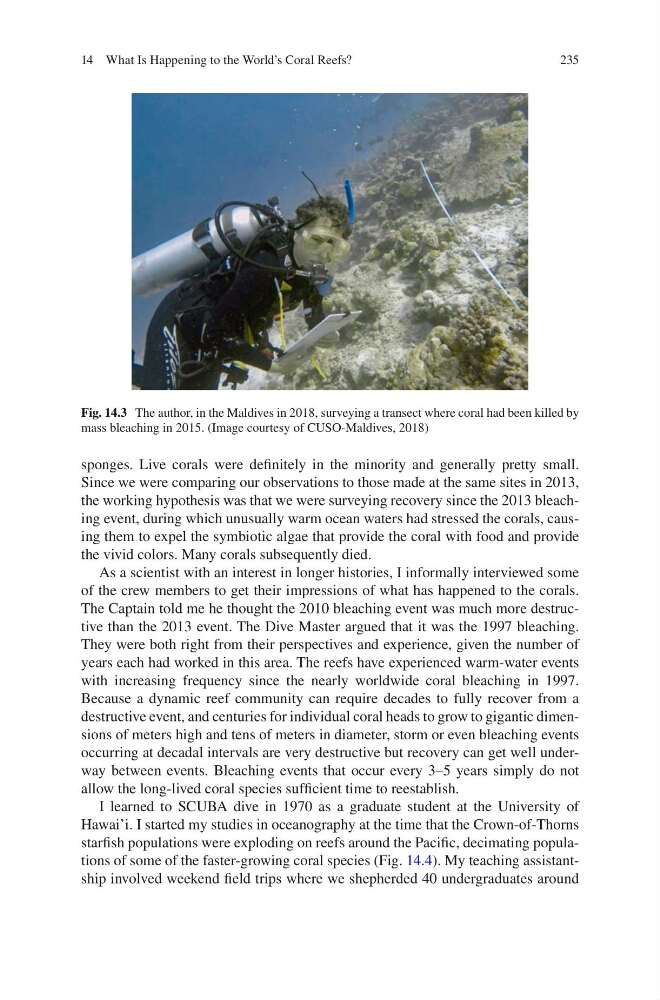
Fig. 14.3 The author, in the Maldives in 2018, surveying a transect where coral had been killed by
mass bleaching in 2015. (Image courtesy of CUSO-Maldives, 2018)
14 What Is Happening to the World’s Coral Reefs?
sponges. Live corals were definitely in the minority and generally pretty small.
Since we were comparing our observations to those made at the same sites in 2013,
the working hypothesis was that we were surveying recovery since the 2013 bleaching event, during which unusually warm ocean waters had stressed the corals, causing them to expel the symbiotic algae that provide the coral with food and provide
the vivid colors. Many corals subsequently died.
As a scientist with an interest in longer histories, I informally interviewed some
of the crew members to get their impressions of what has happened to the corals.
The Captain told me he thought the 2010 bleaching event was much more destructive than the 2013 event. The Dive Master argued that it was the 1997 bleaching.
They were both right from their perspectives and experience, given the number of
years each had worked in this area. The reefs have experienced warm-water events
with increasing frequency since the nearly worldwide coral bleaching in 1997.
Because a dynamic reef community can require decades to fully recover from a
destructive event, and centuries for individual coral heads to grow to gigantic dimensions of meters high and tens of meters in diameter, storm or even bleaching events
occurring at decadal intervals are very destructive but recovery can get well underway between events. Bleaching events that occur every 3–5 years simply do not
allow the long-lived coral species sufficient time to reestablish.
I learned to SCUBA dive in 1970 as a graduate student at the University of
Hawai’i. I started my studies in oceanography at the time that the Crown-of-Thorns
starfish populations were exploding on reefs around the Pacific, decimating populations of some of the faster-growing coral species (Fig. 14.4). My teaching assistantship involved weekend field trips where we shepherded 40 undergraduates around
Fig. 14.3 The author, in the Maldives in 2018, surveying a transect where coral had been killed by
mass bleaching in 2015. (Image courtesy of CUSO-Maldives, 2018)
14 What Is Happening to the World’s Coral Reefs?