

234
(Fig. 14.1). Other islands host small villages; many coral cays are uninhabited by
humans, though extensively inhabited by vegetation, birds, and insects. Around the
coral cays are fringing reefs with shallow reef flats (Fig. 14.2). While there are a few
more remote places in the world, one wouldn’t think that human impacts would be
much to worry about.
I was with a group of Swiss and Italian scientists and their graduate students on
a live-aboard dive boat. We were diving on sites that some of the team had surveyed
in April 2013, just before the onset of a major coral-bleaching event (Fig. 14.3). Any
dive in clear waters with spectacular fish swimming everywhere is mesmerizing. Yet
for someone who has been diving on reefs for nearly 50 years, the dives were actually quite depressing. We were mostly seeing dead coral overgrown by algae and
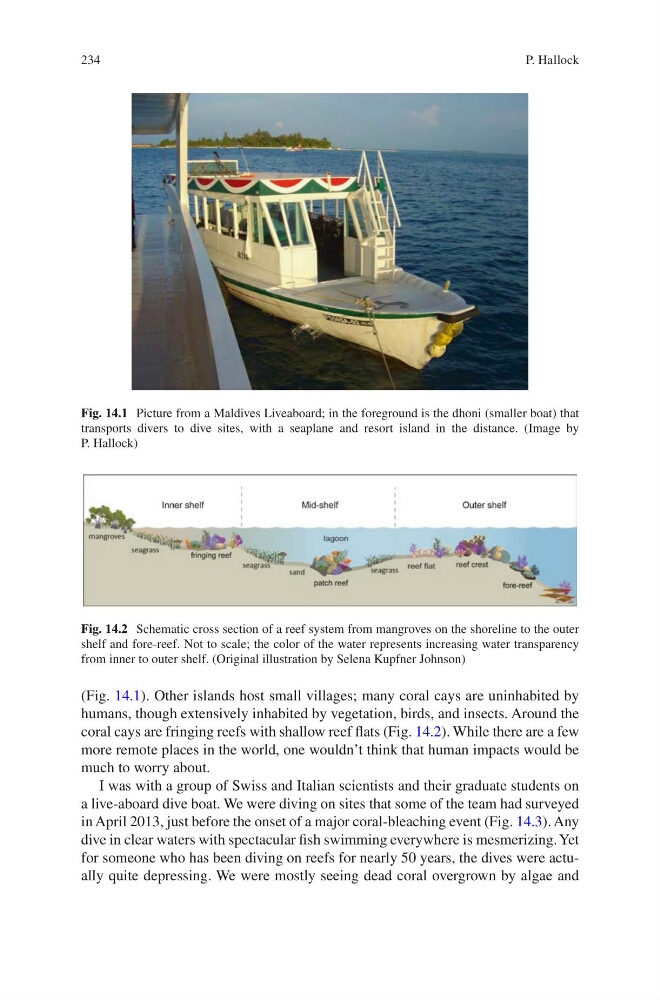
Fig. 14.1 Picture from a Maldives Liveaboard; in the foreground is the dhoni (smaller boat) that
transports divers to dive sites, with a seaplane and resort island in the distance. (Image by
P. Hallock)
Fig. 14.2 Schematic cross section of a reef system from mangroves on the shoreline to the outer
shelf and fore-reef. Not to scale; the color of the water represents increasing water transparency
from inner to outer shelf. (Original illustration by Selena Kupfner Johnson)
P. Hallock
(Fig. 14.1). Other islands host small villages; many coral cays are uninhabited by
humans, though extensively inhabited by vegetation, birds, and insects. Around the
coral cays are fringing reefs with shallow reef flats (Fig. 14.2). While there are a few
more remote places in the world, one wouldn’t think that human impacts would be
much to worry about.
I was with a group of Swiss and Italian scientists and their graduate students on
a live-aboard dive boat. We were diving on sites that some of the team had surveyed
in April 2013, just before the onset of a major coral-bleaching event (Fig. 14.3). Any
dive in clear waters with spectacular fish swimming everywhere is mesmerizing. Yet
for someone who has been diving on reefs for nearly 50 years, the dives were actually quite depressing. We were mostly seeing dead coral overgrown by algae and
Fig. 14.1 Picture from a Maldives Liveaboard; in the foreground is the dhoni (smaller boat) that
transports divers to dive sites, with a seaplane and resort island in the distance. (Image by
P. Hallock)
Fig. 14.2 Schematic cross section of a reef system from mangroves on the shoreline to the outer
shelf and fore-reef. Not to scale; the color of the water represents increasing water transparency
from inner to outer shelf. (Original illustration by Selena Kupfner Johnson)
P. Hallock